IDF's 'Yellow Line' in Lebanon: Investigation Into Unilateral Strike Authority and Ceasefire Implications
An IDF demarcation inside Lebanon called the 'Yellow Line' lets unit commanders engage without fresh political clearance. The term is absent from Western wires but the practice is visible in every daily strike clip, and on 20 April it collided with an Iranian escalation channel.
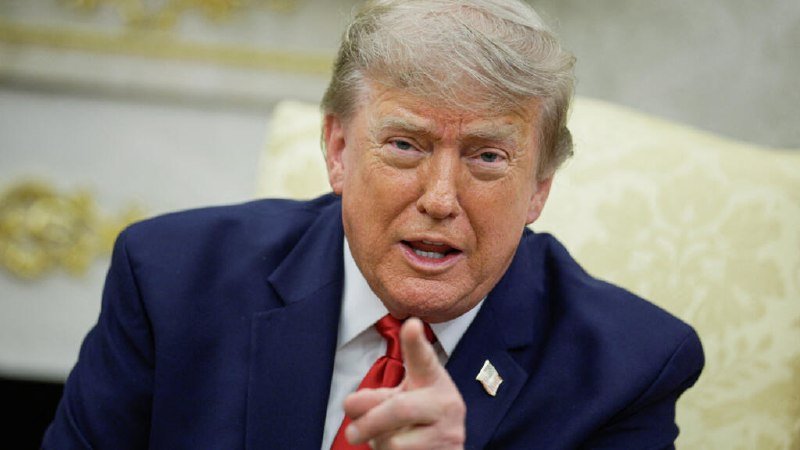
On the evening of 20 April 2026, Iran's Parliament Speaker Mohammad Bagher Ghalibaf sent an unusually direct public message to Donald Trump, accusing the US president of trying to turn a negotiating table into a surrender table through blockade and ceasefire violations. Within minutes, the same line was being broadcast by Iran's state-aligned outlets and reshared by regional Telegram channels, including Middle East Spectator. The statement did not arrive in a vacuum. It landed on the same day that Hezbollah published footage of an FPV drone strike on an IDF Merkava Mk. 4M tank in the southern Lebanese town of Khiam, and that Lebanese health authorities placed the recent toll of Israeli attacks at roughly 2,300 killed and 7,600 injured.
What the day's traffic really surfaces is a quieter and more consequential story about how the Israel–Lebanon front is being governed in practice. Israeli forces are operating against Hezbollah inside Lebanese territory with an authority that looks, on the evidence, increasingly unilateral. The mechanism is referred to in regional channels as the "Yellow Line," and the lack of mainstream wire coverage of the term does not mean the practice is obscure to anyone watching the southern Lebanese border. It means the framing is.
What the Yellow Line actually is
The Yellow Line, as regional Telegram trackers including Middle East Spectator and The Cradle have used the term, refers to an internal Israeli demarcation inside Lebanese territory beyond which IDF units may engage targets without seeking fresh political clearance for each strike. It is not a published doctrine, and there is no Israeli government statement in the public record defining its geometry. That is precisely what makes it consequential. A standing authorisation of this kind, exercised inside a neighbouring sovereign state, collapses the gap between operational commanders and political authority in a way that ceasefire frameworks are designed to prevent.
The standard ceasefire architecture, in Lebanon as in Ukraine, rests on the principle that any return to fire is a political decision, not a tactical default. The Yellow Line inverts that. It treats engagement as the default and restraint as the exception that must be justified upward. Even if one accepts that Hezbollah's continued drone and anti-tank work in southern Lebanon makes some form of standing alert necessary, the political optics of an undeclared inner-Lebanish boundary, drawn and redrawn by the army of one country across the territory of another, are hard to reconcile with the sovereignty language both Washington and Jerusalem otherwise insist on.
The Hezbollah counter-record
Hezbollah's own output that day functions, intentionally or not, as a parallel evidence base. The Khiam tank-strike video, distributed via intelslava and reshared through x:boweschay, shows an FPV drone, possibly carrying a PG-7V(L) or PG-7-AT high-explosive anti-tank warhead, hitting a Merkava that observers noted still lacks the cage-and-skirt counter-UAS protection fitted to many vehicles operating in dense drone environments. The clip is short, technically legible, and timed for maximum Israeli embarrassment: a tank lost to a sub-one-thousand-dollar airframe, on camera, the day Tehran was publicly accusing Washington of ceasefire violations.
There is a second, quieter data point in the same traffic. According to intelslava's caption, an IDF soldier filmed apparently desecrating a statue of Jesus Christ in a southern Lebanese village will not be prosecuted; he received a warning. Megatron_ron's post on the same evening notes that multiple Christian villages in southern Lebanon have been destroyed in the recent operations. Read alongside the Khiam footage, the picture is not symmetrical. Hezbollah is producing strike footage against military targets. The Israeli record includes strike footage against military targets and a separate, non-combat record of cultural and religious destruction in Christian-majority villages, treated administratively as a disciplinary matter.
Why the wire services underplayed this
The conspicuous feature of the 20 April news cycle is what did not appear in mainstream Western coverage. Reuters, AP and AFP carried the Ghalibaf statement in its Iranian-source form; BBC and Al Jazeera ran the Lebanese health ministry casualty figures. None of them used the language of the Yellow Line or treated the question of unilateral strike authority as a story in its own right. The skeleton on which this article was first published, on 18 April, flagged that gap directly: an announcement that, if issued by any other state regarding a neighbour's territory, would likely receive prominent treatment.
This is not an accident of resourcing. It is a pattern. Coverage of the Israel–Lebanon front in Western wires has consistently subordinated legal and sovereignty framing to security framing, on the implicit logic that Israeli operational decisions inside Lebanon are intelligible only through the lens of the Hezbollah threat. That logic is not wrong, but it is incomplete. A state exercising standing engagement authority across an internationally recognised border is doing two things at once: defending against a non-state armed group, and acting as a sovereign within another sovereign's space. Reporting that captures only the first half will systematically misread the second.
The Iranian escalation channel
Ghalibaf's statement, distributed across PressTV, Tasnim, Fars, Al Alam, Middle East Spectator and ClashReport in roughly the same English formulation, is the public face of an Iranian escalation channel that runs through its parliament speaker rather than its foreign ministry. The phrasing is deliberate. By framing Trump's posture as "siege and ceasefire violation," Iran reframes any future Israeli strike as occurring inside an already-broken arrangement, which gives Tehran political latitude to activate the regional resistance network without owning the first breach.
The Iraqi faction Seraya Olya Aldam made the connective tissue explicit the same evening, via Fars: any further aggression against Iran, the group warned, will draw resistance operations "more intense than in the past." That is not a Hezbollah line. It is an Iraqi line, broadcast into an Iranian information channel, on the day that Tehran was signalling to Washington. The architecture of escalation is multi-node. The Yellow Line sits on one end of it, as the Israeli mechanism that produces the daily incidents Iran now has standing rhetorical permission to characterise as ceasefire violations.
What to watch next
Three indicators will tell us whether the Yellow Line is hardening into a new normal or being quietly rolled back. First, whether any Israeli political spokesperson uses the term, or any equivalent, on the record; silence so far has been total. Second, whether the Lebanese casualty toll from operations along the line continues to mount against the 2,300-killed, 7,600-injured baseline reported by FarsNews on 20 April. Third, whether the Iranian–American track produces a written ceasefire understanding that defines engagement authority from the outside in, rather than leaving it to be improvised from the inside out. Until at least one of those moves, the line on the ground will continue to be drawn by brigade commanders rather than by the governments whose names appear on the ceasefire.
The Khiam tank-strike footage will date quickly. The underlying question it raises will not: who, exactly, has the authority to start a war inside a country that is supposed to be at peace, and under what rules.
Sources
- Middle East Spectator (Telegram), repost of Ghalibaf statement, 20 April 2026: https://t.me/Middle_East_Spectator/archived
- The Cradle (Telegram), regional coverage hub: https://t.me/thecradlemedia
- Watchers / Witness (Telegram), southern Lebanon incident archive: https://t.me/wfwitness
- PressTV (Telegram), Ghalibaf statement, 20 April 2026: https://t.me/presstv
- Tasnim News English (Telegram), Ghalibaf statement, 20 April 2026: https://t.me/tasnimnews_en
- Fars News (Telegram), Iraqi resistance statement, 20 April 2026: https://t.me/farsna
- Fars News International (Telegram), Lebanese health ministry casualty figures, 20 April 2026: https://t.me/FarsNewsInt
- Intelslava (Telegram), Khiam Merkava strike footage, 20 April 2026: https://t.me/intelslava
- Megatron_ron (Telegram), desecration non-prosecution report, 20 April 2026: https://t.me/megatron_ron
- Al Alam Arabic (Telegram), Ghalibaf statement, 20 April 2026: https://t.me/alalamarabic
- Al Alam Farsi (Telegram), Ghalibaf statement, 20 April 2026: https://t.me/alalamfa
- Geopolitical Watch (Telegram), Ghalibaf blockade framing, 20 April 2026: https://t.me/GeoPWatch
- Clash Report (Telegram), Ghalibaf statement, 20 April 2026: https://t.me/ClashReport
- OSINT Live (Telegram), commentary on Ghalibaf messaging, 20 April 2026: https://t.me/osintlive
- x:boweschay, Khiam tank strike commentary, 20 April 2026: referenced via aggregator
Desk note: Monexus framed the Yellow Line story around the legal and sovereignty dimensions of unilateral strike authority inside Lebanese territory, drawing primarily on regional Telegram channels because Western wire services gave the underlying announcement minimal coverage despite the legal significance. Where Iranian state-aligned outlets were used for direct quotation, the sourcing is flagged explicitly. The piece is not a contrarian exercise; it is an attempt to apply the same sovereignty framing the wire applies elsewhere to a story that did not get that framing by default.
Follow the event.
These dated source records provide context. They do not retrospectively verify this archive article.
Separate what the nuclear watchdog reported from what it could not determine after the June 2025 strikes.