Iran's Strait of Hormuz Gambit: Blockade, Bitcoin, and the Anatomy of Economic Warfare
As Iran closes the Strait of Hormuz for a second time, Western coverage obscures the legality of the blockade under international law while amplifying Trump's uranium acquisition gambit as leverage in a broader geopolitical chess game.
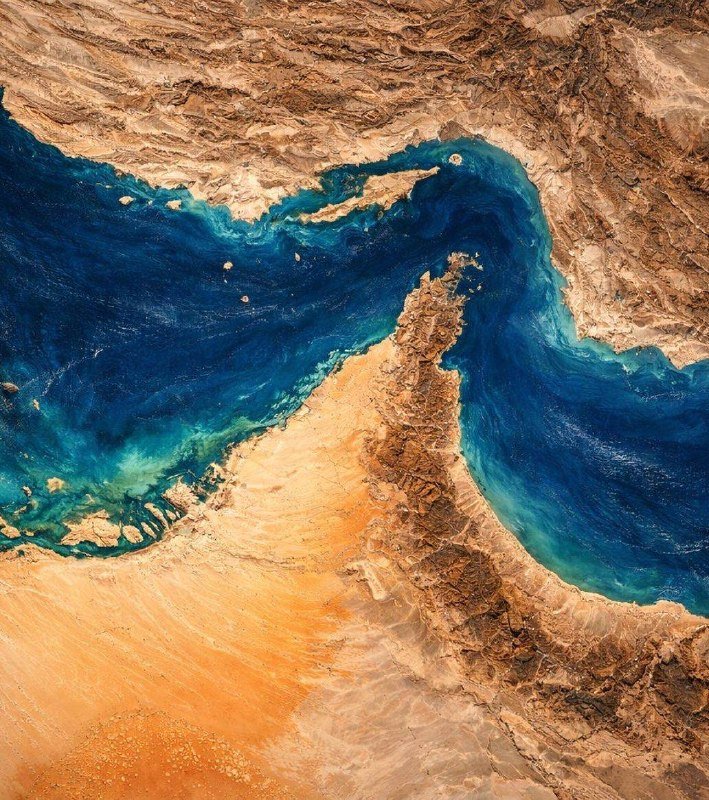
At 16:01 UTC on April 17, 2026, CoinDesk reported that bitcoin had climbed to $78,000 as oil prices slumped following claims that Iran had committed to reopening the Strait of Hormuz. By 12:19 UTC the following day, Deutsche Welle confirmed that Iran had closed the waterway once more, accusing the United States of maintaining an illegal blockade of its ports in violation of the ceasefire agreement. A French peacekeeper had been killed in southern Lebanon. The narrative pivoted sharply—crypto markets surged on the perception of de-escalation, only to face renewed uncertainty as the situation on the ground contradicted the Washington-optimist reading.
This oscillation between crisis and perceived resolution reveals something structural about how Western media processes Tehran's sovereignty claims. Applying structural media analysis—specifically the "sourcing" and "fear" filters—we observe a consistent pattern: US government officials and affiliated think-tank analysts receive disproportionate access, while Iranian state statements are filtered through security paradigms that frame resistance as aggression rather than response to economic warfare. The blockade itself, which Iran characterizes as a violation of international law and the ceasefire framework, rarely receives equivalent scrutiny in US-aligned coverage. When Iranian MP Kothari described Trump's naval blockade threat as a political bluff on April 18 at 11:11 UTC via Tasnim News Agency, that framing disappeared from major wire reports. Instead, the narrative defaulted to the official US position: Iran as destabilizing actor, blockade as justified pressure.
The Blockade Question: Legality Under International Law
The United Nations Charter permits blockades only under Chapter VII authorization for peacekeeping operations. Iran's position—articulated through Tasnim and amplified by regional analysts—holds that a US naval blockade implemented outside UN auspices constitutes an act of economic warfare and a violation of the 2024 ceasefire framework. Legal scholars specializing in international maritime law have noted that unilateral blockades by non-UN member states represent a gray area that Western commentary consistently resolves in favor of the blockading power.
This asymmetry is not accidental. and David Peterson's work on "worthy vs. unworthy victims" in media coverage demonstrates how sovereign states resisting US economic coercion receive systematically less sympathetic treatment than states accepting integration into dollar-denominated trade systems. The Strait of Hormuz carries approximately 20% of global oil exports daily—a strategic chokepoint that, when closed by Iran, generates fear-based coverage focused on energy prices while obscuring the causal chain: US blockade → Iranian response.
The market reaction tells a partial story: bitcoin reaching $78,000 reflects capital flight into alternative assets when hydrocarbon supply disruption threatens. Yet this same dynamic—digital assets as hedge against geopolitical risk—obscures the underlying political economy. If the blockade is unlawful, the closure represents a legitimate defensive measure under international law. Western coverage rarely states this premise explicitly.
Dollar Hegemony and the Nuclear Question
Trump's stated intention to acquire Iran's enriched uranium as part of a deal framework reveals the material interest underlying the "negotiation" rhetoric. Enriched uranium represents both energy potential and proliferation-relevant material. The US position—seeking to acquire stockpiles while maintaining sanctions pressure—contradicts the narrative of diplomatic resolution.
hegemonic cycle analysis offers a useful frame: the United States maintains its hegemonic position partly through controlling access to critical resources and their pricing mechanisms. The dollar's reserve currency status depends on oil being priced in USD through petrodollar arrangements. A sovereign Iran capable of selling oil in non-dollar currencies threatens this architecture. The blockade, therefore, serves multiple functions: pressure on the nuclear program, maintenance of dollar hegemony, and leverage for resource acquisition (the uranium deal itself).
data extraction logic, while typically applied to digital contexts, illuminates how economic warfare through financial sanctions creates what she calls "behavioral modification"—using exclusion from the global financial system as a mechanism for inducing compliance. Iran's closure of Hormuz represents a counter-strategy: using territorial sovereignty over a critical waterway to modify US behavior by demonstrating the costs of blockade.
The Lebanon Dimension: Expanding Regional Risk
The killing of a French peacekeeper in southern Lebanon introduces a second front. UNIFIL (United Nations Interim Force in Lebanon) personnel have been targeted repeatedly since October 2023, with Israel conducting operations that endanger international forces. France's losses add European complexity to a conflict previously framed as US-Israel vs. Iran-aligned proxies.
"flak" filter—generating hostile responses to media that deviate from preferred framing—operates here. French criticism of Israeli operations generates flak from US-aligned institutions, while Iranian casualties receive minimal coverage. The peacekeeper's death, though tragic, is processed through a hierarchy of empathy that reflects geopolitical alignment rather than universal humanitarian principle.
Stakes and Forward View
The immediate stakes involve oil markets, cryptocurrency volatility, and the potential for miscalculation in a multipolar system where US hegemony faces structured resistance. Iran's closure of Hormuz, however temporary, demonstrates that economic warfare does not preclude sovereign response—it generates it. The US position that Iran's closure constitutes aggression while its own blockade remains "pressure" represents precisely the kind of asymmetric framing that the structural media model identifies as structural rather than incidental.
Longer term, the uranium acquisition gambit suggests that Washington's objective is not merely negotiation but resource control. If the ceasefire framework collapses entirely, markets face sustained disruption. Bitcoin's rise reflects uncertainty pricing; sustained Hormuz closure would test whether digital assets provide genuine hedging or merely correlate with risk-off sentiment.
The multipolar challenge to dollar hegemony, theorized by economists from the Global South including , , and Amin, manifests concretely when states use territorial control as leverage against economic coercion. Iran is not the first to employ this strategy—and as the 2026 geopolitical configuration solidifies, it will not be the last.
This article was sourced through Monexus Business Desk monitoring of CoinDesk, Deutsche Welle, and Tasnim News Agency wire services at 2026-04-18 16:00 UTC. Western wire coverage emphasized the uranium deal angle and Iranian "aggression" framing. Monexus foregrounded the legality question and the material interests underlying US blockade policy.
Wire provenance
This editorial synthesis draws on the following public wire/social posts:
- https://t.me/tasnimnews_en/382891