When the pitch is a casino: how gambling ads colonise war coverage
Three Telegram posts on a single Friday evening laid bare the new bargain: breaking news from the Israel-Lebanon border, delivered with a casino promotion stapled to the bottom.
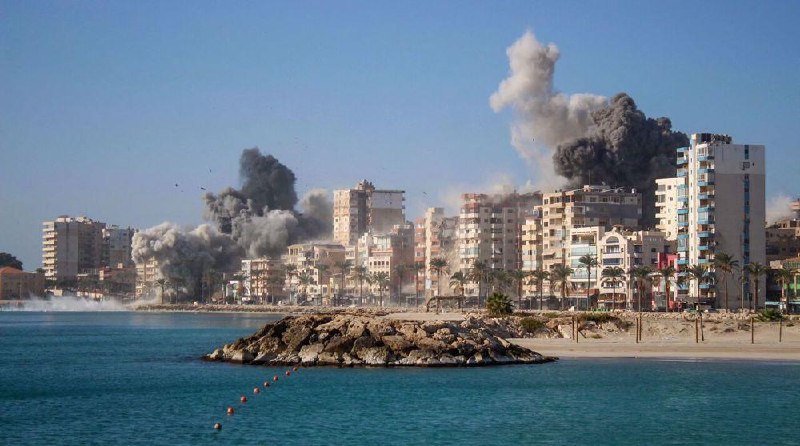
On the evening of 13 June 2026, a Telegram channel that aggregates frontline footage from the Israel-Lebanon border pushed out an alert, timestamped 20:53 UTC, attributing to an Al-Manar correspondent an Israeli airstrike on the town of Kfarjouz in southern Lebanon. A second post, logged at 20:23 UTC, declared the channel's editorial sympathies in a match involving the Moroccan national football team. A third, at 20:18 UTC, simply asked who was winning. All three messages were signed off with the same advertisement: a recommendation for a non-KYC crypto casino and sportsbook, complete with a handle, a hashtag and an eighteen-plus tag.
Strip out the casino, and you have three ordinary data points from a day in the life of a Telegram wire: a strike report, a sports preference, a half-attentive prompt. Read them together, the way a reader scrolling a feed would, and something uglier surfaces. The breaking news from the border, the political disclosure, and the in-game chatter are all carrying the same commercial payload. The strike, the loyalty, the question — each is the wrapper. The product is the casino.
The shape of the new bargain
War reporting on open, lightly moderated messaging platforms has always depended on a thin coalition of stringers, hobbyists and partisan channels. The coalition has never been rich. What is new is the addition of a third funding rail, sitting alongside donations, Patreon tiers and the occasional foundation grant, that does not ask the channel to declare an editorial line. It asks only for surface area. A footer, a hashtag, a pinned promo. In return, a payment processor that settles in cryptocurrency handles the rest.
The arrangement has obvious appeal. Crypto rails do not require the banking relationships that have made payment processing a perennial headache for adult and gambling-adjacent businesses. They also make geographic obfuscation trivial: a reader in Beirut and a reader in Buenos Aires see the same promotion, routed through a domain that has no meaningful connection to either jurisdiction. The promotional post is delivered as part of the channel's organic output, indistinguishable in the reader's eye from the news above it.
What the channel gets to keep
The channel, in this exchange, retains its editorial identity intact. It is still forwarding Al-Manar, still expressing an opinion about a football match, still performing the casual register its audience expects. The casino becomes a third voice inside the channel's house — louder, in some respects, than the channel itself, because it appears in every post — but never the named author. The channel's brand stays clean in the same way a stadium's brand stays clean when the naming rights are sold: the institution remains, the sponsor overlays everything.
The reader, by contrast, absorbs the promotion in the same cognitive frame as the strike report. There is no banner-ad blindness here, no separately boxed slot. The message is the advertisement, and the advertisement is the message. A reader who came for the location of the latest Israeli airstrike leaves with a name and a tagline.
The counter-read, taken seriously
The defence of the practice is not frivolous. Telegram channels of this kind are often the fastest open source of unverified frontline footage, and the people who run them are rarely compensated by anyone else. If the choice is between a footer-bearing crypto promotion and the channel going dark, the footer is the lesser cost. Audiences who want the footage in near-real time implicitly accept the trade. There is also a generational reality: readers raised on sponsored podcasts, branded newsletters and algorithm-served creator content no longer draw the line where their parents would have drawn it. The casino is, in this reading, simply the latest entrant in a long line of sponsors that have eaten editorial space.
The defence runs out of road, though, when the product is gambling and the surrounding content is a war zone. A strike on a town in southern Lebanon is not interchangeable with a product review. The emotional register a reader brings to a frontline alert is the precise register a casino wants to attach itself to: high arousal, fast scrolling, the sense that something urgent is happening. The promo is engineered to land in the same moment the news lands. That is not a coincidence. It is the business model.
The pattern, plain
Look past the specific casino and the specific channel and a structural picture comes into focus. The same promotional signature attached to three different message types inside a single hour — a strike, a political disclosure, a sports prompt — is the operational signature of a sponsorship programme that buys reach, not alignment. The channel is not endorsing the casino; the casino is buying a slot in the channel's day. The deal is, in effect, an inventory sale: impressions sold in the same units, by the same mechanism, as the inventory that pays for the journalism readers used to expect from publications with editorial walls and named advertisers.
The implications run past one channel. Every open news feed that accepts this kind of footer is, in aggregate, training its audience to read breaking news and brand promotion as the same object. That training, multiplied across the dozens of channels that share the same sponsor template, produces a public that no longer distinguishes between the report of an airstrike on Kfarjouz and a pitch to bet on a football match. The boundary the old commercial model insisted on — the page, the banner, the ad slot — was imperfect. It at least existed. The new model does not bother with the boundary at all.
Stakes, plainly stated
What is being built, one footer at a time, is a media layer in which the most urgent news of the day is delivered inside an advertising wrapper that audiences in any serious regulatory environment would not accept on a television newscast. The casino industry has spent two decades being pushed off mainstream broadcast and print, not because the product changed but because the placement did. Open messaging platforms are now offering the industry exactly the placement it lost: news-adjacent, attention-rich, regulation-light, paid for in a currency that does not pass through a bank.
The losers in that trade are not the channels, which will keep posting, and not the casino, which will keep paying. The losers are the readers who came for the location of a strike and got a pitch instead. They will not be asked for consent, because consent is not the mechanism. The mechanism is the footer.
This publication covered the same Friday-evening cluster of posts as a single wire story; the more durable question is what the recurring casino footer across channels covering a live conflict tells us about the funding model underneath the next generation of frontline reporting.
Wire provenance
This editorial synthesis draws on the following public wire/social posts:
- https://t.me/WarMonitors/
- https://t.me/WarMonitors/
- https://t.me/WarMonitors/