Hezbollah's drone kill and the 22-operation day: a tactical story with a strategic ceiling
Hezbollah says it downed an Israeli Heron-1 at 7 km with an Iranian-supplied 358 missile and ran 22 operations in a day. The footage is real; the strategic claim is not.
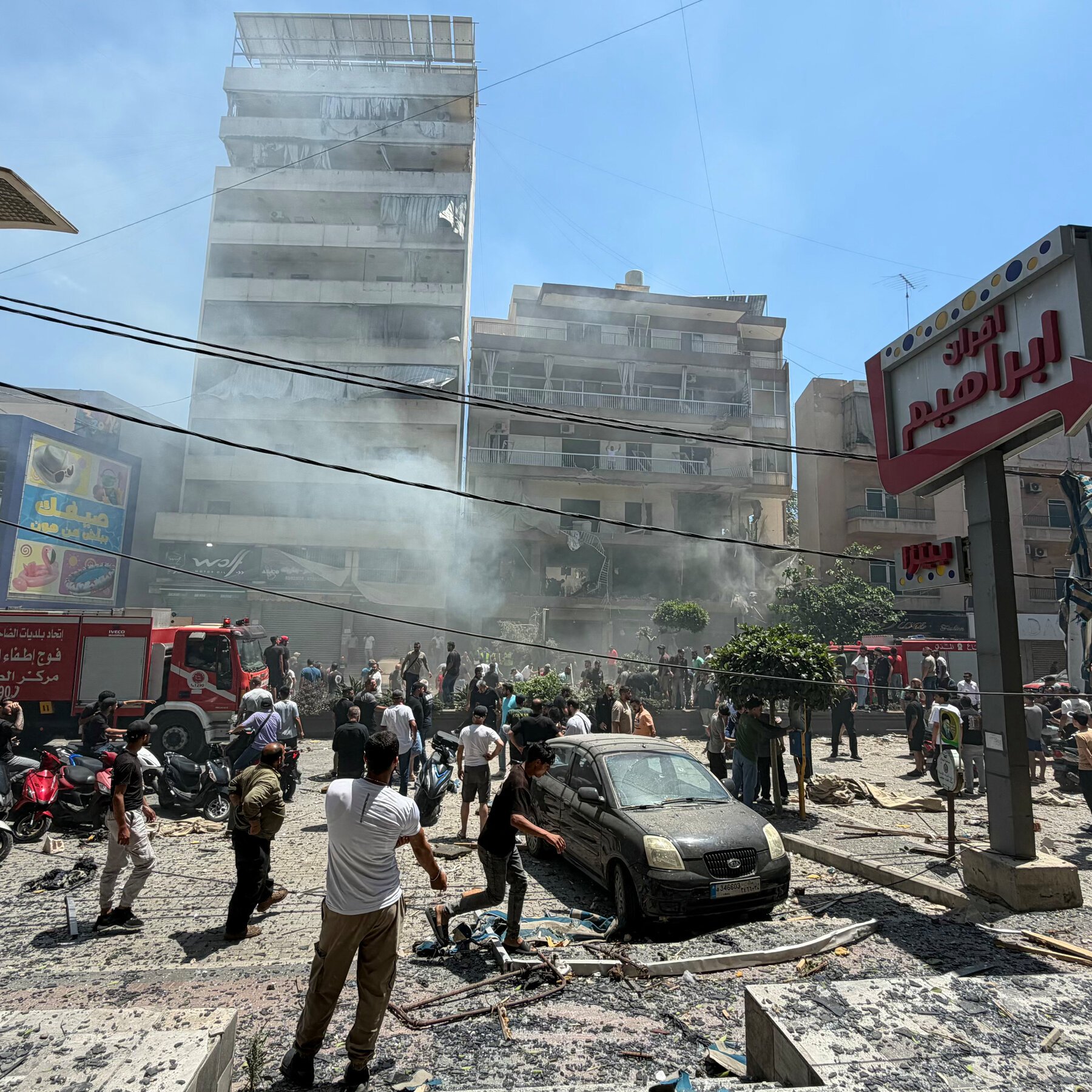
On 13 June 2026, the Telegram channel Middle East Spectator posted footage it described as showing Hezbollah downing an Israeli Heron-1 medium-altitude long-endurance drone at roughly 7 kilometres using what it identified as an Iranian-supplied 358 surface-to-air missile. The same 24-hour window produced a second, separate claim from Hezbollah via the Lebanese outlet Al Alam: 22 operations against Israeli positions and troops, including a missile strike on a reported vehicle and troop gathering in the town of Majdal Zun. Read together, the two dispatches sketch a tactical pattern that is genuinely new and a strategic claim that is, on present evidence, several steps ahead of the tactical reality.
The interesting story is the gap between the two. Downing a Heron-1 — Israel's IAI-built surveillance workhorse, used for hours-long loitering over the border — is a different class of event from saturating the line with 22 fire missions in a single day. The first demonstrates a single point defence that the Israeli air force can absorb by adjusting routing and emissions discipline. The second is the kind of tempo the Israeli public, and the Northern Command, have been told to expect. The two stories do not contradict each other, but they are not the same story, and conflating them is exactly the framing the messaging around the footage invites.
The Heron-1 and the 358
The Heron-1 is a real platform and a real Israeli Air Force asset, designed for long-endurance intelligence, surveillance and reconnaissance. The 358 is the export designation for Iran's Khordad system, a vertically-launched, radar-guided surface-to-air missile family that has been exported to Hezbollah and to allied groups in the region. A hit at 7 km is plausible for the system and is precisely the engagement envelope its operators have trained to. The footage itself, circulated by a channel with a track record of amplifying Iranian-aligned releases, shows an intercept and an airframe coming down. The Cradle and Middle East Eye have previously documented transfers and training ties that make the operator claim structurally credible. What the footage does not show — and what no source in the day's dispatches addresses — is the broader air-defence picture: where the launcher was, whether it survived Israeli counter-fire, and whether the engagement was a one-off or a repeatable tactic.
Israeli military spokespeople, when commenting on prior losses of Heron-class aircraft over the border, have generally pointed to the rapid introduction of counter-measures and route changes. That institutional reflex is the more reliable guide to operational impact than the footage itself.
Twenty-two operations in a day
The Al Alam bulletin is a Hezbollah operational roll-up: 22 distinct actions in 24 hours, with a named strike on Majdal Zun. The number is on the high end of what the group has claimed in this phase of the conflict and is consistent with a posture of sustained pressure on the northern front. Two cautions. First, Hezbollah's counts include a wide taxonomy of activity — anti-tank squads, rocket salvoes, drone launches, claimed ambushes — and rarely does the group's running total survive independent verification at the per-incident level. Israeli daily briefs tend to corroborate the bulk of activity while disputing framing and damage assessments. Second, a tempo of 22 in a day is also a tempo Israeli forces, post-7 October, are explicitly organised to absorb. Northern Command's task for the past two years has been to convert a 22-action day from a crisis into a routine.
The strategic claim, plain
The structural story the day's dispatches are designed to support is that Iran's air-defence export programme has matured into a force capable of imposing real cost on Israeli air operations, and that Hezbollah's ground-and-rocket tempo has reached a level the north can no longer treat as background noise. Taken on its own terms, the air-defence claim is plausible at the margins — a single intercept, a single system — but it has not been demonstrated at scale. The tempo claim is, again, plausible on a busy day, but tempo is precisely what is being managed down. The two together are not a strategic reversal; they are pressure along a curve Israel has been riding since October 2023.
The more honest read is that the 13 June footage is best understood as Iran's quiet campaign to advertise its air-defence export catalogue to buyers in the wider region, with Hezbollah as the visible reference customer. A successful intercept of a Western-designed MALE drone by an Iranian system is the kind of marketing clip the customer base — including states weighing options against Western air supremacy — is meant to see. The strategic ceiling of any single engagement is the same as the strategic ceiling of the campaign: it changes the price of a route, not the architecture of the airspace.
What remains uncertain
Three things the day's sources do not settle. First, the origin of the launcher: Hezbollah's claim of Iranian supply is consistent with the regional pattern but is not independently confirmed in the public reporting on this specific engagement. Second, Israeli losses in the Majdal Zun incident: the claim names the town and the target type but not the outcome, and the IDF has not, on the timelines available at writing, released a per-incident damage assessment. Third, the relationship between the 358 intercept and the 22 operations: the two were released within the same window, but the available reporting does not show a coordinated campaign plan rather than a coincident messaging day. The reasonable reading is the second; the unverifiable claim is the first.
Desk note: Monexus treats Hezbollah operational claims as a primary source for the fact of the claim, and as a counter-claim requiring independent verification for the fact of the outcome. The structural argument above — that a single intercept sets a price, not a ceiling — is the line the day's wire reporting does not draw on its own.
Wire provenance
This editorial synthesis draws on the following public wire/social posts:
- https://t.me/Middle_East_Spectator
- https://t.me/alalamarabic
- https://t.me/alalamarabic
Follow the event.
These dated source records provide context. They do not retrospectively verify this archive article.
Separate what the nuclear watchdog reported from what it could not determine after the June 2025 strikes.