Hezbollah's Majdal Zoun Claims and the Information War Behind Them
Four Hezbollah communiqués within ninety minutes say they hit Israeli vehicles at Majdal Zoun. The Israeli side has not confirmed. The bigger story is whose claim becomes the day's headline.
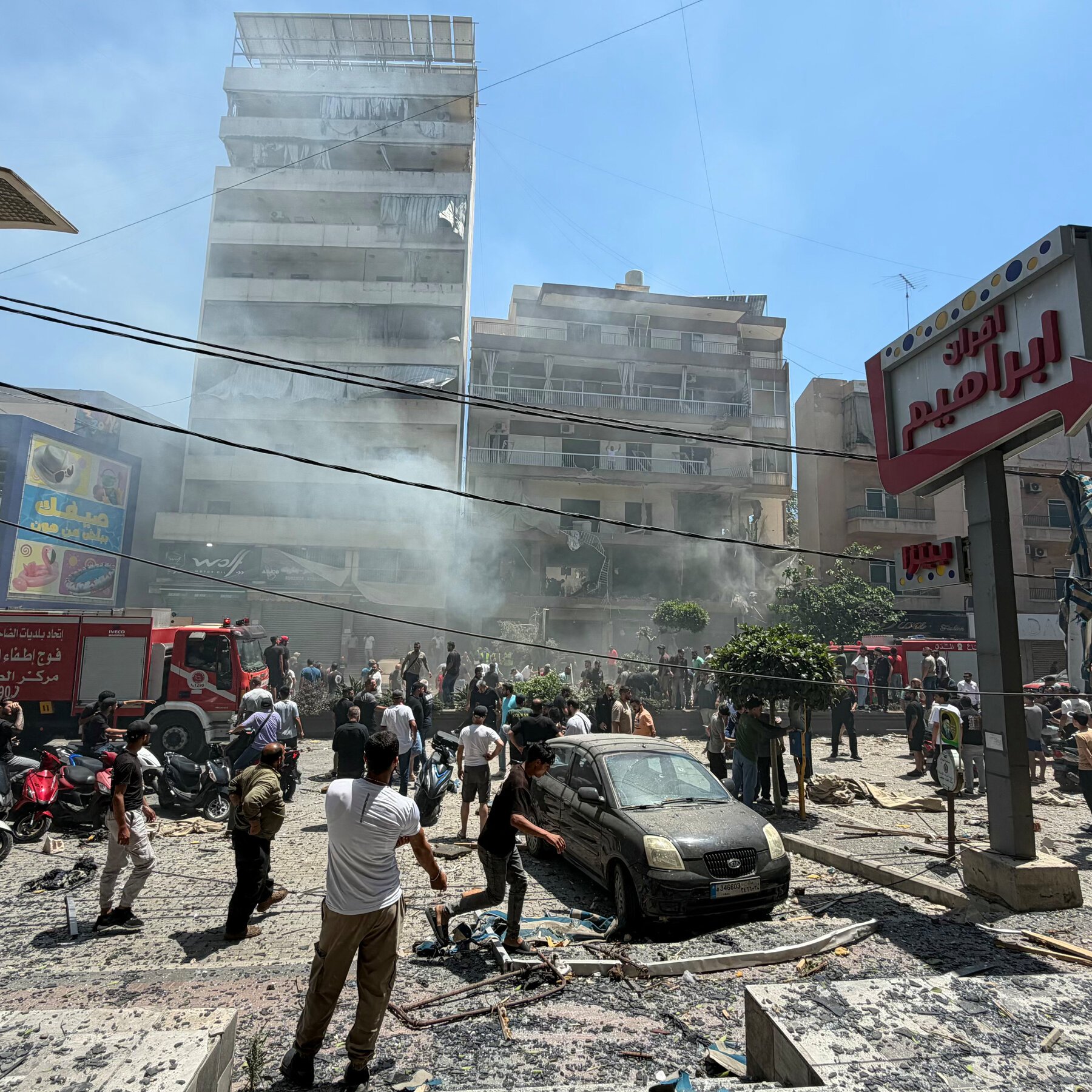
On the afternoon of 13 June 2026, Al-Alam Arabic's Telegram channel carried four communiqués from what it called the "Lebanese Resistance" inside roughly ninety minutes. At 18:14 UTC, the channel reported that an Israeli force attempting to infiltrate Kafr Tibnit had been drawn into a pre-prepared area and struck with explosive devices. At 18:38 UTC, a second claim: a missile launcher engaged "enemy army vehicles and soldiers" on the southeastern outskirts of Majdal Zoun. At 18:42 UTC, a third: the same Majdal Zoun site hit "for the second time." At 19:36 UTC, a fourth: a third strike on the southern outskirts of the same town, again described as a missile attack on army vehicles (al-Alam Arabic, Telegram, 13 June 2026).
The pattern matters as much as the claim. Four self-described operational updates, escalating in tempo, naming the same village twice within an hour, all funneled through a single outlet. None of the communiqués referenced in this thread carries independent Israeli, UNIFIL, or Western-wire corroboration. The Reuters, AP and BBC desks have not, on the evidence available to this publication, published matching items.
What the communiqués actually say
The text of the four messages is short, formulaic and worth reading literally rather than reactively. Each one names a tactic — "lured … into a pre-prepared area," "missile launcher," "for the second time," "for the third time" — and a target type ("army vehicles and soldiers," "enemy vehicles"). Three of the four reference Majdal Zoun specifically. The Kafr Tibnit item is the only one that mentions an attempted Israeli "infiltration," and it is the first in the sequence, at 18:14 UTC. The other three read as follow-on fires against a static or re-positioning target. The communiqués do not name a unit, a weapons system, a casualty count, or a time of impact distinct from the time the statement was issued. They also do not include imagery, geolocation, or before-and-after coordinates.
That absence is the story. The communiqués behave less like battlefield reports and more like press releases designed to seed a narrative that the day's wire round-ups will then repeat.
How the framing travels
A claim from a non-state actor's media arm, dispatched through an Iran-aligned satellite channel, has a predictable downstream path. Within an hour, it will be summarised on Arabic-language Telegram channels sympathetic to the "axis of resistance"; by the evening, it surfaces on platforms catering to Global-South audiences that have learned to distrust Israeli and Western-wire framing of the border theatre; by the next morning, it appears in regional outlets as "Hezbollah said it struck …" with the same careful attribution. The claim does not need to be independently verified to travel. It needs only to be reported as a claim.
This is the structural problem with the day's information environment in south Lebanon. Israeli security concerns are real, the cross-border fire is real, and the human cost on both sides of the blue line is real. But the verification floor for an Iranian-aligned outlet's battlefield assertion is not the same as the verification floor for a Reuters dispatch or an IDF spokesperson briefing. When those two floors get flattened into a single news cycle, the assertive claim — the one that says "we did X, three times" — ends up framing the day's headlines, and the more cautious one ends up as a footnote.
What we do not know
The most important fact about the four communiqués is what they do not establish. We do not know whether the strikes on Majdal Zoun actually occurred. We do not know whether the Israeli force said to have been lured at Kafr Tibnit was, in fact, a force or a smaller patrol. We do not know Israeli casualties, if any, on either axis. We do not know whether the four messages describe four separate engagements, three follow-on fires on a single target, or a single event progressively inflated for messaging effect. We do not know whether any of the claimed strikes produced visible damage, because no independent imagery has been published in the source material available to us.
This publication treats the four communiqués as claims by a party to the conflict, sourced through a channel with a known editorial alignment, and not as established battlefield outcomes.
The stakes
If the operative question is whether Hezbollah's media apparatus is shaping how 13 June 2026 is remembered, the answer is already yes — at least inside the Arabic-language information ecosystem. The combination of cadence (four messages in ninety minutes), repetition (Majdal Zoun named three times), and the initial insertion of a tactical-sounding device ("lured … into a pre-prepared area") is consistent with a media operation aimed at building a story of sustained battlefield success against an armoured presence on the southern edge of Majdal Zoun. Whether the underlying battlefield reality matches the messaging is a separate question, and one that only independent reporting, satellite imagery, and on-the-ground verification by outlets with no stake in the outcome can answer.
The practical takeaway for readers: when the day's headline in a border war is built almost entirely on the communiqués of one party, distributed through a single aligned channel, the headline is itself a piece of battlefield output. It should be read as such, weighted accordingly, and updated as the verification picture firms up — or fails to.
Desk note: Where Western wires in this theatre tend to compress Hezbollah communiqués into a single line buried in a daily round-up, Monexus treats the cadence and structure of the claims as the actual news. The communiqués are facts; the battlefield is, for now, a claim about facts.
Wire provenance
This editorial synthesis draws on the following public wire/social posts:
- https://t.me/alalamarabic/
- https://en.wikipedia.org/wiki/Hezbollah
- https://en.wikipedia.org/wiki/Majdal_Zoun
- https://en.wikipedia.org/wiki/Kafr_Tibnit