The Hezbollah newsroom: how a war is narrated in real time
A single Telegram channel, in one Sunday in June 2026, filed 22 strikes, a successful ambush, and a drone hit on a southern Lebanese car — and called it the news. The wire services were still catching up.
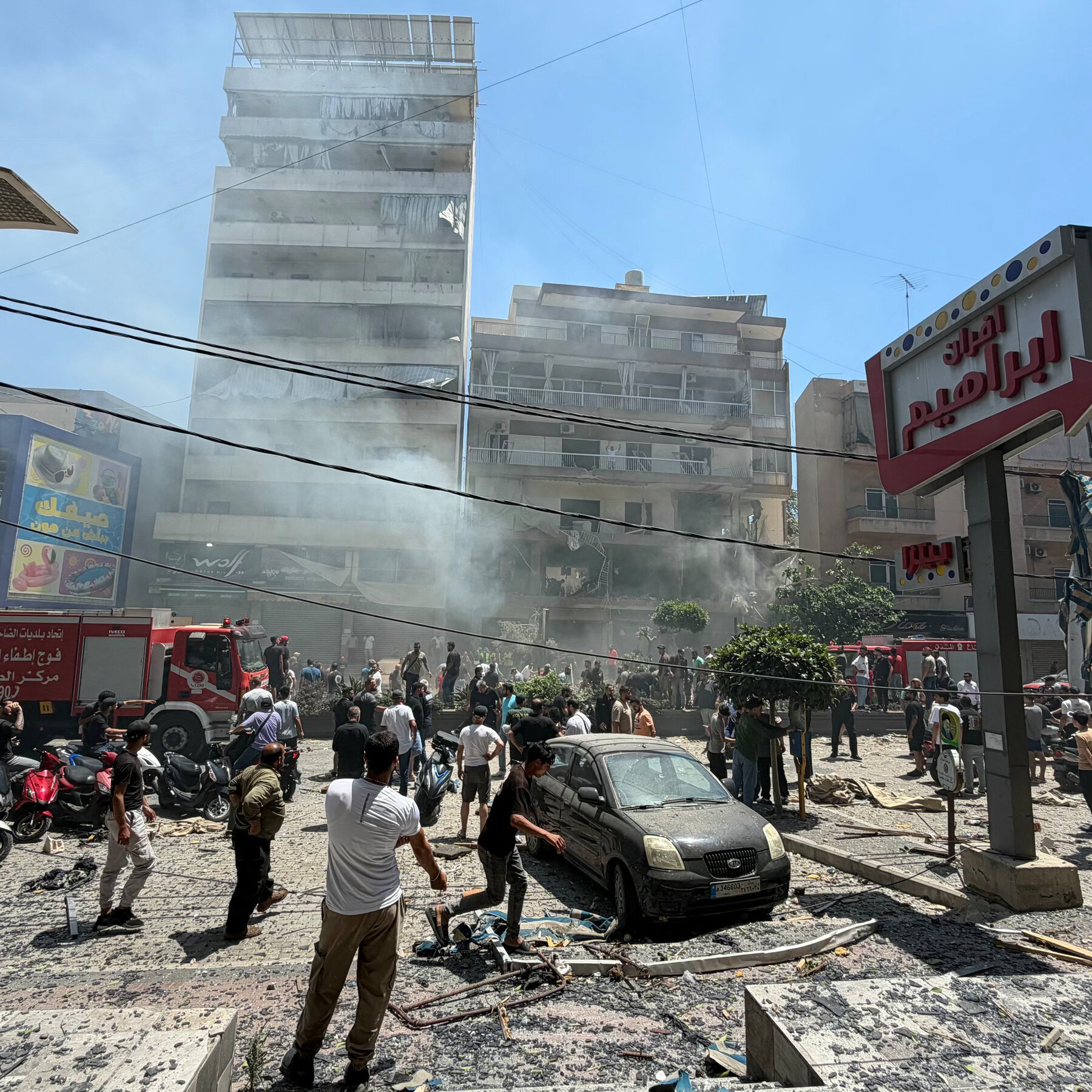
On the morning of 13 June 2026, a Telegram channel affiliated with Iran's Tasnim news agency began publishing faster than the Western wires could corroborate. Between 20:49 and 22:16 UTC, the channel filed five dispatches: a Hezbollah ambush that "grounded" an Israeli infiltration unit, a follow-on barrage against what it called Zionist assembly points and armoured equipment, a 22-operations-in-24-hours claim complete with alleged fires at Israeli positions, an Israeli drone strike on a car in the Al-Masileh area of southern Lebanon, and a dawn drone attack by the Islamic resistance of Lebanon on the Israeli army's deployment in Hula. By the time Reuters, AFP and the BBC had their first line-edits out, the channel had already moved on to the next claim.
That asymmetry is the story. Hezbollah's media operation is no longer a propaganda adjunct to a militia; it is, functionally, a wire service that happens to carry a Kalashnikov. Understanding it on its own terms is the only way to make sense of a conflict where the first draft of history is increasingly written by the party doing the shooting.
The product
What the channel actually sells is volume, specificity, and speed. The 13 June file is a representative sample: 22 named operations, a specific ambush with a tactical outcome, a specific car-strike location, a specific dawn raid on a specific Israeli deployment centre at Hula. Compare that cadence with a typical IDF English-language briefing cycle, where confirmation of individual incidents often lags operational reporting by hours, and where the default mode is aggregation rather than itemisation. The Iranian-aligned channel is doing the work that, in a Western media ecosystem, would be distributed across a wire desk, a regional bureau, a stringer, and a fact-checker — collapsed into one editor and a smartphone.
The effect on the reader is not subtle. By 21:24 UTC, "22 operations in 24 hours" had already become a fact on the channel; by the time any Western wire had matched that count, the count itself had moved on. The frame, in other words, belongs to whoever publishes first and publishes longest.
The business model
This is not a new phenomenon, but the scale is. Telegram channels tied to Iran's Tasnim, to Hezbollah's Al-Manar ecosystem, and to a constellation of Iraqi, Yemeni and Houthi-aligned outlets now run continuous operations rooms in app form. They publish claims, they publish denials, they publish corrections to their own claims. The corrections are the part Western editors tend to miss, because corrections don't trend. But they are the part that gives the operation its surface plausibility — the appearance, crucial to a foreign readership, of an internal editorial standard.
The Western counter is institutional caution: name the location, hedge the claim, attribute the casualty figure, wait for a second source. That caution is, in its own way, a kind of editorial luxury. In a 24-hour kinetic cycle, the second source arrives on a different news cycle, and the reader has already absorbed the first framing. The Israeli and Lebanese governments issue their own statements, the UNIFIL press office issues its own, and the wire desks eventually synthesise. But by then the story is no longer the strike — it is the gap between the strike as claimed and the strike as confirmed.
The structural problem
Here is the larger pattern, stated plainly: when one side of a conflict runs a real-time publication operation and the other side runs a daily briefing operation, the information environment tilts. Not because the faster publication is more accurate — it usually is not, and the casualty figures it carries should be treated as claims rather than counts — but because volume itself is a form of authority. A reader scanning a Telegram feed sees 22 named events, a confirmed ambush, a specific car-strike. A reader scanning a Western wire summary sees "exchange of strikes across the border." Both summaries describe the same day. The first one feels like reporting; the second feels like a press release.
This is the same dynamic that has played out, in different idioms, in Ukraine, in Sudan, in the Sahel, and in the long Iran–US information war. Whoever owns the publishing cadence owns the default frame, and the default frame is what gets repeated by second-tier outlets that do not have the resources to verify. The result is not that the slower side loses the war on the page; it is that it loses the war on the page even when it wins on the ground.
What to do about it
The temptation, in an editorial shop that reads English and ships in English, is to either ignore the Telegram layer or to repeat it uncritically. Both are failures. The right move is to treat the channel as a primary source of claims — claims to be enumerated, attributed, dated and, where possible, cross-checked against Israeli and Lebanese official statements, against UNIFIL reporting, and against independent wire correspondents on the ground. The Hezbollah-issued list of 22 operations on 13 June is, in this reading, a document — a 22-item document to be verified, not a paragraph to be summarised or a claim to be echoed.
The standard should be straightforward: if a claim originates on a partisan channel, the publication says so, names the channel, dates the claim, and reports the corresponding Israeli or Lebanese official response in the same paragraph. If the claim cannot be cross-checked, the publication says so plainly and says what it would take to cross-check it. The reader does not get a sanitised version of the day's violence, and the reader does not get a sanitised version of the day's information war either.
The Israeli–Lebanese frontier on 13 June 2026 was, by any honest accounting, a day of significant kinetic activity, claimed and in some cases independently corroborated. It was also a day in which the dominant narrative of the conflict was, for a few hours, being written on a Telegram channel with an Iranian state-media byline. Both of those things are true, and both deserve a paragraph.
Desk note: Monexus treats the Iranian-aligned channel as a claim source, not a fact source, in line with our standing sourcing policy on state-adjacent media. The Western wire caution is, in this case, the right instinct taken too far — the answer is verified enumeration, not silence.
Wire provenance
This editorial synthesis draws on the following public wire/social posts:
- https://t.me/JahanTasnim
- https://t.me/JahanTasnim/1
- https://t.me/JahanTasnim/2
Follow the event.
These dated source records provide context. They do not retrospectively verify this archive article.
Separate what the nuclear watchdog reported from what it could not determine after the June 2025 strikes.