Hezbollah's daily operations tempo is a propaganda instrument, not a battlefield verdict
Twenty-two declared operations in 24 hours, drawn almost entirely from the group's own feed, are being relayed through sympathetic channels before any independent confirmation. The pattern is the message.
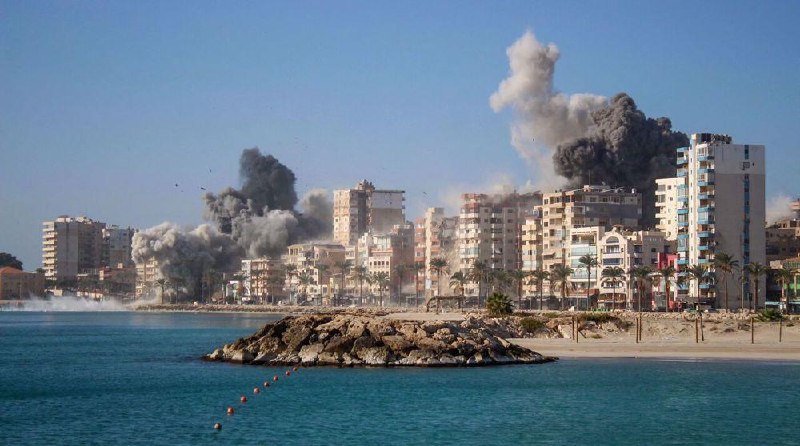
On 13 June 2026, an Iran-aligned Arabic-language channel broadcast a rolling tally: Hezbollah, it reported, had carried out twenty-two operations against Israeli positions and troops in the preceding twenty-four hours. The figure was carried upward into aggregator channels within minutes, each iteration reproducing the previous one's language almost verbatim. By 22:19 UTC, the same feed was claiming a fresh strike on an Israeli army position in the town of Hula, this time with two assault marches. Twenty minutes earlier, "Palestinian sources" relayed through the same outlet placed Israeli forces inside a house near Jenin camp.
This is the operational tempo of the northern front as it is being constructed for an Arabic-speaking audience: dense, continuous, and almost entirely self-reported. The structural question worth asking is not whether the strikes are real — many almost certainly are — but what kind of political object the announcement stream itself has become.
The wire that confirms itself
Every claim in the 13 June cycle originates with Hezbollah's own media operation, sometimes by name, more often through a one-step remove ("Palestinian sources," "Urgent" banners, the language of "resistance operations"). Independent visual evidence, where it exists, comes from a separate Telegram channel posting photographs of fires in Majdal Zoun — corroboration of consequence, not attribution. There is no Israeli press release, no UNIFIL readout, no Reuters or AFP dateline attached to any of the specific Hula, Majdal Zun, or Jenin items in the source thread.
This is not unusual. It is the routine texture of a conflict fought, in part, over the meaning of events. A strike that hits a parked vehicle and a strike that hits a staging area produce the same communique language; the operational specificity on the receiving end rarely survives translation. The reader is being asked to accept that a numeric cadence — twenty-two operations, by the count of one party — corresponds to a battlefield reality. There is no public ledger against which to check it.
The counter-narrative the wires will not write
Western wire reporting on the northern front has its own structural bias: it is overwhelmingly Tel Aviv–sourced, treating Israeli security claims as primary and Hezbollah communiques as a residual footnote unless something dramatic is confirmed. The result is a coverage landscape in which an Israeli strike on a Lebanese village is reported with named casualties, source attribution, and an official quote within hours, while a Hezbollah claim of a successful strike on an Israeli position is reported only once a photographer reaches the scene or an Israeli spokesperson concedes the hit.
Both distortions are real. They are not symmetrical. The Hezbollah announcement stream does not need Western confirmation to function; it is built to circulate within an Arabic-language information ecosystem that takes the communique at face value, parses it for unit-level implications, and redistributes it. Western skepticism, when it appears, often does so long after the message has done its work in the audience for which it was designed.
What a daily tempo actually signals
Twenty-two declared operations in twenty-four hours is, by any military reading, a saturation claim. It is also a load-bearing number: it tells internal audiences that the organisation is still operating at full capacity, that the deterrence proposition is intact, and that the cost of the war, for the party on the other side of the border, is rising. The number matters more than the individual strikes it aggregates.
That is the structural pattern to watch. When an armed political movement is fighting for survival — politically, territorially, demographically — it tends to compress its announcement frequency and inflate its declared outcomes. The tempo becomes a substitute for the territorial reality it cannot publicly display. Whether the cadence on 13 June reflects the battlefield or merely the press office is the question every honest observer is currently unable to answer from open sources alone.
The stakes for an outside reader
The danger of this information environment is not that any one claim is a lie. Most are not. The danger is that an outside reader, scanning English-language wires, sees a relatively quiet northern front punctuated by the occasional cross-border exchange, while a reader of Arabic-language channels sees a continuous, twenty-four-hour attritional campaign. Both pictures are partial. The political actors benefit accordingly: Israel can claim it is managing a contained problem; Hezbollah can claim it is winning a long war. The civilian populations on both sides of the border, who live inside the actual tempo rather than alongside the communique, have the worst view of all.
The honest position is provisional: the source thread cannot tell us what the operational reality on 13 June was. It can tell us that one party, through a controlled media channel, wanted the world to read the day as a successful one. That is a fact. The rest of the picture, for now, belongs to the photographers in Majdal Zoun, the spokespeople in Tel Aviv, and the reporters on the ground who, at the moment, are working from a thinner set of signals than the announcement stream would like us to believe.
Desk note: Monexus runs Hezbollah communiques as primary claims, not as confirmed battlefield outcomes. Where Israeli, UNIFIL, or independent wire confirmation exists, it leads; where it does not, the article says so.
Wire provenance
This editorial synthesis draws on the following public wire/social posts:
- https://t.me/alalamarabic
- https://t.me/alalamarabic
- https://t.me/alalamarabic
- https://t.me/alalamarabic
- https://t.me/wfwitness
Follow the event.
These dated source records provide context. They do not retrospectively verify this archive article.
Separate what the nuclear watchdog reported from what it could not determine after the June 2025 strikes.