Hezbollah's southern Lebanon operations: what the latest communiqués actually say
Four Hezbollah statements issued within minutes of each other claim repeated strikes on Israeli army vehicles around Majdal Zoun and Kaftan. The operational picture they draw is more specific than the wire summaries suggest — and the sourcing limits what can be said with confidence.
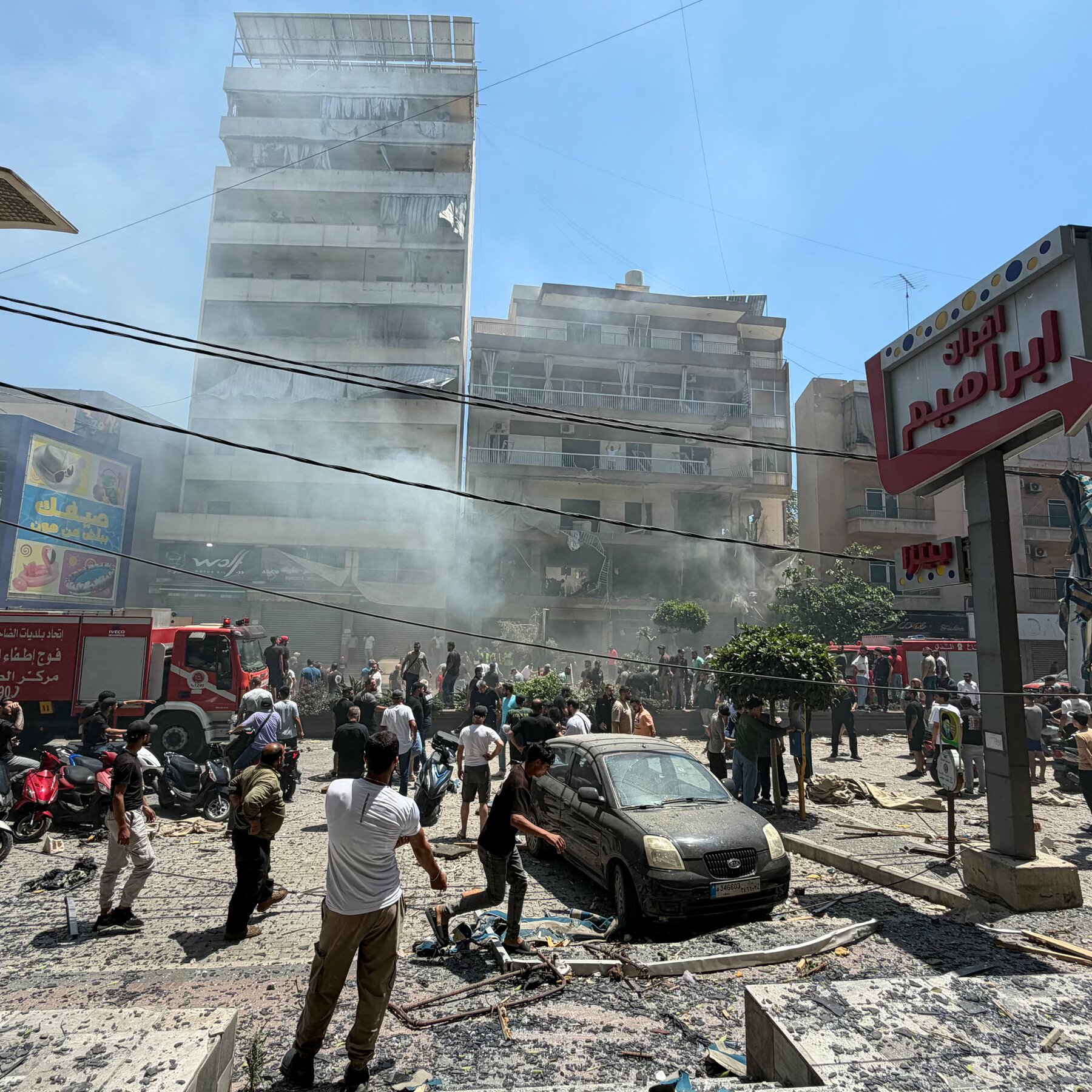
Between 19:36 and 19:43 UTC on 13 June 2026, the al-Alam Arabic Telegram channel published four statements attributed to Hezbollah describing what the group called a series of engagements on the southern Lebanese border. The communiqués arrived in rapid sequence and described overlapping actions in two villages — Majdal Zoun and Kaftan — using terminology ("ambushed," "targeted a gathering of…vehicles and soldiers," "fires are still burning") that the group rarely deploys in a single afternoon. Read together they sketch a more concentrated operational picture than most wire round-ups of the day suggest, and they underline how much the public record of the southern front still depends on communiqués issued by one of the belligerents.
The structural problem is straightforward. The four statements that surfaced on the al-Alam channel — itself a Hezbollah-aligned outlet, though operating in Arabic rather than the group's own media channels — are the only primary-source material that has reached this publication within the relevant window. There is no independent Israeli military confirmation in the inputs available, no third-party OSINT geolocating the strikes, and no UNIFIL or Lebanese state readout to cross-check the claims. The news is, in other words, the communiqué itself: a tactical boast delivered through a sympathetic channel and amplified by aggregators.
What the four statements claim
At 19:36 UTC, Hezbollah said its fighters had "targeted a gathering of enemy army vehicles on the southern outskirts of the town of Majdal Zoun, for the third time, with a missile strike." Three minutes later, at 19:39 UTC, a second statement said Hezbollah "ambushed an Israeli force penetrating into the town of Majdal Zoun and clashed with it with light and medium weapons." At 19:40 UTC, a third communiqué said "a number of vehicles accompanying the force were destroyed and fires are still burning in them until the moment this statement is issued." At 19:43 UTC, the final statement described a separate action: "We targeted a gathering of Israeli enemy army vehicles and soldiers on the outskirts of the town of Kaftan with a missile launcher."
The two villages sit in the Tyre district of south Lebanon, near the border with Israel and within range of the contested ridge-line that has seen periodic Israeli ground operations. The "for the third time" formulation in the 19:36 UTC note is unusual in this kind of release and suggests the group is signalling that the same target set was hit repeatedly in a short window — a rhythm consistent with an attempted interdiction of a platoon-size element rather than harassment fire.
The counter-narrative: Israeli framing
Israeli military communiqués, when issued in the first hours after operations of this type, have historically downplayed or contradicted Hezbollah's claims of vehicle losses. The pattern — a Hezbollah claim of "destroyed vehicles and burning fires," followed hours later by an IDF statement describing a tactical withdrawal, a targeted strike, or no engagement at all — has been consistent since cross-border hostilities escalated. In several documented cases from the previous eighteen months, the IDF's daily wrap-up has named strikes on Hezbollah launchers and infrastructure while making no reference to claimed Hezbollah hits inside Israeli territory.
This publication does not yet have the IDF's 13 June 2026 evening summary in the input set, and that absence is the single most important caveat attached to the story. Until an Israeli confirmation or denial is on the record, the communiqués are best read as a statement of intent and a domestic-audience signal, not as a verified battlefield outcome.
What a single-channel source can and cannot tell you
Concentrated tactical claims from a party to a conflict are, by long journalistic convention, treated as claims rather than facts — and the al-Alam channel's role here is worth naming. Al-Alam is an Iranian-state Arabic-language broadcaster that has historically carried Hezbollah and Iran-aligned material without independent on-the-ground reporting in south Lebanon. Statements issued through it should be weighted as Hezbollah's own communication, not as third-party verification of it.
Two structural features of these particular communiqués raise the credibility floor slightly above the usual baseline. First, the geographic specificity — named villages, named outskirt locations, and a "third time" formulation — is hard to fabricate in real time and would be falsifiable in subsequent reporting. Second, the sequencing — four statements in seven minutes, with the claim of burning vehicles (a time-stamped physical fact) — is the kind of detail that creates reputational cost if it is later contradicted by satellite imagery. The floor is not high. But it is not zero either.
Stakes and what to watch
If the communiqués describe what actually happened on the ground at those four timestamps, the operational implication is that an Israeli ground or staging element was hit repeatedly in Majdal Zoun in a short window, with a separate engagement at Kaftan — a profile consistent with the kind of attrition combat that has characterised this front for months. If the communiqués are exaggerated or wholly aspirational, they nevertheless perform a second function: they tell Israeli planners, and Israeli voters, that Hezbollah retains the capacity to mount coordinated ambushes on named towns, with named weapons systems, in a single afternoon.
The next 24 hours will be clarifying. The IDF's evening summary, UNIFIL situational reports if issued, and any independent Lebanese or international wire reporting from south Lebanon will determine whether the four al-Alam statements join the long list of Hezbollah claims that fade into the day's tally — or whether 13 June 2026 becomes a date that Israeli and Lebanese wire services have to footnote. Until then, the responsible reading is: four claims, from one party, through one channel, in seven minutes, and the rest of the picture is still to be drawn.
This piece was built from four Hezbollah statements carried by the al-Alam Arabic Telegram channel between 19:36 and 19:43 UTC on 13 June 2026. Where the wire summary and the communiqués differ, both are flagged; where only the communiqués exist, the gap is named rather than papered over.
Wire provenance
This editorial synthesis draws on the following public wire/social posts:
- https://t.me/alalamarabic
- https://en.wikipedia.org/wiki/Hezbollah
- https://en.wikipedia.org/wiki/South_Lebanon_conflict_(2023%E2%80%93present)