Iran Deal Carve-Out Sends Shockwaves From Beirut to Tel Aviv
A reported Iran-mediated understanding pulls Lebanon into a wider ceasefire framework, but Israeli officials warn billions in unfrozen funds could harden the very threat the deal claims to defuse.
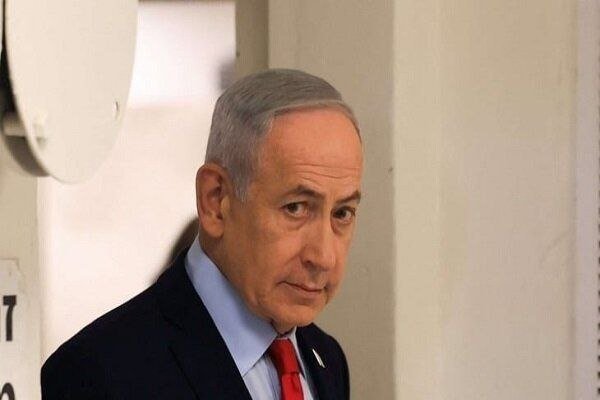
A ceasefire framework negotiated with Iran is being read in Beirut as a diplomatic lifeline and in Tel Aviv as a strategic error. On 12 June 2026, Hussein al-Haj Hassan, a Hezbollah-aligned member of the Lebanese parliament, told journalists that Tehran had informed Beirut that Lebanon falls under the ceasefire regime, and that Israel would withdraw from Lebanese territory. The statement, carried across X by @sprinterpress at 20:43 and again at 20:47 UTC, frames the package as a regional settlement rather than a bilateral Israel–US arrangement, and it forces an awkward question for Israeli planners: how does a deal that hands Tehran a central brokering role over the northern front square with the security concerns raised this week by three senior Israeli officials?
The complaint from Jerusalem, registered through Israeli-channel reporting on 13 June 2026 at 18:01 UTC, is that any arrangement which releases billions of dollars into Iranian state coffers risks inverting the strategic intent of the deal. The officials, whose names have not been published, argue that the money would harden the threat picture rather than soften it, financing the very proxies the framework claims to be containing. It is a familiar Israeli objection to relief-for-constraint packages, but it lands with particular weight now, in the same news cycle in which Israeli aircraft struck the southern Lebanese town of Kfar Jouz, an operation logged by the @wfwitness channel at 18:00 UTC on 13 June. Diplomacy and fire are running on parallel tracks, and the gap between them is widening.
What was actually agreed
The public shape of the deal, as filtered through the Lebanese readout, is straightforward enough to summarise. Iran has communicated to Beirut that Lebanon is included in the ceasefire regime, and that Israel will pull back from Lebanese territory. The terms as paraphrased by al-Haj Hassan do not specify a timetable, an exchange mechanism, or a verification architecture, and they are notably silent on the question of Hezbollah's armed status north of the Litani. The framing positions Tehran, not Washington, as the guarantor — a diplomatic architecture that grants Iran a regional leadership credential it has spent four decades trying to convert into formal recognition.
For Beirut, the implications are immediate. A formal Israeli withdrawal from southern Lebanon would, in principle, allow displaced Shia communities to return to border villages that have been depopulated by months of cross-border fire. It would also reopen the political space for the Lebanese state, rather than Hezbollah's military wing, to assert authority in the south — though whether the ceasefire architecture permits that transition is precisely the question Israeli officials are asking out loud.
The Israeli counter-reading
Israeli objections follow a structural pattern, and they are not unreasonable on their own terms. The argument runs as follows: the Iranian state has demonstrated a sustained capacity to convert liquidity into regional military presence, and any deal that delivers hard currency without ironclad constraints on its deployment simply resets the threat at a higher altitude. The three officials cited on 13 June extend that logic to its bluntest conclusion — that billions flowing into Tehran's treasury would strengthen the regime, not moderate it. It is a position that aligns with the long-standing Israeli view that constraining Iran requires denying it revenue, not negotiating over how that revenue is spent.
The counterpoint, which Israeli planners are unlikely to endorse publicly, is that the status quo is also a cost. Continued kinetic operations in southern Lebanon, of which the Kfar Jouz strikes are the most recent reported instance, carry their own bill — in Israeli reservist days, in Lebanese civilian displacement, and in the diplomatic capital spent explaining the campaign to a sceptical northern audience. The argument the three officials are making is that a bad deal is worse than an expensive non-deal. It is a defensible read, but it is not the only one available.
Why the Lebanese framing matters
The most under-reported element of the readout is its provenance. A Hezbollah-aligned parliamentarian, speaking on the record about Iranian commitments to Lebanese sovereignty, is functionally endorsing a settlement that ties Lebanon's security architecture to Tehran's diplomatic calendar. That is a significant concession from a movement that has, for two decades, framed itself as the sole defender of the south against Israeli encroachment. If the ceasefire holds, the political credit accrues to Iran first, to the Lebanese state second, and to Hezbollah as the broker of last resort. The Lebanese government's silence on the announcement is conspicuous; it suggests the deal was communicated to Beirut, but not necessarily negotiated by it.
For international observers, the takeaway is that the deal's legitimacy will be tested in the south before it is tested in any foreign ministry. If Israeli forces withdraw in a verifiable sequence, and if border villages are restored to civilian use without parallel Hezbollah re-militarisation, the framework can claim success. If, as the three Israeli officials fear, the disbursements fund reconstitution, the same framework will be cited retrospectively as the moment the threat picture worsened. There is little room for a middling verdict.
Stakes and the next forty-eight hours
The next two days will determine which reading prevails. A verifiable Israeli pullback from at least one southern Lebanese locality would vindicate the Iranian-mediated framing and force Israeli officials to argue against a deal that has already produced a tangible outcome. Continued or escalated strikes — Kfar Jouz being the most recent datapoint — would harden the Israeli objection and push the framework toward collapse before any funds move. The third possibility, and the one most consistent with the parallel reporting on 12 and 13 June, is a managed ambiguity: a partial withdrawal, continued low-level enforcement, and a financial release sequenced slowly enough that neither side has to declare victory or defeat.
The honest uncertainty here is the verification question. None of the reporting on the table specifies who counts the withdrawals, who audits the disbursements, and what the tripwire is for reactivation. The Lebanese readout offers political language; the Israeli readout offers strategic language. What it does not yet offer is the technical annex that turns a political understanding into an enforceable arrangement. Until that document surfaces, the framework is best read as a direction of travel rather than a destination.
Monexus framed this against the Western wire default — Israeli security concerns as the lead, Hezbollah-aligned readout as the alternate frame, both presented with their institutional provenance made explicit. The structural story is the Iran-as-arbiter shift, expressed in plain editorial prose without theorist scaffolding.
Wire provenance
This editorial synthesis draws on the following public wire/social posts:
- https://t.me/GeoPWatch
- https://t.me/wfwitness
Follow the event.
These dated source records provide context. They do not retrospectively verify this archive article.
Separate what the nuclear watchdog reported from what it could not determine after the June 2025 strikes.