Tehran Fortifies, Washington Hails a Deal: What the Iran Files Actually Show
Hours before a much-touted Memorandum of Understanding was due to be signed in Washington, Iranian engineers were mining the entrances to the very tunnels that hold the country's enriched uranium stocks.
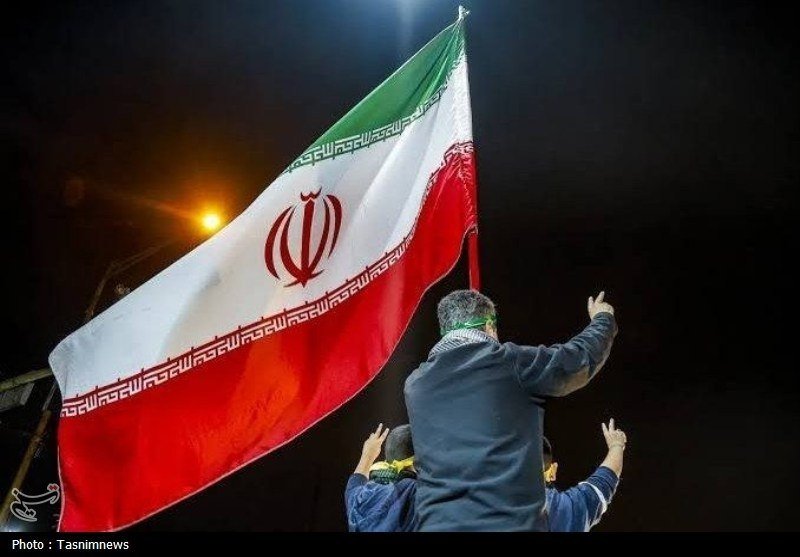
On the evening of 13 June 2026, with Washington already churning out weekend talking points about a looming Iran agreement, Tehran was doing something else. According to CNN reporting carried that day, Iran has barricaded and mined the entrances to tunnels where its uranium stocks are kept — a hardening of the very sites a diplomatic accord would, on paper, seek to render less alarming. The contrast is hard to overstate. At 20:21 UTC Donald Trump told reporters the Memorandum of Understanding with Iran would be signed the next day. By 21:10 UTC a Reuters wire confirmed his line: a deal, Sunday. By 21:45 UTC CNN's reporting on the fortification work was on the wires.
The official story and the physical evidence are moving in opposite directions, in real time, in public. The natural question is what each side thinks it is buying by performing the move it is performing.
The diplomatic script
For more than 48 hours the messaging out of Washington has been a single, repeated sentence. On 12 June 2026 at 18:37 UTC, an Axios-sourced report — relayed through Trump's own remarks — suggested a deal could land "over the weekend, or Monday." By the following afternoon Trump was firmer: a deal to be signed Sunday. Reuters confirmed the framing in its own dispatch. The script is well-rehearsed and the cast is small. There is the White House, the Iranian negotiating team, and a press corps being asked to report each iteration as if it were the last.
The trouble with scripts of this kind is that they tell you nothing about substance. What the Memorandum of Understanding actually contains — whether it constrains enrichment, whether it touches delivery mechanisms, whether it survives a news cycle, whether the United States is treating it as a binding instrument or a photo opportunity — does not appear in the available reporting. The wire copy is the announcement of an announcement.
The physical script
CNN's reporting on the tunnel entrances is the kind of detail that diplomatic choreography is designed to crowd out. Mining the approaches to a facility and barricading them is not a symbolic gesture. It is a job. It takes engineers, explosives, days of preparation, and a clear theory of the threat being prepared for. The implicit theory here is that the United States, having talked up a deal in the morning, retains the capacity and possibly the intent to act militarily on the same sites in the afternoon.
That reading sits awkwardly with the Washington script, but it does not contradict it. American coercive diplomacy in the nuclear file has long combined negotiations with the maintenance of a credible military option. The mining and barricading are best read as Tehran's response to the latter half of that formula. They are also, plainly, leverage — a way of raising the cost of any unilateral move before the ink dries on a Memorandum of Understanding whose legal weight, again, is not on the record.
What the framing leaves out
Western coverage of Iran's nuclear posture has, for two decades, defaulted to a particular vocabulary: enrichment as concession, sites as bargaining chips, uranium as inventory. The Iranian counter-reading, which barely surfaces in the English-language wire copy, treats the same uranium as a sovereign asset and the tunnels as a defensive perimeter. Neither framing is wrong, and the policy work between now and any signature ceremony will happen in the gap between them.
A further layer is the experience of the 2015 Joint Comprehensive Plan of Action and its 2018 collapse. Tehran did not emerge from that cycle trusting the durability of American signatures. From an Iranian vantage point, hardening a site is the only move that costs nothing if diplomacy holds and pays off if it does not. The same arithmetic, run in reverse, is what makes the talking points in Washington sound thin.
What we verified, and what we could not
The verifiable record for 13 June 2026 is small and specific. CNN reported that Iran had significantly increased protection measures at tunnel entrances holding uranium stocks, including mining and barricading. Reuters confirmed Trump's claim that a deal would be signed Sunday. An earlier Axios-sourced item, dated 12 June, set the "weekend or Monday" expectation. Trump's own remarks about a Memorandum of Understanding were carried the same day. The number of sources is short, and on a story this size that is itself a fact worth flagging.
What the available reporting does not establish is the text of the Memorandum, the legal status of any commitment, the location of the hardened sites, the level of enrichment involved, or whether any third party — the IAEA, Qatar, Oman, the Gulf states — has been formally tasked with verification. The pipeline that produced these notes carried wire copy and social posts, not the document itself. Until the text exists, any commentary on whether the deal is real is commentary on a shape, not a thing.
The stakes, plainly
If the Memorandum of Understanding is what its name suggests — non-binding, declaratory, a placeholder for harder work — then the mining at the tunnel entrances is a rational hedge, and the next six months will be the actual negotiation. If it is in substance a freezing arrangement with enforcement teeth, then the fortifications are a sign of bad faith on the Iranian side, and the Sunday ceremony will be a photograph rather than a settlement. The available evidence does not yet let a reader choose between those two readings. What it does let a reader do is notice the timing. The fortification work and the signing ceremony are not sequential; they are simultaneous, and the simultaneity is the story.
Desk note: Monexus treated the wire copy on the deal and the CNN reporting on the fortifications as two halves of the same signal. A deal that is announced while its target is being hardened is, at minimum, a deal that both sides are not yet confident of. We will update when text is on the record.
Wire provenance
This editorial synthesis draws on the following public wire/social posts:
- https://x.com/sprinterpress/status/
- https://x.com/sprinterpress/status/
- https://x.com/unusual_whales/status/
- https://x.com/unusual_whales/status/
Follow the event.
These dated source records provide context. They do not retrospectively verify this archive article.
Separate what the nuclear watchdog reported from what it could not determine after the June 2025 strikes.