Tehran's parliamentary warning shot: the Iran-US deal that isn't a deal yet
A senior Iranian MP says the draft US-Iran text strips out reparations, ignores the Supreme Leader's red lines, and unwinds Tehran's leverage on the Strait of Hormuz — the latest signal that the 'agreement' on the table may be no agreement at all.
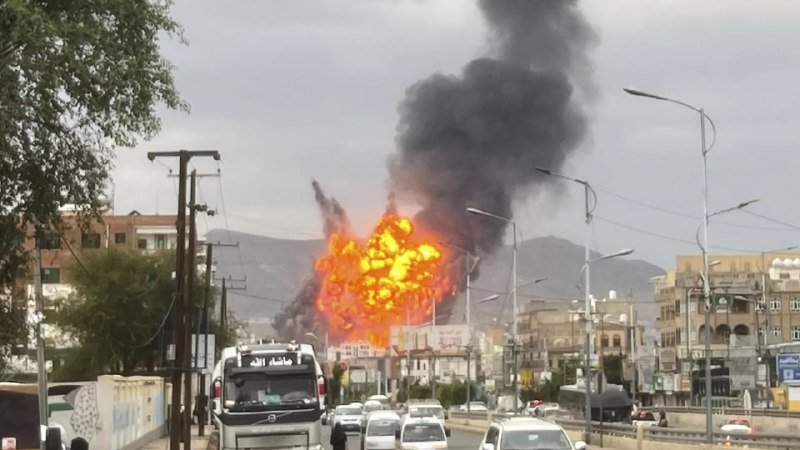
On 13 June 2026, Mahmoud Nabavian — deputy head of Iran's Parliamentary National Security and Foreign Policy Commission — opened a sustained, multi-front attack on the draft text being negotiated between Tehran and Washington. Posted in sequence between 16:49 and 17:21 UTC on the Telegram channel wfwitness, the warnings amount to a single argument delivered in five parts: the document on the table is not a deal, it is a concession, and the Iranian side should stop behaving as if it were anything else.
The dispute now unfolding in the Islamic Republic's parliament matters because the rest of the world has been told a deal is close. What Nabavian describes, in the language used by a sitting member of the body that must eventually bless any agreement in Tehran, is a draft that fails on three independent tests at once.
The sanctions trap
Nabavian's first complaint, posted at 17:21 UTC, is procedural and substantive at the same time. He warns that under the current draft, if 100% of the sanctions referenced in the text are lifted, the United States retains a built-in mechanism to walk the commitment back. In his framing — and the point is worth taking seriously even by readers inclined to dismiss Iranian parliamentary theatre — the text commits Tehran to irreversible steps while leaving Washington's side reversible. That asymmetry is the original sin of the document, on his reading. The sanctions architecture of the last decade was never a single instrument; it was a layered system of executive orders, treasury designations, and secondary pressures on third-country buyers. Lifting all of it cleanly is a categorically different exercise from lifting any of it partially, and the draft's language, in Nabavian's account, does not yet do the first thing.
The silence on reparations
At 17:11 UTC, the second message widened the critique. The draft, Nabavian says, omits war reparations entirely. The reference point is the twelve-day war of June 2025 and the broader cost — to Iranian infrastructure, to civilians, to the regional position the Republic spent four decades constructing — of the maximum-pressure campaign that preceded it. The omission matters because a deal that does not address reparations cannot, in the Iranian domestic political grammar, be presented as a restoration of rights. It can only be presented as a pause in hostilities. Those are different stories with different downstream consequences for who in Tehran can sign, who can oppose, and on what terms.
Hormuz and the red lines
The third and fourth messages, at 17:05 and 16:54 UTC, are about the Strait of Hormuz and they are the most operationally consequential. Nabavian says the latest draft on reopening maritime traffic fails to meet the red lines laid out by the Supreme Leader, and that revisions risk stripping Iran of its leverage over the chokepoint through which roughly a fifth of seaborne oil passes. The structural point is plain. Any settlement that resolves the nuclear file but leaves the maritime file unresolved does not resolve the underlying contest over Iran's place in the global energy architecture; it simply relocates it. Nabavian is telling colleagues — and by extension, the Americans — that a narrow nuclear-only deal is not the deal his chamber is prepared to authorise.
The blockade commitment that isn't there
The 16:49 UTC message closes the loop. Nabavian argues the draft text makes US commitments on lifting the maritime blockade ambiguous in precisely the way the sanctions language is ambiguous — formal language, informal retention of leverage. Read together, the five messages describe a draft in which the United States gets verifiable constraints on Iran's nuclear and missile programmes, and Iran gets language.
The counter-read is the one being delivered in Western chancelleries and parts of the Iranian foreign-policy establishment: this is what negotiations look like in their final metres, every side complains the other side's draft is insufficient, and the gap between Nabavian's rhetoric and a signed text is exactly the distance a working compromise has to travel. On that view, the parliamentary warnings are theatre staged for a domestic audience that needs to be seen resisting.
Both readings can be partly true. The honest assessment is that the text is genuinely thin where Nabavian says it is thin, and that the parliamentary critique is also being amplified because Tehran's negotiating position needs internal cover. The question is whether the thinness can be repaired inside the negotiating window, or whether the document currently being briefed to the press as a near-final agreement is in fact a placeholder for a much harder second phase that has not yet begun.
The structural pattern is familiar. Sanctions architecture is, in the technical literature of international sanctions design, a deliberately redundant system — overlapping executive orders, SDN listings, secondary sanctions, financial-channel restrictions — and the asymmetry Nabavian names is the asymmetry such systems are designed to preserve. A deal that does not unwind the redundancy does not unwind the leverage. That is the point Tehran's parliament is making, and it is the point that will determine whether what is announced in the coming days as an agreement is received, in the region that has to live with it, as a settlement or as a rearrangement.
The stakes, plainly
If the trajectory described in these five messages holds, three things follow. The Strait of Hormuz remains a contested corridor rather than a settled transit zone, which means insurance premia, routing decisions, and the price of crude retain a geopolitical risk premium the market has been slowly discounting on the assumption of a deal. The Iranian domestic balance shifts further toward the parliamentary hardliners who have spent the last year arguing the negotiating track was structurally biased. And the United States arrives at the point of announcement holding a document that its own agencies — and its Gulf partners — will read as a partial settlement, leaving the harder items for an administration that may not be this one.
What remains genuinely uncertain is the distance between the draft Nabavian is attacking and the text that, if a deal is signed, actually goes to the Majles for review. Iranian negotiating practice routinely leaves the loudest objections on the public record and the most consequential concessions in the annexes. The sources available do not specify which version of the document the deputy head of the security commission has in hand. They do specify that, on 13 June 2026, the most senior parliamentary voice on the file is publicly telling Tehran that what it has is not yet enough.
This publication frames the Nabavian intervention as a substantive negotiating signal, not as theatre: the three-track critique — sanctions reversibility, reparations omission, Hormuz leverage — maps onto the three items a closed deal would have to resolve, and the absence of any of them is being named in the open by a member of the body that has to pass the result.
Wire provenance
This editorial synthesis draws on the following public wire/social posts:
- https://t.me/wfwitness/1
- https://t.me/wfwitness/2
- https://t.me/wfwitness/3
- https://t.me/wfwitness/4
- https://t.me/wfwitness/5
Follow the event.
These dated source records provide context. They do not retrospectively verify this archive article.
Separate what the nuclear watchdog reported from what it could not determine after the June 2025 strikes.