Iran and the United States move toward a preliminary deal, with Pakistan as the unlikely middleman
Three governments are converging on the language of a deal. The substance — sanctions, enrichment, verification — is still being argued over, and the parties are not yet saying the same thing about what has been agreed.
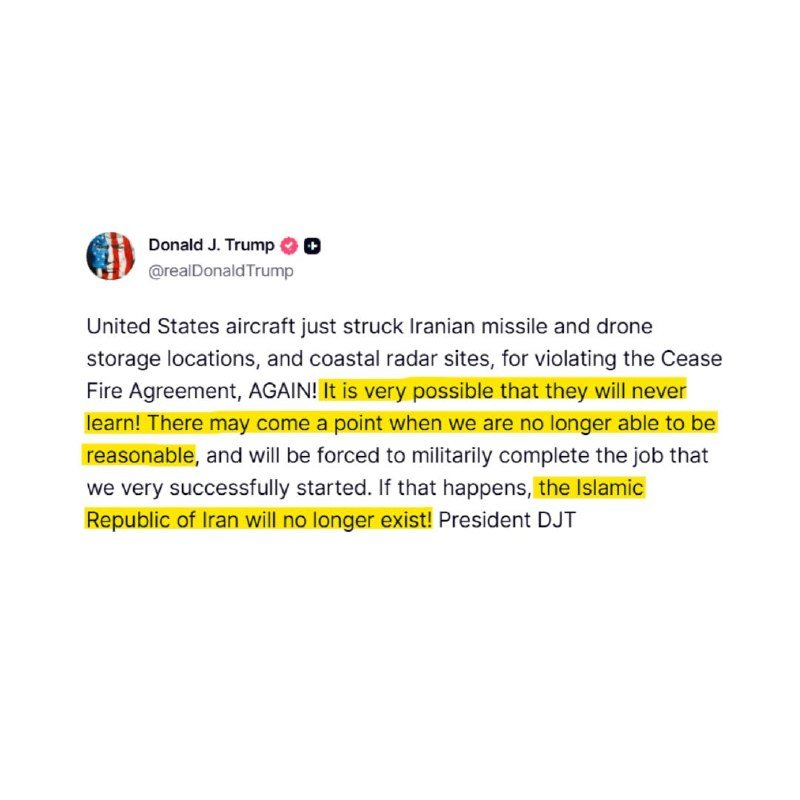
On the evening of 12 June 2026, Pakistani Prime Minister Shehbaz Sharif announced that Iran and the United States had reached a "final agreed-upon text" for a peace deal, posting the claim to X via the @unusual_whales account. Roughly twenty-four hours later, on 13 June, Donald Trump confirmed from the White House that he would sign a final agreement with Iran on his birthday, with One America News reporting the comments hours after Sharif's. By Saturday evening, Iranian state-aligned outlets, US officials, and mediators in Islamabad were each suggesting — in their own words, and on their own timelines — that a preliminary deal could be signed within days. The choreography of the announcement, the choice of venue (Pakistan, not Qatar or Oman, the two intermediaries in earlier rounds), and the near-simultaneous release of competing drafts tell the real story: the parties are closer to a deal than at any point in the post-2018 standoff, but they are not yet saying the same thing about what has been agreed.
What is now in circulation is a preliminary text, not a final one. The headline questions — the future of Iran's enrichment programme, the sequencing of sanctions relief, the verification architecture, the disposition of frozen Iranian funds held in third-country escrow — remain disputed. That three governments, two of them under acute domestic pressure, would each put their name to a deal in the same forty-eight-hour window suggests the substantive gaps have narrowed to a known set of clauses, not a fundamental impasse. It also suggests the gaps that remain are technical enough to be resolved by a face-to-face signing rather than another negotiating round.
The Sharif move and the Islamabad channel
Pakistan's role is the most novel element of the sequence. Sharif's 12 June statement on X, picked up by the @unusual_whales account at 18:31 UTC, was framed as a fait accompli: a "final agreed-upon text" between Washington and Tehran. That is a stronger formulation than any Iranian or American official has used on the record in recent weeks. The choice of Islamabad as the venue for what Trump described as an imminent signing, reported by One America News on 13 June at 18:17 UTC, marks a departure from the back-channels that have defined this dispute for two decades. Oman's Muscat and Qatar's Doha have, since the early 2000s, hosted the indirect track that produced the 2015 framework. Pakistan's army chief, General Asim Munir, has met Iranian officials in Tehran in recent months; Islamabad has incentive to demonstrate relevance to a Gulf security file that directly affects its western border and its energy imports.
The Pakistani mediation is also, in practical terms, a vulnerability for the deal. Sharif is a political leader with a parliamentary coalition that includes figures who have publicly opposed closer Pakistan-US alignment. A Pakistani-brokered text, hosted in Islamabad, will be read in Tehran as adjacent to Washington's regional architecture, not as a neutral facilitation. Iran's foreign ministry has not yet issued a line-by-line endorsement of the text; its public statements have been calibrated to confirm that talks are at an advanced stage without endorsing the language Sharif used.
The Iranian counter-frame
Tehran's communication strategy across 12-13 June has been to acknowledge progress without conceding that anything has been "final." Iranian state media have stressed that any deal must include the unfreezing of assets held abroad, the restoration of oil-export licences, and a credible guarantees package against future US withdrawal — a reference to the 2018 exit from the Joint Comprehensive Plan of Action (JCPOA). The framing is consistent with how Iranian officials have spoken for two years: the deal is desirable, the conditions are non-negotiable, and the sequencing matters more than the headline. Tehran's resistance to a public description of the text as "final" is, in this reading, a negotiating posture rather than a substantive objection — it preserves room to walk back from clauses Sharif's statement may have oversold.
The harder question is enrichment. Iran's programme has, across IAEA reporting, expanded significantly since 2019: higher enrichment levels, more advanced centrifuges, and a broader stockpile. Any deal that does not address the enrichment question is a deal that solves the sanctions issue while leaving the nuclear question open. US framing has consistently treated the two as a single package. Iranian framing, in state-aligned commentary, has treated enrichment as a sovereign right to be preserved. If the preliminary text bridges that gap, the bridge is not visible in any of the public summaries.
What a preliminary deal actually does
The Saturday framing — "preliminary peace deal could be signed within days," per the 13 June 17:09 UTC wire — is itself a clue. A preliminary deal, in the language of arms-control diplomacy, is a political commitment to negotiate a final deal on agreed terms within a fixed window. It locks in a ceasefire-equivalent posture, releases some frozen assets, and creates a verification architecture, but it leaves the substantive nuclear and missile questions to a follow-on negotiation. The 2015 JCPOA followed this pattern: an interim deal in November 2013, a final deal in July 2015. The pattern's strength is that it creates time and incentives for the harder work; its weakness is that it creates a window in which either side can walk.
For markets, the operative question is the sanctions architecture. Oil-export licences, banking-channel access (the SWIFT reconnection for Iranian banks), and the unfreezing of funds in escrow accounts in South Korea, Japan, Iraq, and Oman are the levers that move crude flows and hard-currency availability. A preliminary deal that unlocks any of these is, in practical terms, a partial deal; a preliminary deal that defers all of them to a follow-on agreement is, in practical terms, a framework for talks.
Stakes, sequencing, and the verification problem
The structural challenge is older than the current negotiation. Three US administrations and two Iranian presidencies have tried to translate the technical content of enrichment levels, centrifuge counts, and plutonium pathways into a politically durable agreement. The technical content is solvable; the political durability is the variable that has failed in 2018, 2020, and 2025. A deal signed in Islamabad in mid-June 2026, with Trump citing his birthday and Sharif citing his role as mediator, has an unusually high political-fragility quotient before the ink dries.
The parties that lose most from a deal collapsing are the same parties that lost from the 2018 collapse: European companies with conditional commercial exposure, Iranian middle-class savers holding devalued rials, and Gulf states whose energy market and security posture both benefit from a managed arrangement. The parties that benefit most from collapse are those for whom the current sanctions architecture is a feature, not a bug: hardline constituencies in both Washington and Tehran whose domestic position depends on the dispute continuing. The signing window, if it opens, will be narrow.
What remains contested
The sources do not specify the text. They confirm only that there is a text, that three governments are speaking about it in the same forty-eight-hour window, and that the language each is using differs in ways that matter. Sharif says "final." Trump says "imminent." Iranian state media says "advanced." Each formulation is consistent with a different distance from a deal. Until the text is published — or, more realistically, until a senior official on at least one side reads into the record what is in it — the distance is a matter of inference, not evidence. The pattern of the past two decades suggests the next seventy-two hours will be decisive, and that the actual substantive content will surface only after the political actors have decided how to describe what they have agreed to.
This publication treats the 12-13 June sequence as a genuine diplomatic inflection, not as a media event. The Pakistan channel, the preliminary-deal framing, and the alignment of the announcement with Trump's birthday all carry signal. The signal is that the gap has narrowed; the signal is not that the gap has closed.
Wire provenance
This editorial synthesis draws on the following public wire/social posts:
- https://t.me/OANNTV
- https://x.com/unusual_whales/status/
- https://t.me/OANNTV/
Follow the event.
These dated source records provide context. They do not retrospectively verify this archive article.
Separate what the nuclear watchdog reported from what it could not determine after the June 2025 strikes.