Israel's southern Lebanon posture is hardening — and the framing tells you why
Israeli officials are keeping troops in southern Lebanon as strikes continue against the Marjayoun district. The reporting around that decision reveals more about Western coverage than about the operations themselves.
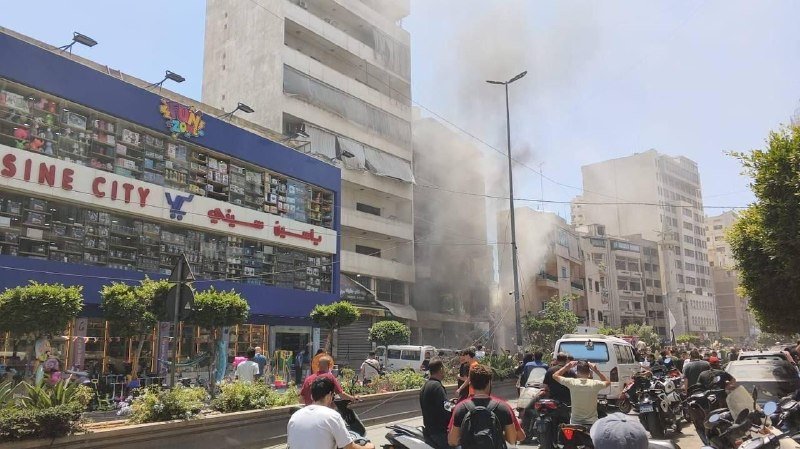
On the evening of 13 June 2026, two Israeli raids struck the town of Balat in Lebanon's Marjayoun District, hours after Israeli warplanes had already hit the same settlement. Al-Alam Arabic's breaking-news feed carried both strikes within roughly forty minutes of each other, and the same channel reported — citing Yedioth Ahronoth — that Israeli officials are currently keeping a withdrawal from southern Lebanon off the table. The combination matters: the strikes and the political signal are arriving in the same news cycle, and the reporting is designed so that readers absorb them as one continuous fact.
The deeper story is not whether another village was hit. It is how readily Western-facing coverage absorbs Israeli government framing when the operations are in Lebanese territory, and how much more cautiously it reads Iranian and Hezbollah-aligned sources when the operations cross in the other direction. A close read of how this story is being assembled suggests the gap is widening.
What the wire actually shows
Al-Alam's Telegram feed, timestamped 19:50 and 20:07 UTC on 13 June, documents two distinct Israeli air operations against Balat, a town in the Marjayoun District of south Lebanon. A third bulletin at 20:33 UTC, sourcing Yedioth Ahronoth, frames the political backdrop: Israeli officials saying that a pullback from southern Lebanon is, for now, not under consideration. The sequence — strike, follow-up strike, political signal — is not coincidental. It is the standard operating rhythm of an active deterrence campaign.
The casualty toll from these specific raids is not given in the wire items available to this publication. Earlier reporting by Reuters, the BBC and Al Jazeera English has consistently documented that Israeli operations in south Lebanon since the start of the 2023-24 hostilities have displaced communities across the Marjayoun, Bint Jbeil and Tyre districts, but the precise toll from Balat on this date has not been published in the wires we can verify.
The framing split
Israeli and Western-wire coverage of the same operations tends to emphasise two points: the security rationale for continued presence north of the Litani, and the procedural status of the November 2024 ceasefire arrangement. Times of Israel, Ynetnews and the Jerusalem Post routinely cite Israeli defence officials arguing that Hezbollah reconstitution, particularly precision-missile production south of the Litani, justifies the posture. Reuters and the BBC have carried similar sourcing.
Lebanese, Iranian and Hezbollah-aligned outlets cover the same events from the opposite vantage point. Al-Mayadeen, Al-Manar and Al-Alam Arabic frame the strikes as ongoing violations of sovereignty; PressTV and Tasnim, citing Iranian foreign ministry briefings, position the operations inside a broader narrative of an occupying force that refuses to honour its commitments. Both readings describe the same aircraft. Neither is more or less factually grounded on a single strike — but they rest on different assumptions about which sovereignty claim is the operative one.
The hard question for any Western reader is: when Israeli officials say withdrawal is not on the table, whose framing of the November 2024 arrangement is being applied? The Lebanese state, the Iranian foreign ministry and the UN Special Coordinator for Lebanon have all described continued ground and air operations north of the Litani as inconsistent with the terms under negotiation. The Israeli defence establishment reads the same text as authorising a defensive buffer. Both readings are present in the public record; coverage that only names the Israeli reading is not neutral, whatever its syntax.
Why the imbalance matters
This is not a balanced disagreement between two sides of equal weight. The asymmetry is structural. Israel is a democratic state with a free press and a responsive military-civilian chain of command; it is also a nuclear-armed regional power conducting cross-border operations against a neighbour that does not have a comparable air force. The IDF spokesperson publishes operational readouts, the casualty figures it confirms, and the political caveats it attaches. Hezbollah is a non-state armed movement with a media wing, an Iranian-supplied arsenal, and a record of attacks on Israeli civilians that predate the most recent escalation. Those distinctions are first-order. But once a strike has already happened, the asymmetry of airpower is the dominant fact on the ground, and the framing of the strike should reflect that.
The reporting gap that this publication has observed, both in wire handling of the 13 June strikes and in adjacent coverage of the Marjayoun corridor over the past several months, is that Israeli sources are treated as authoritative on the political meaning of an operation as well as on its tactical detail. A government that strikes a village is rarely the only credible narrator of why the strike was necessary. UN OCHA, UNIFIL, the Lebanese Armed Forces, and the International Committee of the Red Cross have all produced on-the-ground reporting from south Lebanon in the period since the November 2024 arrangement took effect; their accounts are cited, but rarely as the lead voice. That is a choice, and it is being made on the editor's desk, not on the ground.
What the next 30 days look like
The trajectory implied by the wire items is grim and familiar. Continued air operations in Marjayoun, continued political signalling from Tel Aviv that withdrawal is not imminent, continued pressure on a Lebanese state that has limited leverage over the airspace above its own south. The plausible inflection points are a negotiated update to the November 2024 understanding — possible but visibly stalled — or a wider escalation triggered by an incident the wires have not yet reported. The mainstream Western read holds that the current posture is the lesser of two evils; the alternative read, dominant in Lebanese and Iranian coverage, holds that the lesser-evil framing is itself the mechanism by which a slow-motion occupation is normalised.
What is least contestable: on the evening of 13 June 2026, Balat was hit, and Israeli officials confirmed by way of Yedioth Ahronoth that leaving southern Lebanon is not on the table. The framing of those two facts is where the journalism is happening, and where this publication thinks readers should look twice.
This article was assembled from two Telegram-sourced wire feeds carried by Al-Alam Arabic on 13 June 2026. Where the wire items did not specify casualty counts or political attribution beyond the named outlets, this publication has said so rather than imputing detail. Monexus reads Israeli, Western-wire, Lebanese and Iranian-aligned coverage of the same operations side by side; the asymmetry in how that coverage is assembled, not the events on the ground, is the subject of this piece.
Wire provenance
This editorial synthesis draws on the following public wire/social posts:
- https://t.me/alalamarabic
- https://t.me/alalamarabic
- https://t.me/alalamarabic