Southern Lebanon absorbs another day of raids — and the question of what counts as 'limited'
A cascade of airstrikes across south Lebanese towns on 13 June 2026, sourced only to Lebanese channels, exposes the widening gap between Tel Aviv's 'limited operation' framing and the daily reality on the ground.
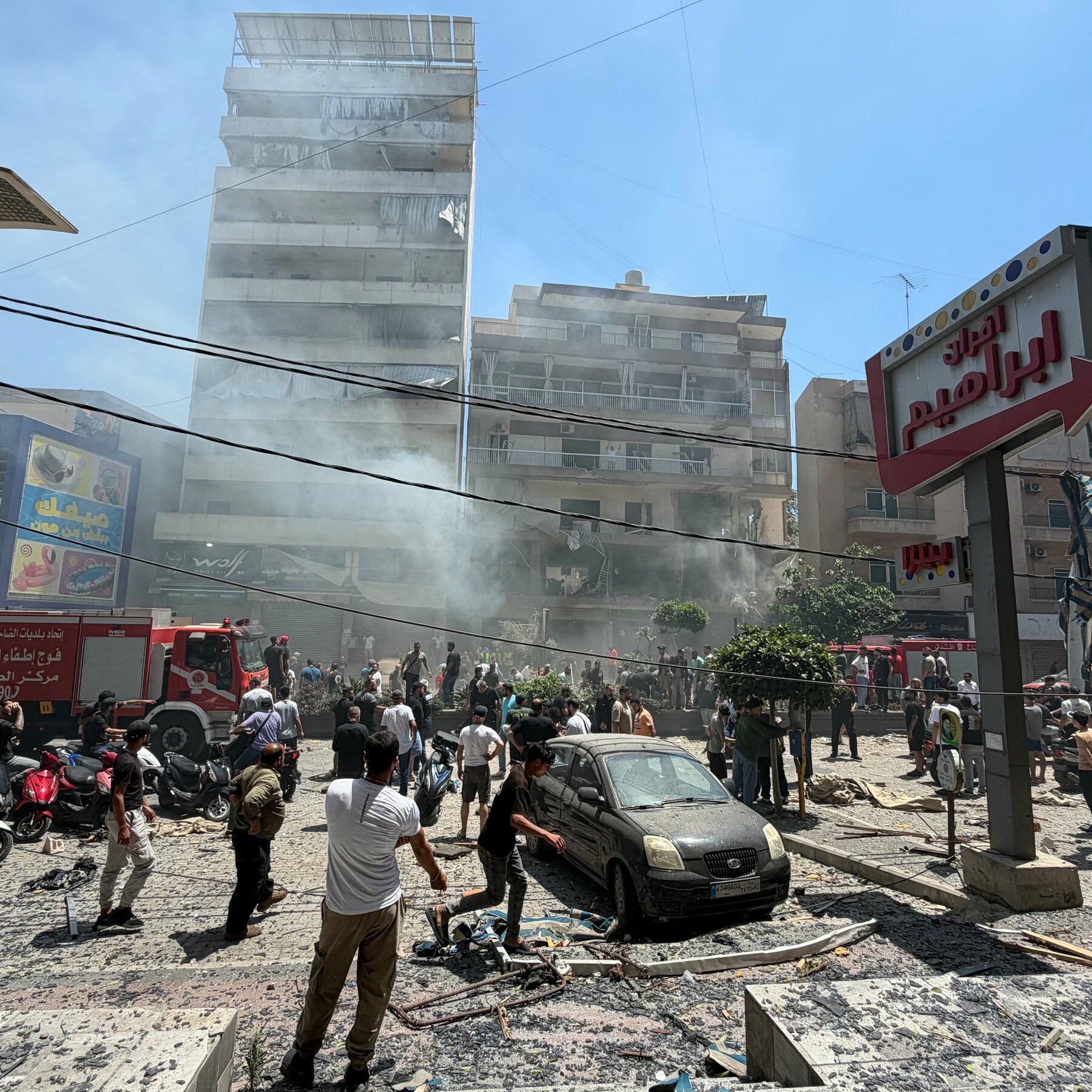
On the afternoon of 13 June 2026, residents of Adshit, Kafr Rumman, Faroun, and Al-Haniya — small towns scattered along Lebanon's southern frontier — heard warplanes return to the same airspace Israeli jets had circled earlier in the week. According to Lebanese sources relayed by Al Alam Arabic's breaking-news desk, the raids on those four towns came in at 17:54 UTC. By 18:49 UTC, Al-Haniya had been struck again and artillery fire hit Fron. An hour later, flares drifted over Qana and Rashkananiyeh. By 19:19 UTC, two more raids — this time on Sir al-Gharbiyya and Shukin — were in the log. Six discrete strike-and-shelling events in roughly ninety minutes, all in the same narrow band of territory that has spent two decades on the front line of an unfinished war.
The pattern, more than any single sortie, is the story. The reporting comes from a single information channel — Al Alam Arabic, citing "Lebanese sources" — and that limitation is the story too. It is a channel aligned with the Iranian-aligned axis and not a stand-alone factual basis. But even with that caveat, what is being described is consistent with the kind of near-continuous, low-altitude Israeli activity in south Lebanon that Western wire services have documented for months: the routine use of flares, artillery, and airstrikes to keep the border area depopulated and to interdict what Israel describes as Hezbollah reconstitution efforts. The reading depends entirely on whose map you are using.
What the Israeli framing assumes
Israeli security planners have, for the better part of two years, described operations across the Lebanese border as "limited, targeted, and temporary" — a tempo calibrated to degrade an enemy's rebuilding capacity rather than to conquer ground. The argument is that the activity on 13 June, read in this light, is calibrated force: each sortie has a defined target set, each target set is tied to a specific intelligence predicate, and the broader civilian population is meant to be warned off, not punished. Israeli officials have, in past public statements, used phrases like "pinpoint and temporary" to describe precisely this kind of activity in the same theatre.
The structural problem with that framing is arithmetic. Six events in ninety minutes, in a corridor only a few kilometres wide, do not look like precision in any meaningful sense — they look like saturation of a small space. The towns named in the Lebanese-channel reporting — Adshit, Kafr Rumman, Faroun, Al-Haniya, Fron, Qana, Rashkananiyeh, Sir al-Gharbiyya, Shukin — are not military installations. They are villages. Some, like Qana, carry a heavy historical weight from earlier rounds of this same conflict. The line between "targeted" and "area denial" is doing more rhetorical work than the available evidence can support.
What the Lebanese-channel framing hides
There is, in turn, a temptation on the Lebanese and Iranian-aligned side to present every sortie as part of a deliberate campaign against civilians — to frame each airstrike as proof of an exterminatory intent the operational record does not support. That framing is also load-bearing in a way the sources do not earn. Israeli strikes on south Lebanon over the last two years have, in UN and wire reporting, overwhelmingly been concentrated on identifiable Hezbollah infrastructure — munitions depots, observation posts, drone-assembly sites, the comms nodes the group uses to coordinate its own fire. Civilian harm, when it occurs, is real and severe, and Israeli obligations under the laws of armed conflict are not optional. But the flat claim that villages are being targeted for being villages is not, on present evidence, the most defensible read of the pattern.
Both framings, in other words, are doing work the data does not fully justify. That is exactly why a day like 13 June matters: it is a stress test for both stories at once.
What "limited" actually means on the ground
The structural fact underneath the rhetoric is depopulation by accumulation. Each sortie is, individually, contained. Each warning, individually, is observed. Each evacuation order, individually, is bounded. But the cumulative effect — across weeks, across the named towns above, across the dozens of others not in this particular log — is that the southern Lebanese border strip empties. Families who left in 2024 have not returned. Towns that were agricultural market centres before the current war are now front-line villages, intermittently inhabited. The frame Israeli spokesmen use — "temporary, localised, surgical" — is accurate to the level of the individual sortie and misleading to the level of the population. A reader who takes the spokesmen's framing at face value and a reader who takes the Lebanese-channel framing at face value will, respectively, under-count and over-count the same reality.
The honest read sits in the gap. The 13 June log, taken from a single source with a clear editorial alignment, is best understood as a representative sample of tempo rather than as a stand-alone indictment or exoneration. It tells us what kind of war is being fought in that strip on that afternoon: a high-frequency, low-altitude, low-yield campaign, where the unit of operation is a single sortie and the unit of consequence is a depopulated district.
What remains uncertain
The reporting carries two real limits that any honest account has to flag. First, the sourcing is narrow: every entry in the day's strike log is attributed to "Lebanese sources" via a single Iran-aligned outlet. The causal specifics — what was hit, whether there were casualties, what weapon was used — are not in the public thread. Casualty figures, in particular, are absent. Second, there is no Israeli confirmation or denial in the materials available, and no wire-service corroboration within the source set; the operational record is therefore one-sided by construction, and the framing inside it has been chosen by a party to the conflict. A reader who treats the day as either an atrocity or a routine is reading past what the evidence actually shows. What the evidence shows is tempo, location, and the persistence of a campaign that the official vocabulary on both sides refuses to name for what it is.
Monexus frames this as a tempo story, not a casualty story. The wire services available to most readers default to either "targeted strike" or "civilian massacre"; the more accurate read of 13 June is a documented high-frequency pattern in a narrow band of Lebanese territory, sourced entirely to one side. We name the limitation rather than pretend it isn't there.
Wire provenance
This editorial synthesis draws on the following public wire/social posts:
- https://t.me/s/alalamarabic
- https://t.me/s/alalamarabic
- https://t.me/s/alalamarabic
- https://t.me/s/alalamarabic
- https://en.wikipedia.org/wiki/South_Governorate