Piastri calls Monaco podium reversal 'mind-blowing' as McLaren and Red Bull lodge appeals
A stewards' decision to wipe out Gasly's pit-lane speeding penalty has handed the Alpine driver a Monaco podium, prompted McLaren and Red Bull to signal intent to appeal, and drawn an unusually pointed reaction from race-winner Oscar Piastri.
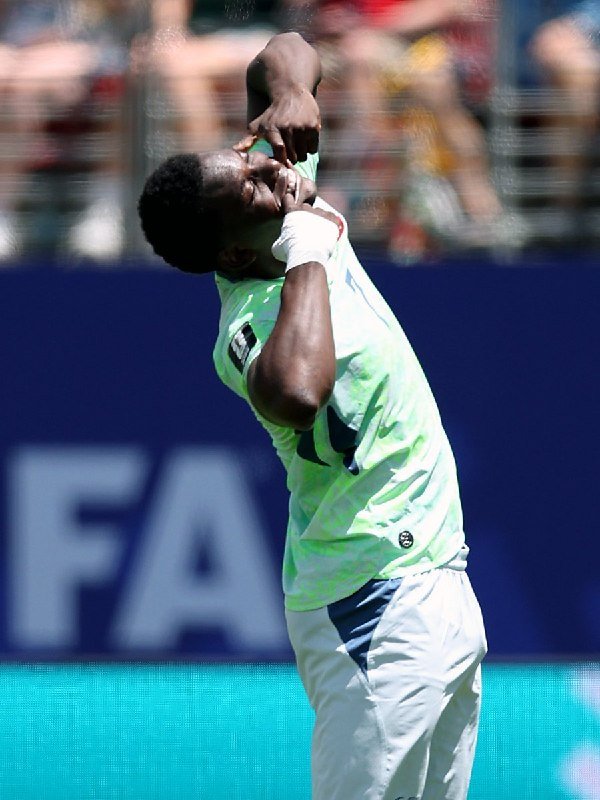
Oscar Piastri said on 2026-06-13 that he was "pretty mind-blown" by the decision to overturn a penalty that had demoted Pierre Gasly from third place at the Monaco Grand Prix, an unusually pointed remark from a driver who had just won the most prestigious event on the Formula 1 calendar. The stewards' verdict, handed down after the race, wiped out a five-second time penalty the Alpine driver had received for an alleged pit-lane speeding infringement and restored him to the podium, demoting the McLaren of Lando Norris and the Red Bull of Max Verstappen in the process.
Piastri's frustration is the visible edge of a row that now runs through the paddock. The result in Monte Carlo was always going to be politically charged — Monaco compresses the field, rewards track position, and turns minor technical infringements into order-of-finish swings. But this year's controversy has crossed into unusual territory: the team that finished on the lower steps of the podium is publicly contesting the steward's reasoning, and the sport's commercial lead, McLaren, is signalling an appeal. The episode is as much about who governs the rules mid-weekend as it is about who took the trophy.
The stewards' reasoning, and why it has not stuck publicly
The original penalty, issued during the race, related to a pit-lane speeding offence attributed to Gasly. The post-race review by the stewards reversed the sanction. The text of the decision has not been disputed by the FIA in the reporting seen by this publication, but the outcome has. McLaren and Red Bull lodged their intention to appeal the verdict on 2026-06-12, the formal first step under the International Sporting Code before a team can elevate the matter to the ICA (the FIA's International Court of Appeal).
Piastri's reaction, recorded in the cooldown room and on team radio, was sharper than the usual driver-to-stewards register. "Pretty mind-blown" is not a phrase drivers reach for when they merely disagree with a call; it is the vocabulary of surprise that the process itself produced a particular outcome, rather than disagreement with the outcome alone. That distinction matters, because it is process — not the sporting consequence for a single team — that the appeals are likely to target.
What the appeal can and cannot do
An intention to appeal under Article 14 of the FIA's International Sporting Code does not, on its own, change the classification. The Monaco podium remains Gasly's, with Norris and Verstappen fourth and fifth, until and unless the ICA upholds a challenge. The court hears questions of application of regulation and proportionality of sanction, and its rulings are published in full. The cost of a successful appeal to a driver is reputational as much as sporting: a reinstated third place after a court ruling is harder to celebrate than one that survives a single weekend.
For McLaren, the calculation is the constructors' championship. Reordering the Monaco result by even a single place shifts the points ledger at a moment when the team is contesting both titles. For Red Bull, the calculus is more about precedent than points: Verstappen already holds a buffer in the drivers' standings by the structural reality of the 2026 calendar, and a clear public position on stewarding standards is consistent with the team's wider posture on regulatory clarity.
The structural frame
Formula 1's rule book is the most litigated document in motorsport. Decisions that look technical — a delta in pit-lane speed, a track-limits call, a virtual safety car timing window — are also political, because they re-allocate the single most valuable commodity in the sport: finishing position. The Monaco weekend, where the street circuit makes overtaking structurally near-impossible, amplifies the weight of every officiating call.
Piastri's "mind-blown" remark is a useful tell. Drivers routinely express disagreement; they rarely express disbelief in the process itself. The framing inside the paddock, as reported in the broadcast pen, was that the stewards' reversal was defensible under one reading of the regulation and indefensible under another. Which reading prevails is now a question for the appellate body, not the race-day panel.
The wider pattern is familiar: in tight championships, the governance of the rule book becomes a second race. The teams that win it are usually the ones with the cleanest procedural case and the most disciplined public language. Piastri has supplied the public language; McLaren and Red Bull will now have to supply the procedural case.
Stakes and a narrower read
The most plausible outcome, given the structure of ICA proceedings and the relatively narrow regulatory question, is that the appeal narrows rather than succeeds outright. The stewards' call can be revisited on procedural grounds, but reversing a post-race reinstatement typically requires the appellants to show that the original penalty should not have been applied in the first place — a high bar. The likeliest forward effect is tighter stewarding language for the next round, rather than a change to this classification.
There is a narrower read that the sources do not support, and it is worth naming. Some of the broadcaster chatter has framed the reversal as a verdict on McLaren's recent dominance; the available reporting does not substantiate that read. The decision is recorded as a steward's call on a specific alleged infringement, not as a balancing act across the championship. Piastri's reaction, strong as it was, was a reaction to the process and its outcome for the podium order, not a claim of bias.
What remains uncertain, and where the evidence thins, is the regulatory interpretation itself. The stewards' published reasoning will determine whether the appeal finds traction; the broadcasters covering the post-race period have reported the reversal but not, in the items reviewed here, the full text of the stewards' decision. Until that document is in the public domain, the strongest available statement of the case is the one Piastri made on the record: a process that produced a particular result, and a result that the teams most affected intend to test.
Desk note: Wire coverage of the stewards' call has focused on the sporting impact and the language of driver reaction. Monexus frames the dispute procedurally — as a question of stewarding standards under heightened championship pressure — rather than as a verdict on any one team's season.