A night of sirens on the border that northern Israel stopped noticing
Early-warning alerts in Metula and across the Confrontation Line on the evening of 13 June 2026 mark the latest in a pattern of cross-border fire that residents say has become routine — and that policymakers in Tel Aviv and Beirut have conspicuously failed to arrest.
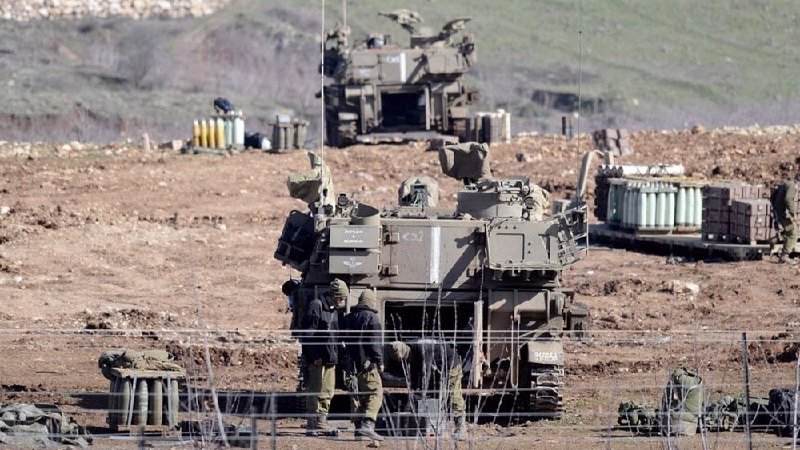
At 20:34 UTC on 13 June 2026, early-warning sirens sounded across the Confrontation Line in northern Israel, with the town of Metula specifically named in initial alerts. The Telegram channel wfwitness reported explosions audible over the area, and the geography channel GeoPWatch flagged the Metula alert as a possible-missile-launch event. Within a minute the same wfwitness feed had repeated the warning. The pattern — alert, explosion report, repeat alert — has become so familiar to readers of these channels that it barely registers as a story. That familiarity is itself the story.
The northern frontier between Israel and Lebanon has been the slowest-burning of the country's active frontlines for the better part of two years. The 13 June episode fits a tempo that residents describe in plain terms: alerts, intercepted projectiles, occasional shrapnel damage, and a return to routine by morning. The structural point is not that any single evening's sirens are decisive, but that the cadence has flattened into background noise for a public that once treated a rocket alert as a generational event.
What the alerts actually say
Telegram feeds that aggregate Home Front Command data are blunt instruments. They tell readers that sirens sounded and roughly where, and they sometimes carry second-hand reports of explosions heard from observation points. They do not, in the moments after the alert, tell readers which projectiles were intercepted, which landed, or who fired. The 20:34 UTC posts on 13 June conform to that pattern. The Metula alert is the most geographically specific element; the rest of the Confrontation Line is described in regional terms. The "explosions over the area" line that follows is the kind of formulation that gets used when intercepts, impacts and detonations of incoming ordnance cannot yet be separated.
Readers outside the regional media ecosystem often want a clean attribution within minutes. The reality is that the first hour after a siren is dominated by uncertainty, and that uncertainty is itself a problem. When alert narratives become routine, the public-information value of each new alert decays.
The Hezbollah question, stated plainly
The Iranian-backed Shia paramilitary organisation Hezbollah is the only actor on the Lebanese side of the border with both the rocket inventory and the political incentive to fire into the Metula area. That is the mainstream Israeli security framing, and it is the framing that has justified sustained Israeli air activity over southern Lebanon for most of the past two years. It is also a framing that leaves several things out. Hezbollah has, at various points in the same period, publicly disclaimed responsibility for particular salvos and pointed to smaller Palestinian-aligned factions operating from Lebanese soil. The Israeli defence establishment tends to treat those disclaimers as tactical rather than substantive, and treats the smaller factions as Hezbollah-controlled by default. The two readings cannot both be fully right, and the wire record does not resolve the question for any given night.
The deeper structural problem is that "Hezbollah fired" and "someone in south Lebanon fired" produce very different policy responses, and the distinction gets elided in the first hour of coverage precisely when the public most needs it kept clear.
Why the cadence matters more than the count
The arithmetic of the northern front — rockets fired, interceptors launched, square metres of forest burned, homes damaged — has been reported in fragments for so long that it has lost its shock value. Israeli regional councils publish damage tallies that the national press treats as background. The more telling number is the demographic one: the number of evacuated residents who have not returned, the number of school days held remotely, the number of agricultural seasons skipped. The siren on 13 June is not a discrete event; it is a data point in a slow-motion displacement.
There is also a media-economy point. Telegram channels that rebroadcast Home Front Command alerts compete on speed. The reward structure is to be first with the location and loudest with the warning, not to be last with the verified attribution. That structure is fine for situational awareness and bad for understanding. It produces a public that knows a siren went off in Metula at 20:34 UTC and does not, twelve hours later, know who fired or whether anyone was hurt.
What the trajectory looks like from here
The plausible paths forward are not novel. Either the cadence continues at roughly its current rate, in which case the northern communities absorb another year of partial evacuation and the political pressure on the government in Tel Aviv to negotiate or escalate both grow; or a discrete escalation forces a wider response, in which case the southern-Lebanon civilian cost becomes a first-order international story; or a diplomatic settlement — improbable on the visible timeline — relocates the front. None of those paths is improved by the current information environment, in which the public learns where the siren sounded before it learns what was fired.
The honest summary on 13 June 2026 is that a siren went off in Metula, explosions were reported, and the rest of the picture will be filled in over the next twenty-four hours by outlets with longer attention spans than a Telegram feed. The disquieting summary is that the next siren will sound the same way, and the one after that, and the one after that, until something structural changes or until the region learns, once again, to call routine by a harder name.
This piece documents an active alert window in northern Israel on the evening of 13 June 2026. The wire record at time of publication is limited to Telegram-channel aggregations; mainstream confirmation of projectile origin, intercept count and damage assessment is pending.
Wire provenance
This editorial synthesis draws on the following public wire/social posts:
- https://t.me/wfwitness
- https://t.me/GeoPWatch