Qatar's World Cup lesson: hosting doesn't make you a contender
A 1-0 deficit at the break in Santa Clara was a reminder that tournament football rewards depth, not marquee billing. Qatar's 2022 hosting dividend is fading fast.
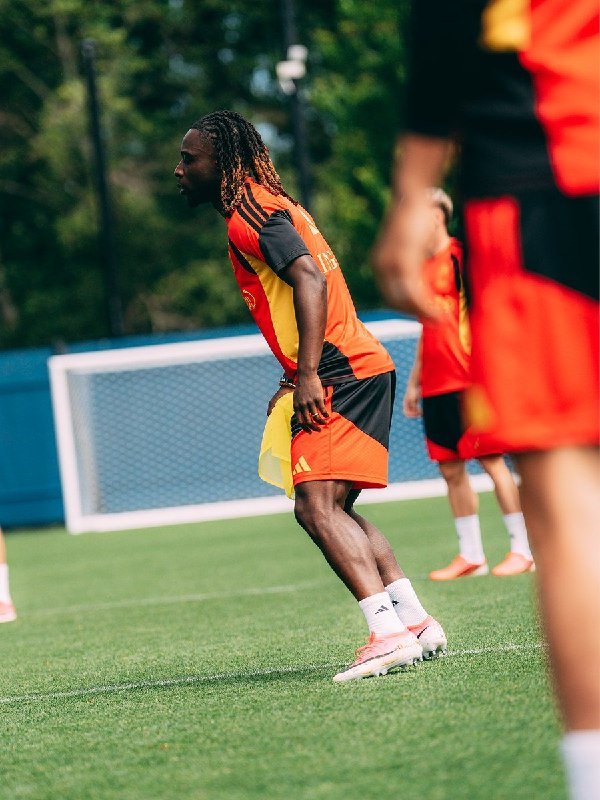
At 19:12 UTC on 13 June 2026, in Santa Clara, Dan Ndoye drifted into the penalty area and forced Qatar goalkeeper Mahmoud Abunada into a sharp save. Twelve minutes later, video review confirmed a Swiss penalty, and Abunada — the man who had just kept his side in the contest — was shown a yellow card for the challenge that caused it. By 20:14 UTC, the second half had begun with Qatar trailing Switzerland 1-0, needing a goal to stay alive in the 2026 World Cup. The arithmetic is brutal, and so is the lesson: hosting a tournament, as Qatar did at Doha 2022, does not build a national team that can compete with Europe's midfield engines.
Qatar's problem is not a lack of investment. The 2022 tournament was a state-backed showcase, and the federation has since doubled down on the Aspire Academy pipeline and naturalised a number of players of Qatari heritage across Africa and the Gulf. What the 1-0 deficit to Switzerland exposes is a structural gap between ambition and depth: Switzerland can rotate Dan Ndoye, who has a full season of top-flight European football behind him, while Qatar is still leaning on a goalkeeper to compensate for a midfield that cannot retain possession under pressure.
The depth gap
Switzerland did not need to be brilliant in Santa Clara. They needed to be solid, and they were. Ndoye's movement between the lines repeatedly pulled Qatar's centre-backs into one-on-one situations, and when the penalty was finally given, it was the kind of decision that almost VARs itself: a late challenge on a forward already shaping to shoot, inside the box, in the 70th minute. For Qatar, the worry is not the result; it is the pattern. The save from Abunada at 19:12 was almost identical in shape to the saves Qatar's goalkeepers had to make throughout the Gulf Cup and the Asian qualifiers: a one-on-one, the defence already bypassed, the keeper the last line of resistance.
What the framing misses
The comfortable line on Qatari football is that it is a story of soft power and petrodollar vanity: a small country that bought a tournament and a team, and is now paying the bill. There is something to that, but the more honest read is that Qatar is doing what late-stage sports federations have always done. The United Arab Emirates built a continental-weight side by naturalising Brazilian-born players a decade ago; Saudi Arabia is currently running the same experiment with Cristiano Ronaldo and a roster of stars earning Premier-League wages. The result, almost always, is a team that beats its neighbours and loses to anyone with a working midfield. Qatar's 2022 semi-final run was the exception, not the model.
The structural frame
The deeper story is the gap between hosting the tournament and producing the squad. Switzerland has never hosted a World Cup. It produces, on a rolling basis, dozens of players in the top five European leagues. Switzerland's U-21 side is competitive in European Championships. None of that is a function of FIFA bidding wars or Gulf sovereign-wealth spending; it is a function of a domestic league system that exists inside the European football economy, with promotion and relegation, scouting networks that feed the Bundesliga and Serie A, and a federation that has been investing in coaching education for two decades. Qatar's federation is, in effect, trying to out-spend a system. The Swiss penalty on Friday was the system collecting.
What is at stake for Doha
If Qatar can find a goal in the second half, the narrative softens: a respectable group-stage exit, a one-goal margin, the naturalising-and-pipeline project declared a work in progress. If they cannot, the reckoning arrives earlier. The 2026 tournament is the first one Qatar has entered as a defending semi-finalist, and the squad that beat Japan and South Korea in 2022 is in the autumn of its cycle. The 2030 cycle, co-hosted across three continents, will not offer Doha the same soft-focus coverage. The next generation of Qatari players is being judged in real time, against a Switzerland side that is good enough to reach the knockouts and structured enough to make a quarter-final.
What remains uncertain
The thread coverage of the match is granular on incidents — the save, the VAR review, the yellow card — but says nothing about tactical shape, possession splits, or the identity of the Swiss goalscorer. The available reporting also does not address Qatar's substitutions or the pattern of their second-half possession, which is where this match will be won or lost. Until the final whistle, the question is whether Abunada can keep his side within one goal long enough for the forwards to find a chance; beyond that, the question is whether Qatar's federation reads the result as a tactical problem to fix, or as a marketing problem to manage.
This publication framed the result around structural depth rather than tournament politics, on the reading that the more durable story is the gap between hosting a World Cup and fielding a team that can survive in one.
Wire provenance
This editorial synthesis draws on the following public wire/social posts:
- https://t.me/s/telesurenglish
- https://en.wikipedia.org/wiki/Qatar_national_football_team
- https://en.wikipedia.org/wiki/Switzerland_national_football_team
- https://en.wikipedia.org/wiki/2026_FIFA_World_Cup