Simonyan takes the stage in Sochi, and the cultural-soft-power signal Moscow is sending
RT's editor-in-chief used a Sochi film festival podium to declare that "there is no death, but God exists" — a line aimed less at cinephiles than at a global audience Moscow is trying to keep inside its media orbit.
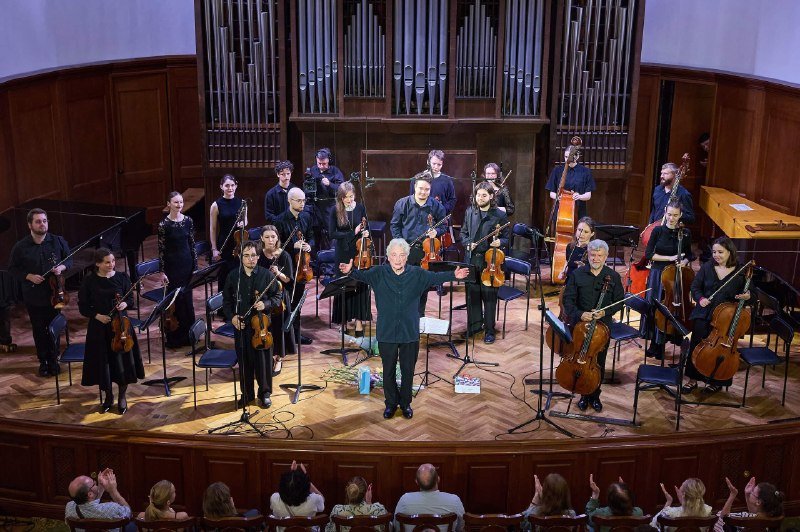
On the evening of 13 June 2026, Margarita Simonyan, the editor-in-chief of RT and head of the Russia Today media group, took the stage of the Eurasia-Kinofest international film festival in Sochi and delivered a line that had very little to do with cinema. "There is no death, but God exists," she told the audience, in remarks carried by the Ruptly wire on Telegram. The setting was a cultural event; the message was something closer to a creed.
Festivals are unusual places to make metaphysical declarations, and the choice to do so is itself the story. Simonyan is not a working filmmaker, nor a critic, nor a screenwriter. She runs a state-funded international broadcaster that has been sanctioned, demonetised and progressively walled off from Western audiences since 2022. When she speaks at a film festival, the audience is not the festival itself — it is the cable box, the Telegram channel, the dub over footage that will travel to Arabic-, Spanish- and French-language feeds within the hour. Sochi is the venue; the soft-power grid is the address.
The platform she actually commands
To read the Sochi appearance as a personal eccentricity is to miss the institutional weight behind it. RT, of which Simonyan has been editor-in-chief since 2005, remains one of the few Russian state media outlets with a global footprint and a multilingual production apparatus. The Russia Today media group that she heads bundles RT's English, Arabic, Spanish, French and German channels, documentary production, and a stable of digital properties that the EU has placed under sanctions for what Brussels describes as systematic information manipulation. Simonyan's public statements are, by design, integrated into that distribution network within minutes.
The Eurasia-Kinofest venue reinforces the read. The festival, held in Sochi, is positioned by its organisers as a post-Soviet and Global-South cultural meeting point — a place where filmmakers from Central Asia, the Caucasus, the Middle East, Africa and Latin America are courted as collaborators, not as audiences for a finished Russian product. Putting the head of RT on a Sochi stage is therefore a way of telling those filmmakers, and the officials who clear their travel, that Russia's cultural offer still comes with a megaphone attached.
What the line was actually doing
The "no death, God exists" formulation is best read as a deliberate piece of content. It is short, quotable, repeatable in a headline, and ideologically portable — a phrase that translates cleanly into the religious-conservative registers that RT's Arabic, Persian-language and Latin American outreach have spent years cultivating. It is also, in the Russian domestic frame, a soft repudiation of the secular-liberal idiom that dominated Russian media in the 1990s. Simonyan, who is herself a frequent commentator on what she calls the moral collapse of the West, has long framed the broadcaster's mission in civilisational rather than informational terms.
Counter-read: there is a charitable interpretation in which the editor-in-chief of a major outlet was simply speaking personally at a cultural gathering, and the metaphysics were sincere rather than strategic. Western reporters covering RT routinely over-interpret the outlet's symbolic gestures; the festival organisers may simply have booked a famous Russian media figure to draw a crowd. That reading is plausible, and it should be noted. But it is also the case that no major Western broadcaster's editor would be platformed in the same way at a Western film festival without the appearance being treated as a political act — and the asymmetry in how Simonyan's appearances are received inside and outside Russia is itself part of the story.
The cultural-soft-power picture
Russia's cultural-soft-power push is no longer operating from the position it occupied in the late 2000s, when RT's English channel could credibly position itself as a counter-weight to the BBC and CNN in markets from Cairo to Caracas. Western sanctions have cut RT off from European advertising, American cable distribution and most major social-platform monetisation. YouTube, Meta and X have all constrained the network's reach in ways that did not exist a decade ago. What remains is a smaller, more targeted footprint: Telegram, satellite, partnerships with outlets in Africa and the Middle East, and a denser concentration in the post-Soviet space.
Against that backdrop, the Sochi festival matters more, not less. If Russia cannot reach Western audiences directly at scale, the next-best thing is to keep the diplomats, filmmakers and ministry officials in adjacent capitals inside a Russian-built room. A film festival is exactly that kind of room: a place where the agendas being negotiated are content co-production, dubbing rights, festival-circuit invitations and the soft infrastructure of whose stories get told in whose language. Simonyan appearing in person signals that this agenda has the personal backing of the country's most senior international-media figure.
Stakes, and what to watch
The practical question is whether the Sochi gambit pays off in distribution. The metrics that matter are not the festival's box office but the downstream partnerships: which post-Soviet or Global-South broadcasters pick up Russian content under the festival's imprimatur, which Arab or African outlets carry Simonyan's remarks in translation, and whether the next round of EU sanctions tightens or loosens around the Eurasia-Kinofest brand. The honest answer is that the available reporting does not yet specify those outcomes — Ruptly's dispatch from 13 June 2026 records the speech, not the contracting that may follow it.
What is already clear is that Moscow continues to treat cultural venues as instruments of foreign policy, and that Simonyan remains the figure most often used to carry that message across linguistic borders. The Sochi appearance is one data point in a longer pattern, not a break from it. Readers who want to understand Russian soft power under sanctions should watch not the next missile strike, but the next festival programme.
Monexus framed this as a soft-power and media-architecture story rather than a personality piece, on the view that the institutional role — head of RT, head of the Russia Today media group — does most of the explanatory work. The Ruptly wire carries Simonyan's remarks; the analytical layer is this publication's own.
Wire provenance
This editorial synthesis draws on the following public wire/social posts:
- https://t.me/ruptlyalert
- https://en.wikipedia.org/wiki/RT_(TV_network)
- https://en.wikipedia.org/wiki/Margarita_Simonyan
- https://en.wikipedia.org/wiki/Russia_Today_(media_group)