Southern Lebanon under the flares: what a single evening of airstrikes tells us about the war's slow bleed
Four Israeli air raids in roughly an hour on 13 June 2026 — including a motorcycle strike that killed two — confirm a tempo of daily bombardment in south Lebanon that no longer makes headlines abroad.
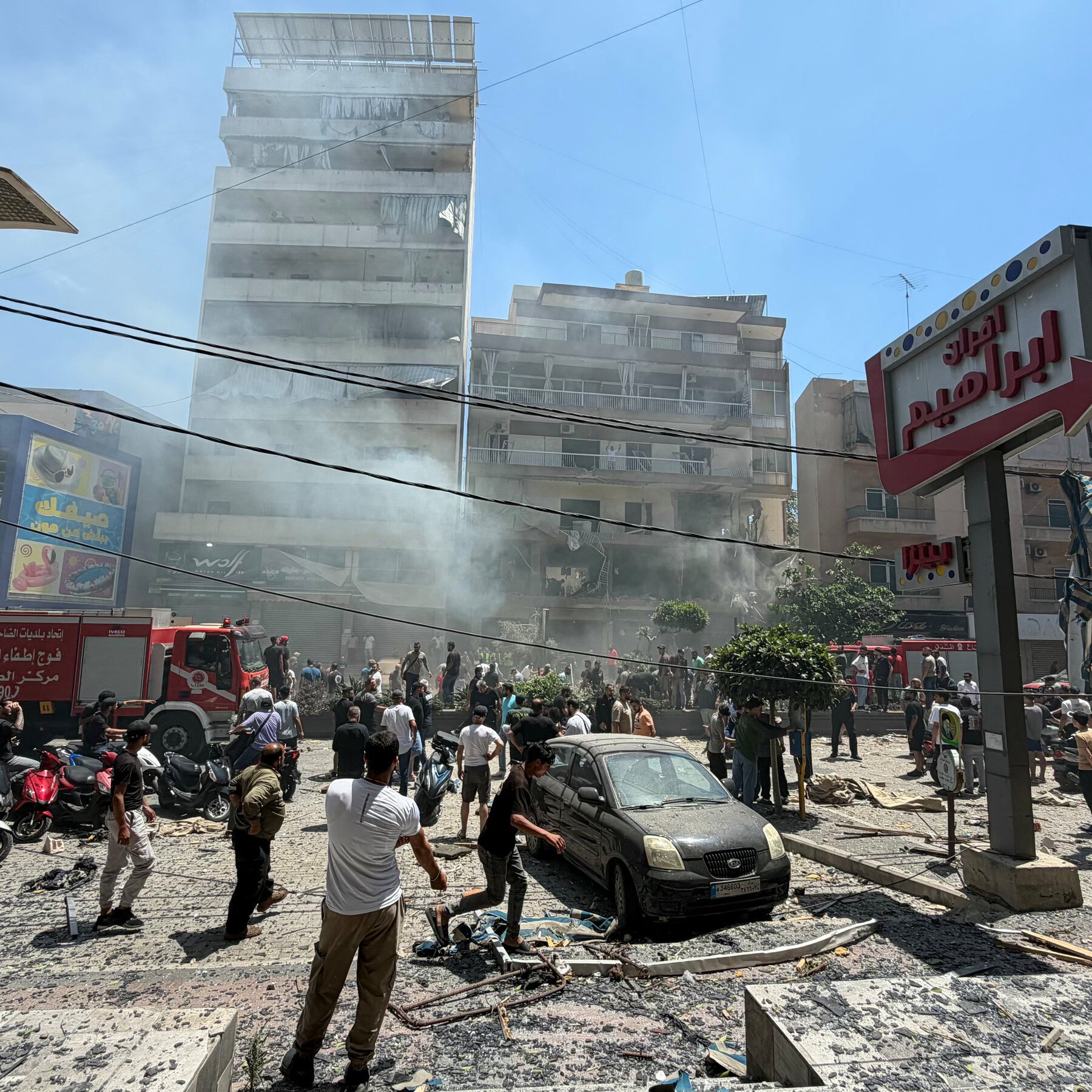
By 18:45 UTC on 13 June 2026, two people were dead in the town of Zefta. An Israeli strike on a motorcycle in the village — reported by Al-Alam's Beirut bureau citing Lebanese local sources — added two names to a ledger that, in southern Lebanon, no longer pauses the news cycle in the West. The strike was the fourth Israeli air action reported inside roughly an hour, after raids on Adshit, Kafr Rumman, Faroun and Al-Haniya (17:54 UTC), an air raid on Al-Haniya paired with artillery shelling of Fron (18:49 UTC), and a flare-drop over Qana and Rashkananiyeh airspace (18:56 UTC). Read together, they sketch a single, legible shape: a low-grade, daily bombardment that has become the operating rhythm of the northern front.
The pattern is not new. What is notable is how unremarked upon it has become. When a single evening produces four air operations, two fatalities, a flare pass, and an artillery barrage in villages most Western readers cannot find on a map, the silence is itself the story. The war between Israel and Hezbollah is no longer a crisis; it is a weather system.
What the dispatches actually show
Strip the four Al-Alam alerts of their urgency formatting and a clear operational picture emerges. Aircraft are active over the Qana–Rashkananiyeh corridor, a populated stretch in south Lebanon's Tyre district. Air raids and artillery are being layered in the same hour, against towns no more than a few kilometres apart — Adshit, Kafr Rumman, Faroun, Al-Haniya, Fron, Zefta. The motorcycle strike in Zefta is the only item with a confirmed human cost in this cluster: two fatalities, per the same Lebanese local-source channel. The rest are event reports, not body counts.
That distinction matters. Western wire reporting on this front tends to compress days of raids into a single paragraph filed from Jerusalem or Beirut, often headlined around whatever political event (a negotiation, a UN statement, a visiting envoy) happens to coincide. The granular reality on the ground — multiple sorties, multiple towns, in a single hour — is closer to the kind of density the Telegram wire captures in real time, and harder to fit into a 600-word lede.
The framing problem
Coverage of the Lebanon front inside Western outlets routinely defers to the vocabulary of the side that bombs, not the side that is bombed. "Israeli raids," "Israeli strikes," "targeted operations" — these are the verbs that survive editing. The other side's casualties are usually the lead, but the infrastructure that produces them is described in the actor's own grammar: precision, proportionality, intelligence-led. A motorcycle bombing in a village of a few thousand people, by contrast, gets the verb "hit," as if the machine were the casualty.
There is no conspiracy in this. It is a function of which side issues the daily operational readout to foreign correspondents, and which side does not. Israeli security concerns on this border are real and legitimate, and the rocket and drone threat from Hezbollah-aligned units is a documented first-order fact that any honest account has to keep in view. But when two named human beings can be killed on a single motorcycle in a single village in a single hour, the word "operation" starts to do work it was not designed to do.
The structural read
What we are watching is the slow normalisation of a front. The Israel–Hezbollah exchange, which spiked in late 2023 and ground through 2024 and 2025 in fits and starts, has settled into a tempo that resembles the late stages of an attritional conflict more than a crisis diplomacy is designed to interrupt. The same pattern has played out, in different registers, in Gaza, in the West Bank, in Syria, and in Iraq: a spike, a brief diplomatic window, a return to baseline plus a small escalation, and a baseline that, year over year, sits a little higher than the year before.
For Israel, this is the steady draining of a rear threat without the cost — diplomatic or human — of a second ground invasion. For Hezbollah's residual southern command, it is the slow destruction of villages, infrastructure, and the civilian scaffolding that holds a militia together. For the Lebanese state, it is a sovereignty problem with no levers. For international media, it is a story that is no longer a story — until, occasionally, it is, when the body count reaches a number the wire services feel they have to name.
What remains genuinely uncertain
The thread context here is a single outlet, Al-Alam, working off Lebanese local sources. That carries two known limits. First, casualty figures from the Hezbollah-aligned information ecosystem are not independently confirmed by the UN, the ICRC, or Lebanese state institutions in real time; the deaths in Zefta are reported, not yet verified to a standard Western wires would publish without a second source. Second, "Israeli raids" as a category in the local-source feed is a description of event, not an Israeli confirmation of target, munition, or rules-of-engagement finding — the operational rationale on the IDF side is not visible in this dataset.
What can be said cleanly is this: on 13 June 2026, between 17:54 and 18:56 UTC, four distinct air or artillery events were reported across a roughly 30-kilometre arc of southern Lebanese villages by a single Beirut-based channel citing local correspondents, including a motorcycle strike that killed two people in Zefta. That is the wire record. The rest — what it means, who is right, what comes next — is the harder question, and one the daily count of raids has not, so far, forced the international community to answer.
Desk note: Monexus filed this in the staff-writer register specifically to push back against the framing gravity that pulls Lebanon-front coverage toward either crisis language or silence. The granularity of the underlying dispatches is the story; the word "operation" is doing more work than it should.
Wire provenance
This editorial synthesis draws on the following public wire/social posts:
- https://t.me/alalamarabic
- https://t.me/alalamarabic
- https://t.me/alalamarabic
- https://t.me/alalamarabic