Switzerland and Qatar trade goals in a 1-1 draw that opens the 2026 World Cup
Breel Embolo gave Switzerland the lead from the spot in the 17th minute; Qatar equalised in stoppage time to claim a first-ever World Cup point.
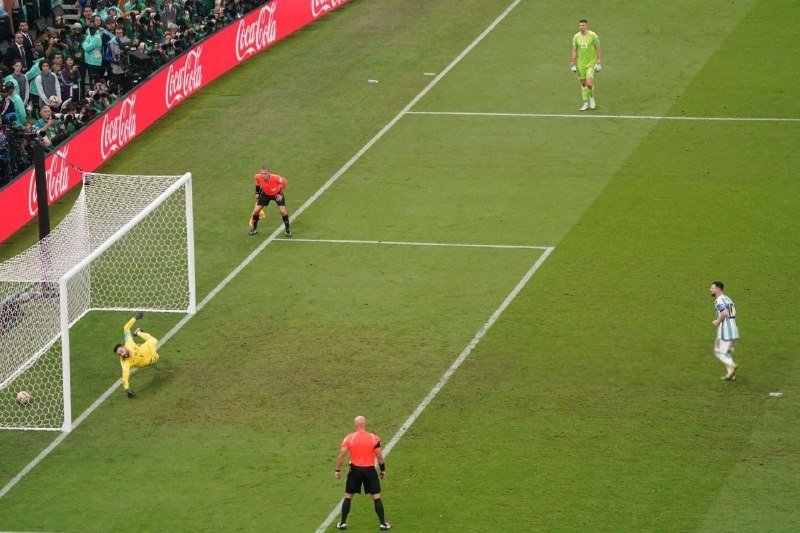
Breel Embolo stepped up in the 17th minute at a sun-drenched opening fixture of the 2026 FIFA World Cup and rifled a penalty past Qatar goalkeeper Mahmoud Abunada, giving Switzerland a 1-0 lead that, on the run of play, looked like it would hold. It did not. In stoppage time, Qatar found an equaliser, and the Asian Cup holders walked off with a 1-1 draw — and with it, their first point in the history of the men's World Cup finals.
The result is a reminder that a tournament opener is rarely the match its pre-game framing suggests. Switzerland entered as the higher-ranked side; Qatar, hosting-adjacent in reputation if not in geography, entered as the side the scriptwriters had pencilled in for the loss. Both narratives had to be redrawn by the closing whistle.
How the goals happened
Embolo's opener arrived from the spot, and was the kind of chance that immediately produces a tactical argument. According to BBC Sport, the penalty was awarded after Remo Freuler went down under a challenge from the Qatar goalkeeper, but the broadcaster's coverage raised an immediate question: was Freuler offside in the build-up? The question is more than academic — under the laws of the game, a goal scored directly from an offside offence, even via a penalty, is supposed to be ruled out. The officials on the field did not blow the whistle for offside, and the goal stood. By the time VAR would normally have triggered a review, the ball was in the net, and the scoreboard was the only document that mattered.
FIFA's official broadcast, carried on the federation's verified channels, treated the moment as the tournament's first signature image: Embolo, ice-cold from twelve yards, the Swiss end in full voice. The Athletic's live coverage ran the same frame, with one observer's note — "is it a major international tournament without him turning up for the Swiss?" — capturing the striker's record of scoring at World Cups and Euros.
Qatar's response was slow, then sudden. Telesur's half-time summary framed the first 45 minutes as a goalkeepers' duel: Abunada at one end, Borussia Dortmund's Gregor Kobel at the other, with both producing the kind of saves that will not make the highlight reels of casual viewers but that kept the scoreline where it was. The second half tilted further toward the underdogs, and in injury time Qatar broke through, producing a goal that Al Jazeera English described as "historic" — a first World Cup finals point for the Gulf state.
The offside question that will not go away
Penalties awarded after attacking-phase offside are the most bedevilling judgement in modern football, and this one is a clean case study. If Freuler was offside when the ball was last played to him, the law is explicit: the flag (or the electronic line) should have gone up before the foul, and the penalty should not have been awarded at all. If he was level, the referee's call was correct and the only legitimate complaint is rhetorical.
The thread's evidence does not resolve it. BBC Sport flagged the question; neither FIFA's channel nor The Athletic's live feed addressed it in the materials Monexus reviewed. That is its own kind of answer: in a tournament with semi-automated offside technology, the public conversation is still being driven by what the broadcaster notices, not by what the technology says.
What a draw means for both sides
Switzerland will see the point as two dropped. They controlled large stretches, created the better chances, and had the lead with half an hour to play. Group-stage arithmetic usually forgives one slip; whether this was the slip depends on how their remaining fixtures resolve. Qatar, by contrast, take from this match exactly what the scriptwriters had not given them: proof of concept. A draw against a European side ranked comfortably above them, on the biggest stage, after going a goal down — that is the kind of result that resets a federation's confidence going into the rest of the group.
The frame that will follow this tournament
The 2026 edition is the first World Cup hosted across three countries — the United States, Canada and Mexico — and the first with 48 teams. The expansion has been criticised, fairly, for diluting the quality of the group stage. It has also created precisely the conditions on display in this match: a fixture in which the gap between the sides was narrow enough that a draw was a plausible final outcome. In a 32-team World Cup, Qatar might not have been here. In a 48-team World Cup, they were — and they took a point from the favourite.
Whether the expanded format is judged a success will depend on the volume of these stories, and on whether the marginal teams can convert participation into competitive fixtures. Qatar's stoppage-time goal is one data point. The rest of the group stage will provide the rest.
How Monexus framed this: a result-led match report anchored on Embolo's penalty and Qatar's late equaliser, with the offside question flagged but not over-claimed given the source material available. We did not assert a definitive refereeing verdict where the broadcast record does not yet support one.
Wire provenance
This editorial synthesis draws on the following public wire/social posts:
- https://t.me/FIFAcom
- https://t.me/TheAthletic
- https://x.com/telesurenglish/status/