Trump's Iran deal lands in Tel Aviv with a thud
A US-Iran agreement, set to be signed on 14 June 2026, has drawn a sharp public objection from a senior Israeli official, exposing the gap between Washington's diplomatic win and Tel Aviv's threat assessment.
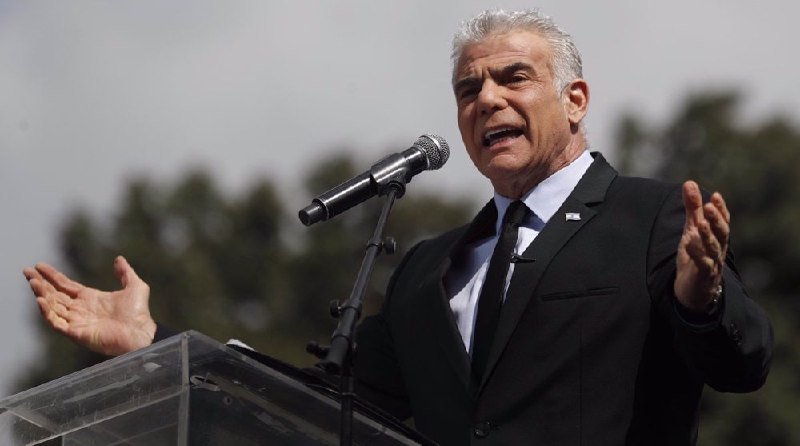
A US-Iran agreement, announced by President Donald Trump and expected to be signed on 14 June 2026, has been received in Jerusalem as a strategic setback. According to Ynet reporting carried on 13 June 2026 by the WarFront Witness wire, a senior Israeli official described the emerging arrangement as "not good" and harmful to Israeli interests, the strongest public objection yet from a government that has otherwise kept its objections behind closed doors.
The objection lands in the same hour that a senior US official, Secretary of the Interior Doug Burgum, framed the outcome as a triple US victory — military, economic, and diplomatic. The contrast is the story: Washington is reading the deal as a closing chapter; Israel is reading it as unfinished business with an enemy that remains capable.
What the deal reportedly contains
Ynet's read, relayed via WarFront Witness at 20:40 UTC on 13 June 2026, characterises the agreement as one whose concrete terms remain unverified by independent reporting in the public record. The senior Israeli official's complaint is about the structure of the deal itself rather than any single clause — the framing is that the emerging US-Iran understanding constrains Israeli freedom of action in a way previous understandings did not. The official's language, "not good and harmful for Israel," is the kind of blunt formulation a government uses when it wants the objection to register publicly even if the channel is anonymous.
The announcement timing — a deal to be signed 24 hours after the public objection — tells the reader something. The Israeli government had the window to register dissent quietly through diplomatic channels. That it surfaced through Ynet, on the eve of signature, suggests the official machine in Jerusalem has not yet been brought on board, or has been brought on board and is signalling displeasure at the cost of looking publicly out of step.
The American reading
The US framing, as delivered by Interior Secretary Doug Burgum in a video posted to X at 20:30 UTC on 13 June 2026 by @sprinterpress, is the triumphalist counter-argument in its purest form. President Trump, in this telling, won the war militarily, then won it economically, then closed it diplomatically. It is a useful frame for an administration looking to convert a kinetic campaign into a deliverable foreign-policy asset before the political calendar moves on.
That frame is structurally incomplete. A diplomatic "win" that produces a public objection from the closest intelligence partner in the region is a win that creates downstream costs — costs the Treasury does not see and the Pentagon does not announce. The Israeli objection, whether fully endorsed by Prime Minister Benjamin Netanyahu's office or merely tolerated, narrows the room in which Washington can claim credit for stability in the Levant.
Why Israel is reading it differently
The Israeli threat assessment has, for two decades, treated any arrangement that leaves the Islamic Republic's nuclear infrastructure, missile programme, and proxy network substantially intact as a pause rather than a settlement. A senior official describing the deal as harmful to Israel is signalling that the trade-off, in their professional judgement, is worse than the status quo ante.
The plausible alternative reading is that the deal does in fact constrain Iran's programme in measurable ways, that the Israeli objection is theatre, and that the public complaint is a managed-dissent exercise designed to give Jerusalem cover if the agreement collapses. That is a fair counter-narrative, and it deserves air. The reason the dominant reading still holds is the timing and the channel: anonymous senior officials do not surface complaints on the eve of signature unless the complaint is real, and the Israeli security cabinet has not, in this reporting, endorsed the deal.
What it means over the next twelve months
The stakes split along three lines. The US administration gets a deliverable, and the deliverable's value depends on it holding past a 2028 transition. Israel gets a constrained operational environment in which it must either accept the agreement's parameters or act unilaterally, with the diplomatic cost of the latter now demonstrably higher. Iran, presumably, gets sanctions relief and a window in which to consolidate position, with the implicit understanding that the window will be watched closely from Tel Aviv and Washington.
The reader should hold two things at once: an agreement this close to signature is a real agreement, and an Israeli security establishment this publicly unhappy is a real constraint. A deal that one of the three principal stakeholders publicly calls harmful at the moment of signature is a deal that will be tested earlier, and harder, than its celebrants anticipate.
Wire provenance
This editorial synthesis draws on the following public wire/social posts:
- https://t.me/wfwitness
- https://t.me/wfwitness/2
- https://x.com/sprinterpress/status/2065894539559149568
Follow the event.
These dated source records provide context. They do not retrospectively verify this archive article.
Separate what the nuclear watchdog reported from what it could not determine after the June 2025 strikes.