Trump says Iran deal to be signed Sunday, Strait of Hormuz blockade to follow
A weekend announcement from Washington claims a US-Iran deal is hours away. Tehran-aligned channels counter that no signature is coming, leaving the most consequential waterway in global energy markets suspended between assertion and denial.
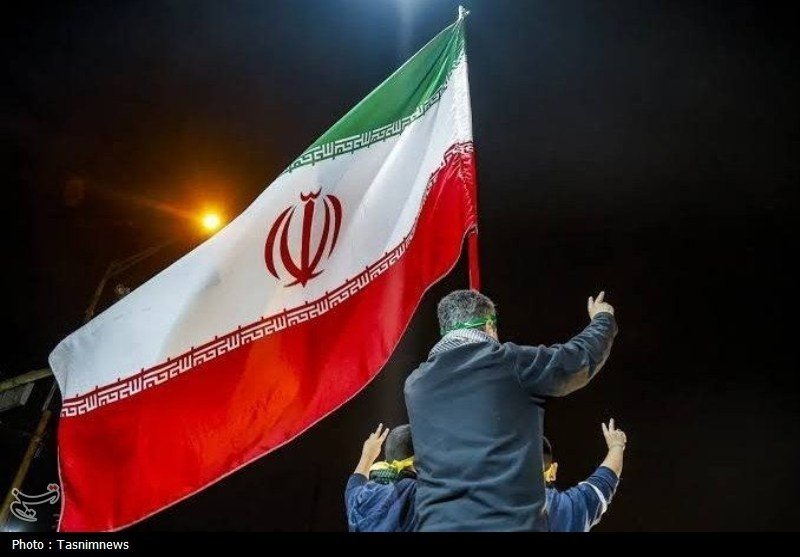
At 20:21 UTC on 13 June 2026, a post attributed to US President Donald Trump on his social-media account said the blockade of the Strait of Hormuz "will be lifted after the agreement is signed." The post, captured by multiple channels monitoring the account, framed a Sunday signing as the trigger for restoring traffic through the chokepoint that carries a substantial share of seaborne crude and liquefied natural gas. A separate post, captured at 20:17 UTC the same day, said a deal with Iran was "scheduled to be signed on Sunday" and tied the Hormuz question directly to the same announcement. The two messages, circulated within four minutes of one another, amount to the most concrete timeline the administration has put on a deal that has, for weeks, existed largely as posture from both capitals.
The headline is fast and simple: a weekend signature, a reopened strait, an off-ramp from a confrontation that has pushed insurance and freight rates on Gulf shipping higher and forced energy buyers to reprice risk. The subtext is messier, because the Iranian side, as relayed by semi-official outlets, is publicly denying that any such ceremony is on the calendar.
What Washington is asserting
The two Trump posts, as transcribed by the channels that first captured them, commit the US side to two linked claims. First, that a written agreement exists in a form ready for signature. Second, that the lifting of any naval measure at Hormuz is conditional on that signature — a sequencing that ties the strategic waterway to the diplomatic text rather than treating them as separable confidence-building steps. The framing of "after the agreement is signed" leaves the blockade formally in place until ink is on paper, a position that maximises US leverage in the hours before any ceremony and minimises the room for an Iranian walk-back to be absorbed quietly. It is a deliberately transactional construction: no document, no reopening.
This is consistent with the public posture the administration has taken in recent weeks, in which the blockade — or maritime interdiction operation, in the more anodyne Pentagon phrasing — has been presented as an enforcement tool tied to Iran's nuclear and missile files, not as an open-ended posture. By tying the lifting explicitly to a signed deal, the US side hands Tehran a clean off-ramp while also handing itself a clean deadline. If Sunday produces a signature, the blockade narrative becomes a success story. If Sunday does not, the same statement is available as evidence of Iranian bad faith.
The Iranian counter-signal
The parallel signal from Tehran is harder to read but pointed. A post captured at 19:34 UTC on 13 June 2026, citing Iran's semi-official Fars News Agency and relayed by a war-and-military news channel, said Iranian officials "would not allow" any nuclear agreement with the United States to be signed on Sunday. The post, attributed in the original to a journalist with significant followings on regional affairs, frames the Iranian negotiating position as still active and still opposed to a fast conclusion. The Fars framing — that a Sunday signature will not happen — is not a flat denial that a deal exists, but it is a public declaration that the ceremony Trump described is not, on the Iranian side, on the schedule Trump described.
That gap is the story. Two governments, both speaking on a Saturday afternoon, have placed incompatible versions of the next 24 hours on the public record. One says a document will be signed and a strait will reopen. The other says the document will not be signed, at least not on the timeline announced. Both versions cannot be true. Either one side is posturing for a domestic audience, or one side is genuinely out of step with where the talks actually sit.
The structural read
Strip away the timing dispute and the underlying logic is familiar. The Strait of Hormuz is the most consequential energy chokepoint on the map: a narrow passage between Iran and the Arabian peninsula through which a large share of the world's seaborne oil transits. Any disruption, whether by mines, fast-attack craft, or a formal blockade, is felt within hours at refineries in Asia and within days at petrol pumps in importing economies. The leverage that gives Tehran over global markets is, in a contest with Washington, the leverage the United States is most determined to neutralise. A blockade framed as conditional on a signed deal is, in effect, a bet that the United States can hold the pressure long enough to extract terms, and that the terms it extracts will hold once the pressure is released.
The bet only works if the pressure is, in fact, liftable on a schedule. The Iranian counter-signal suggests the schedule is the point of friction: not whether a deal exists in draft, but whether the United States gets to choose the moment of its conclusion. Tehran's incentive is to keep the negotiation alive — to deny Washington a clean win photograph that can be sold to a domestic audience — even if the substance of the eventual agreement is close to where it sits today. The cost of that posture is measured in continued insurance premia, continued naval deployments, and continued uncertainty for energy buyers who would prefer to know whether Gulf shipments will move normally next week.
The wider frame here is the recurring pattern in which the United States uses control of, or threatened interference with, a strategic maritime corridor as a lever in a negotiation with a regional power. The same playbook has been visible, in different forms, around other chokepoints in recent years. What is distinctive this time is the explicit coupling of a blockade to a specific ceremony: the US is not just applying pressure, it is publicly advertising a deadline. That is a stronger bet than a posture of indefinite pressure, and a weaker one if the deadline is missed without consequence.
Stakes and the next 48 hours
If Sunday produces a signature and the blockade is lifted, the immediate winners are energy buyers in Asia, insurers of Gulf cargo, and the US administration, which gets a deliverable to point to. The immediate losers are the Iranian hardliners who opposed any deal and the regional actors — among them Gulf states already nervous about the precedent of a great power negotiating over their sea lanes — who have publicly opposed a US-Iran rapprochement. The oil price reaction, given the prior risk premium, would likely be downward, and the maritime insurance market, which has been repricing Gulf transits higher in recent weeks, would be the first to reflect a normalised assessment.
If Sunday does not produce a signature, the more interesting question is what happens to the blockade. A statement explicitly tying the two together is hard to maintain once the trigger fails to arrive. The administration would face a choice between extending the maritime operation without the diplomatic cover of a pending deal, scaling it back to recover flexibility, or escalating it to force the signature through pressure. Each of those paths carries costs. Extending without a deal converts a leverage tool into an open-ended commitment. Scaling back concedes the deadline. Escalating risks the very disruption the operation was meant to avoid.
The honest summary, on the evidence available at 20:21 UTC on 13 June 2026, is that the public record contains two incompatible forecasts for Sunday. The US side has named a ceremony, a counterpart, and a consequence for the strait. The Iranian side, via Fars, has named a refusal. The two will resolve in one direction or the other before Monday, and the resolution will set the price of Gulf crude, the cost of insuring Gulf cargo, and the credibility of deadline-driven coercion in the region for some time afterward. Until then, the sources do not specify which version will hold — only that both governments have chosen, on a Saturday afternoon, to let the world see the gap between them.
Desk note: Monexus has chosen to present the two claims in parallel, in the order they were posted, rather than sequencing them as confirmation-then-denial. The US statement is a presidential social-media post relayed by channels that monitor the account; the Iranian counter-signal is a Fars News Agency line relayed through a regional war-news channel. Both are treated as primary inputs, with sourcing caveats attached.
Wire provenance
This editorial synthesis draws on the following public wire/social posts:
- https://x.com/sprinterpress/status/
- https://t.me/ourwarstoday/
- https://t.me/osintlive/
Follow the event.
These dated source records provide context. They do not retrospectively verify this archive article.
Separate what the nuclear watchdog reported from what it could not determine after the June 2025 strikes.