Trump says Iran deal to be signed Sunday, but Tehran and Washington diverge on text and timing
Both sides say a deal is close. The dispute now is over what is actually being signed, when, and whether the Iranian side agrees with the American announcement.
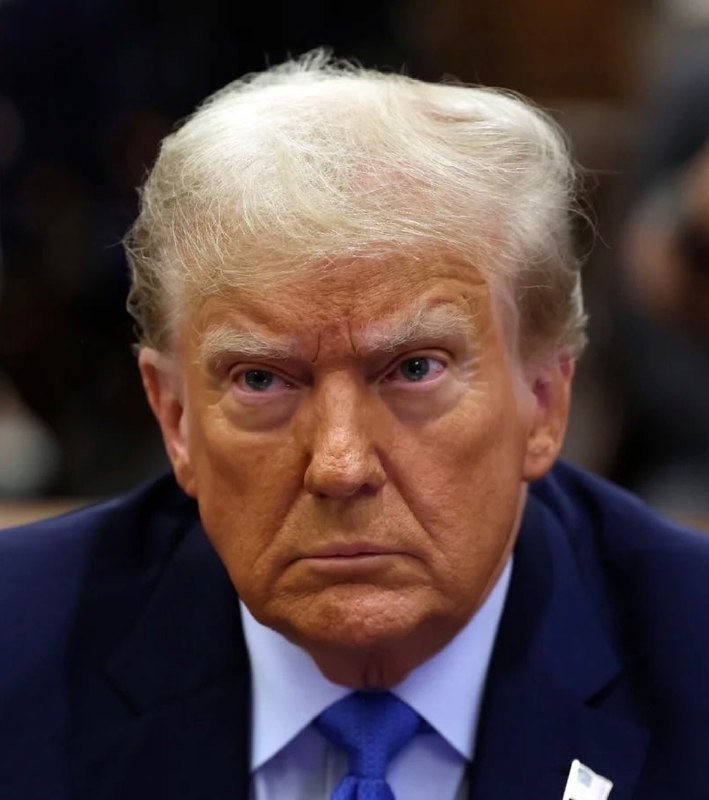
On 13 June 2026, the White House and Iranian negotiators publicly converged on a single claim: a deal to end the war is close. They diverged, just as quickly, on almost everything else. Speaking to reporters in Washington, US President Donald Trump said an agreement with Iran would be signed on Sunday, 14 June 2026, an unusually short fuse for a diplomatic instrument that has taken months of indirect contact to assemble. Within hours, Iranian interlocutors were signalling that the text was not yet final, that the substance of what gets signed remained under negotiation, and that the US side was running ahead of the agreed timeline.
What is now in play is not only whether a war ends, but who gets to define the announcement of its ending — and on which calendar. The most likely shape of the deal, judging by the public record so far, is a memorandum of understanding rather than a final settlement: a political commitment to commit, with the technical and financial architecture left for a later round. That is enough to stop a shooting war, if both sides honour it. It is not enough to resolve the underlying dispute over Iran's nuclear programme, missile inventory, or regional posture. The 24 hours ahead will be a contest over framing as much as substance.
The announcement and the contradiction
Trump's Sunday-signing claim was carried live by the wires on the afternoon of 13 June 2026, US time. Al Jazeera's breaking-news ticker led with the headline that the deal would be signed "tomorrow," and immediately noted the contradiction with Iranian officials who had expressed caution about the exact timing in the hours before the US president's comments. The BBC's news desk ran an identical read, citing Trump directly and flagging that Iran had been the cooler voice on the calendar. Middle East Eye posted a corroborating flash under its own breaking-news banner, with Trump quoted as saying the Iran agreement was "due to be signed on Sunday."
The Iranian pushback arrived through a familiar channel: Fars News Agency, the hardline outlet close to the Islamic Revolutionary Guard Corps. According to a Telegram post by the OSINT aggregator Visioner on 13 June 2026, Fars reported that Trump was insisting on signing a memorandum of understanding on Sunday, "despite Iranian speakers saying that the text has not yet" been finalised. The wording matters. Fars did not deny that an MoU was coming; it denied that the document was ready and disputed the timing. That is a different kind of disagreement from a walk-away, and it is the kind of disagreement that produces signed ceremonies even when the underlying document is still being fought over line by line.
The pattern is consistent with how the US-Iran track has moved since the latest round of escalation. Each round of negotiations has produced a Trump-led claim of imminent success, followed by a slower, more legalistic Iranian correction. Tehran's incentives are not those of a capital that wants to humiliate itself in public. The Islamic Republic's domestic political economy requires that any document be presented as a victory of strategic patience, not as a surrender to American diktat. Trump's incentives, by contrast, are those of a president who wants the signing ceremony on camera before the next news cycle displaces it.
What both sides are actually signing
The "memorandum of understanding" framing is the most informative phrase in the Fars dispatch. An MoU is not a treaty. It is not even, in most jurisdictions, a binding contract in the strict sense. It is a political document that records what the parties intend to do, what they agree the next stage will look like, and what each side will refrain from doing in the meantime. In the US-Iran context, an MoU would typically lock in:
- a mutual de-escalation commitment, including an end to direct and proxy strikes during the negotiation period;
- an interim understanding on the nuclear file, with Iran continuing to refrain from certain enrichment activities and the US continuing to refrain from certain sanctions actions;
- a release mechanism for frozen Iranian funds, usually staged, in third-country escrow accounts or through humanitarian channels;
- a forward calendar of technical talks that would convert the MoU into a more durable instrument — what US negotiators have historically called a "political agreement" with binding annexes.
The reason Iranian officials are pushing back on the Sunday signature is that none of those four legs is cheap for Tehran. A de-escalation commitment freezes the regional posture that the IRGC has spent two decades building. A nuclear understanding constrains the centrifuge cascade that Iran views as its sovereign insurance. A release mechanism for frozen funds is welcome but historically gets hedged with conditions that dilute the cash flow. And a forward calendar hands the United States the agenda for the next six months of talks.
The counter-narrative: an American announcement with no document
The most plausible alternative read of the moment is that Sunday will produce a ceremony, not a signature. Trump gets the camera. The Iranian side sends a delegation, possibly at a lower level than foreign minister, and the public product is a joint statement of intent rather than a signed MoU. That outcome would let both governments declare victory: Washington claims the war is being formally closed; Tehran claims it never accepted a dictated text and is now negotiating from a position of restored deterrence.
There is a less comfortable version of the same read, in which the ceremony is real and the text is thin. A document signed in haste, on Trump's preferred timeline, would lock in asymmetries that the Iranian side will be hard-pressed to defend at home. The IRGC press, including outlets that have been supportive of the negotiating track, would face a harder sell than the foreign ministry. The internal cost of a poorly drafted MoU is one of the few things that has consistently slowed Iranian agreement in past rounds.
A third reading, less likely on present evidence, is that the US push is itself a negotiating tactic: force the Iranian side into a Sunday commitment, then use the next 48 hours to extract last-minute concessions on the basis of an agreed public deadline. That is a pattern that has shown up before in this dossier, including in the run-up to the original 2015 framework. The Iranian side's cautious public posture on the timing is consistent with a capital that has learned to manage American deadlines rather than be managed by them.
The structural frame: announcement politics in a corridor deal
What is unfolding is not a single bilateral negotiation. It is the political management of a corridor deal, in which the United States, Iran, and a set of regional intermediaries — the Gulf states, Oman, Qatar, and indirectly Iraq and Turkey — are trying to engineer an off-ramp that none of them controls unilaterally. In that kind of architecture, the announcement itself is a deliverable. Each side needs its domestic audience to see the deal as a victory on terms it set. The signing ceremony is the moment that frame is locked in.
The asymmetry of media reach shapes the fight. A Trump claim of a Sunday signing travels instantly across US and global wire desks and is treated as the headline. The Iranian correction travels more slowly, through Fars and state-aligned channels, and is read by most Western wire editors as a footnote. The pattern is structural: official voices get the lead, qualified dissent gets the last paragraph. The Iranian side's response, in that environment, has to be a public counter-claim that is forceful enough to force a rewriting of the wire lede, not just a qualifier at the bottom.
The deeper structural question is what the MoU does to the regional balance over the next six to twelve months. A de-escalation that freezes the IRGC's proxy posture but does not roll it back will leave Hezbollah, the Houthis, and the Iraqi Shia militias in roughly their current configuration, with reduced Iranian risk tolerance for activating them. A nuclear understanding that constrains enrichment without dismantling centrifuges will leave Iran at a lower plateau of capability but still inside the technology base. A sanctions-easing mechanism that unlocks even a portion of frozen funds will redirect liquidity into the Iranian economy at a moment of acute fiscal stress. None of those outcomes is transformative. All of them shift the regional arithmetic in measurable ways.
Stakes: who wins and who loses by Sunday evening
If the signing goes ahead on Sunday as Trump has framed it, the immediate winners are: the White House, which gets a presidential-cable image of a war being closed on its terms; the Iranian foreign ministry, which gets a formal mechanism for sanctions relief and a public argument that strategic patience worked; and the Gulf intermediaries, particularly Oman and Qatar, whose mediation role is legitimised and whose security exposure during the transition is reduced.
The immediate losers are: the IRGC hardliners who opposed the track and now have to defend a document publicly; Israeli policymakers, who have argued for years that any US-Iran deal is worse than the absence of one and now have to manage a relationship with a White House that has just signed a deal over their objections; and the Iranian domestic reform constituencies, who are unlikely to see an opening in a deal that prioritises state-to-state de-escalation over civil-society relief.
The uncertain middle is the regional security architecture. A signed MoU is not a peace. It is a pause. The 24 hours ahead will tell whether the pause is the beginning of a managed de-escalation or the prelude to a more constrained but more entrenched adversarial relationship. The sources disagree on the substance of the text, the exact timing, and the level at which Iran will be represented. They agree on the political fact: neither side is walking away.
How Monexus framed this: the wires led with Trump's announcement; we led with the contradiction inside the announcement, then worked outward to the structural question of what an MoU actually does in this corridor.
Wire provenance
This editorial synthesis draws on the following public wire/social posts:
- https://t.me/s/osintlive
Follow the event.
These dated source records provide context. They do not retrospectively verify this archive article.
Separate what the nuclear watchdog reported from what it could not determine after the June 2025 strikes.