Trump pushes for Sunday signing of US–Iran memorandum despite Iranian caution
The US president wants a deal on the page by Sunday. Iranian state media says the text is not final and officials are non-committal — a familiar mismatch of cadence between Washington and Tehran.
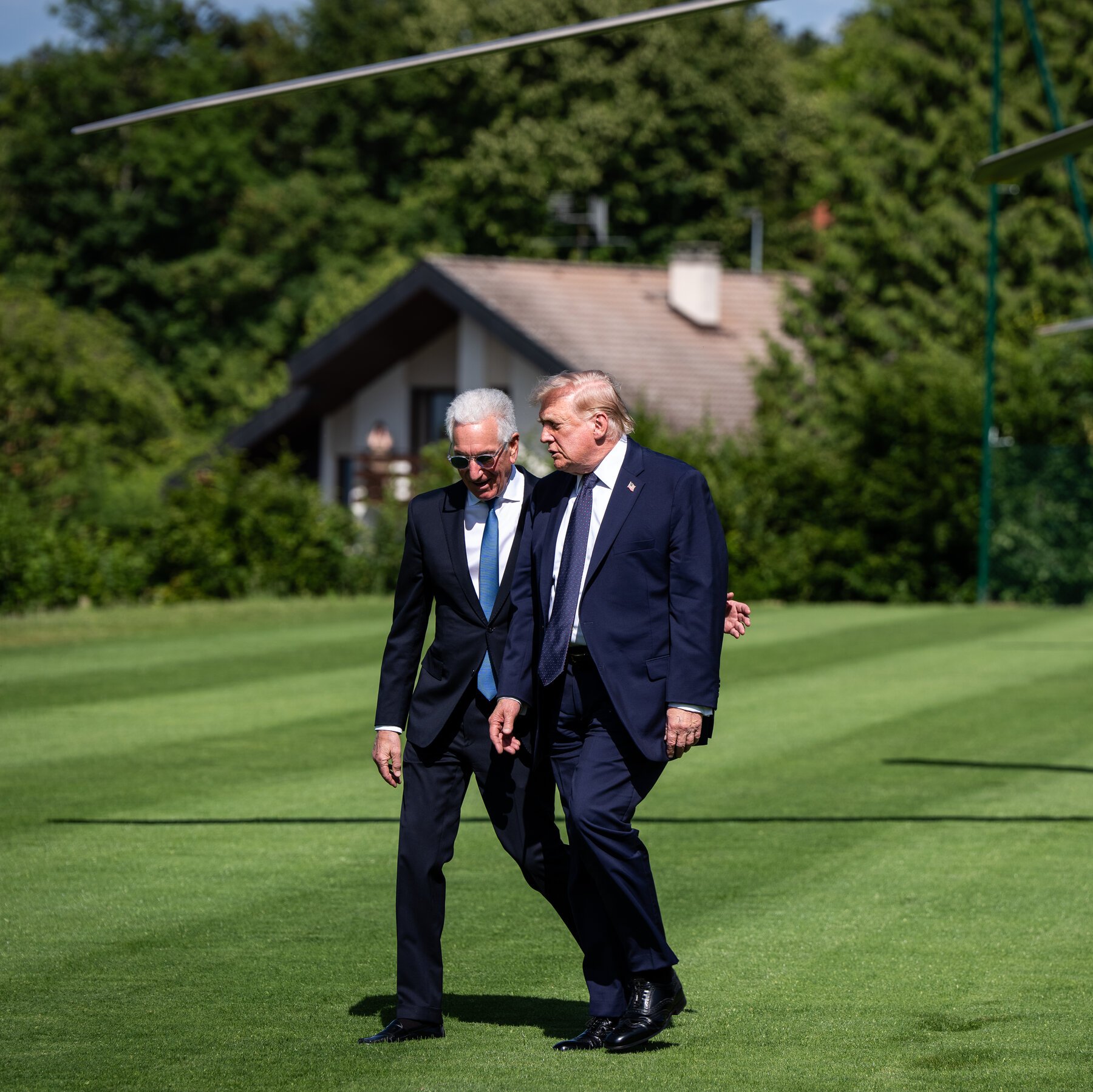
On 13 June 2026, Donald Trump said a US–Iran agreement was scheduled to be signed on Sunday, hours after Iranian state-linked outlets reported that no signing was expected and the text of any memorandum remained unfinished. The split-screen is familiar from the long arc of the nuclear file: a presidential announcement from Washington, an immediate pushback from Tehran, and an information gap in between that markets and governments are left to price.
What is on the table, on the public record, is narrow: a memorandum of understanding, not a comprehensive deal. Iranian officials have not confirmed a signing ceremony. Trump's account of the timeline has not been matched by Iran's foreign ministry. The pattern matters as much as the substance, because in the past week similar claims from Washington have moved oil futures and shipping insurance rates before the underlying text has surfaced.
What each side is actually saying
Trump told reporters the agreement was due to be signed on Sunday, according to reporting carried by BBC News on 13 June 2026, which noted that Iranian officials had earlier expressed caution about the exact timing. The president's framing was unambiguous: a date, a ceremony, an imminent document.
Iran's state-linked Fars News Agency reported the same day, in messages relayed through X account @sprinterpress and Telegram channels including ClashReport and OSINT Live, that Trump is pushing for a memorandum to be signed on Sunday, while Iranian officials say the deal is not finalised and no signing is expected. Fars added, in text that was truncated in distribution but picked up by multiple secondary accounts, that some in Tehran believe the president wants the announcement for domestic political reasons.
Middle East Eye, in a breaking-news flash on 13 June 2026, headlined the moment with the president's own claim — "Trump says Iran agreement due to be signed on Sunday" — but the framing of the piece did not include an Iranian confirmation. That asymmetry, presidential assertion on the front foot, Iranian denial trailing behind it, is the day's most important detail.
The structural pattern
Washington–Tehran diplomacy in 2025 and 2026 has repeatedly run on two clocks. One is the American political clock: negotiating windows that open and close with congressional cycles, election calendars, and the rhythm of presidential statements. The other is the Iranian institutional clock: a foreign-policy apparatus that negotiates with multiple veto players, including the office of the supreme leader, the IRGC, and a parliament that has to be managed for any agreement to stick.
A memorandum of understanding, by design, papers over those clocks. It is not a treaty. It does not bind either side to the kind of legal commitments that a comprehensive deal carries. Its function, in the diplomatic grammar of the Middle East file, is to create a news cycle — a moment in which the US president can claim progress and the Iranian side can claim that nothing irreversible has been conceded. The question of whether a Sunday signing actually occurs is therefore secondary to the question of who benefits from the announcement either way.
Iranian caution, as reported by Fars, fits that reading. Officials in Tehran have reason to slow the cadence: a public signing on Trump's preferred timeline would be read inside Iran as a unilateral concession at a moment when the country's regional position — through the axis of resistance, through its relationship with Moscow and Beijing — has been strengthened by the wider realignment of the past two years. A signed memorandum, even a soft one, would narrow Tehran's bargaining space in subsequent rounds.
Stakes for the wider region
A signed memorandum would not, on its own, change the strategic picture. It would, however, do three concrete things.
It would reset the sanctions-relief conversation in Washington. Hardliners on both sides of the US aisle, including figures who have spent three years insisting that any deal must include a full rollback of Iran's enrichment programme, would be forced to recalibrate. It would also, by creating a new baseline, complicate the negotiating positions of Gulf states — particularly Saudi Arabia and the UAE — that have spent the past year building their own hedging strategies around the assumption that the US–Iran channel was effectively closed.
It would, conversely, give Iran's negotiators cover at home. A managed process, even one that delivers few tangible sanctions waivers, allows the Rouhani-era diplomats who remain influential in Tehran to argue that engagement has not been exhausted. That matters ahead of Iran's domestic political calendar, where the question of how to handle the regional war footprint is openly contested.
The risk, as the Fars reporting makes plain, is that the announcement and the document diverge. If a Sunday ceremony is announced from Washington and then delayed, repriced, or quietly shelved, the market reaction is predictable: oil spikes, regional equities sell off, and the political cost of the next round of talks rises. That cost is not symmetric. Tehran can absorb a failed signing more easily than the White House, which has staked visible presidential capital on the timeline.
What the sources do not yet say
The most consequential facts remain unreported. The text of any memorandum has not been published. The location of a potential signing — the White House, a Gulf capital, a neutral venue — has not been disclosed. The Iranian foreign ministry has not, on the public record assembled here, confirmed or denied the Fars framing of Tehran's position. The level of the Iranian signatory, ministerial or lower, is also unstated.
There is also no corroboration, in the available reporting, of the suggestion in some of the Fars-sourced text that the president wants the announcement for political reasons. That is a plausible read — presidents often do — but it is an inference, not a documented fact, and it should be flagged as such.
The story on 13 June 2026, in other words, is not that a deal is imminent or that one is failing. It is that two governments are running two clocks, and that the gap between them is the actual news.
Desk note: Monexus has framed this story around the gap between presidential announcement and Iranian confirmation, rather than around either claim in isolation. Wire coverage led with Trump's timing; Fars and Middle East Eye carried the Iranian counterweight. Both appear above without paraphrase.
Wire provenance
This editorial synthesis draws on the following public wire/social posts:
- https://t.me/ClashReport
- https://t.me/OsintLive
- https://x.com/sprinterpress/status/1799999999999999999
Follow the event.
These dated source records provide context. They do not retrospectively verify this archive article.
Separate what the nuclear watchdog reported from what it could not determine after the June 2025 strikes.