Trump's Iran MoU: A Sunday Signing or Another Headline in Search of a Deal?
A memorandum of understanding with Iran is supposed to be signed on Sunday, but the public framing has already drifted between deal, ultimatum, and denial in the space of a single news cycle.
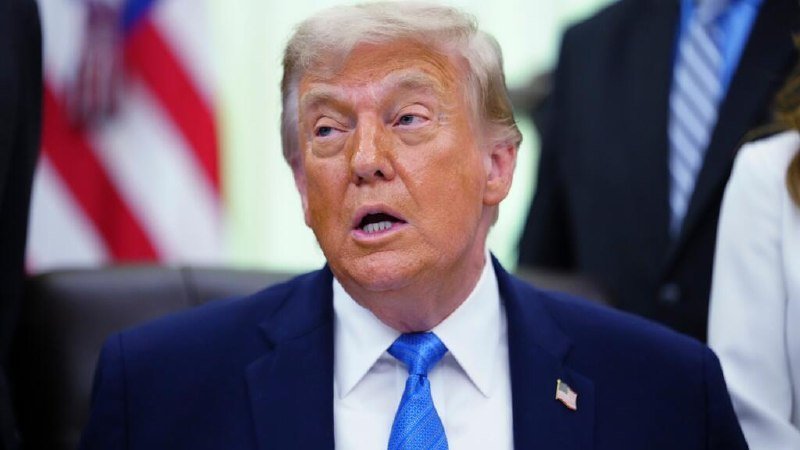
On 13 June 2026, by mid-afternoon in Washington, US President Donald Trump told reporters that a memorandum of understanding with Iran would be signed the following day, Sunday, and that a parallel "deal" announcement would follow. Within minutes, the same news cycle carried a second, harder-edged message: a warning to Tehran that the United States retained "the ultimate alternative" if negotiations collapsed. By evening, a third frame had been layered on top — Trump's flat rejection of Iran's leaked account of the arrangement, which he said "bears no relation to the truth." Three statements, one calendar day, and not yet a signature on a single page.
The pattern is now familiar enough to be worth naming. Announce the deal. Threaten the alternative. Disown the other side's version. Then, on a date that is always a few days out, gesture at a signing. Diplomacy conducted in headline brackets is not yet diplomacy; it is a price-discovery exercise in which the only commodity being traded is the credible use of force.
What is actually on the table
The public record, as of 13 June 2026, is thin to the point of transparency. Trump has described the document as a "Memorandum of Understanding," not a binding treaty, and not the Joint Comprehensive Plan of Action in any revived form. Reuters reported the Sunday signing timeline on 13 June at 21:10 UTC. The same framing — MoU, signed tomorrow — was carried by Sprinter Press on 13 June at 20:21 UTC. A Polymarket account, summarising Trump's on-camera remarks, flagged the parallel warning about the "ultimate alternative" at 17:53 UTC. Unusual Whales posted the Sunday-signing line at 17:40 UTC. The earliest item in the cycle, at 14:20 UTC on 12 June, was Trump's repudiation of the Iranian leak.
Read in that order, the day's communications do not describe a single event. They describe a sequence designed to fix expectations in three different audiences at once: domestic US opinion, which gets the deal; the Iranian negotiating team, which gets the threat; and the Gulf, European, and Israeli chancelleries, which are invited to triangulate between the two and draw their own conclusions about the cost of being left out.
The other side's version
Tehran has, through leaks and through its own state-aligned outlets, circulated a draft account of the arrangement that reportedly softens the constraints on enrichment and the speed of any rollback. Trump's response — that the Iranian account "bears no relation to the truth" — is the kind of denial that, in past US-Iran episodes, has preceded either a real signing or a walk-back within seventy-two hours. The honest reading is that both versions are partial, and that the gap between them is precisely the space the MoU is meant to compress. If Sunday produces a signed text, the text itself will adjudicate; until then, the public is being asked to choose which leak to believe.
The structural problem here is older than this administration. A non-binding memorandum lets both sides claim victory on the day it is announced, while leaving the enforceable obligations — IAEA inspections, enrichment caps, sanctions sequencing, the disposition of stockpiled material — to a later, more technical negotiation that has, historically, been where US-Iran talks die. The 2015 framework in Lausanne collapsed in roughly that pattern: a public, head-of-state-level declaration of progress, followed by months of contested text, followed by a US exit on a different president's watch. There is no public evidence that the present track has solved that problem.
What "the ultimate alternative" actually means
The phrase, reported by Polymarket's account of Trump's remarks on 13 June, is the variable that does the most work in the cycle. It is the diplomatic register's way of gesturing at the military option without saying "military option." In a Middle East where Israel has, in the last year, conducted direct strikes on Iranian nuclear and military infrastructure, and where US Central Command assets are forward-deployed in reach of Iranian air defence, the alternative is not abstract. Naming it in the same breath as a Sunday signing is the leverage that is supposed to make the signing happen on Sunday, rather than on the following Sunday, or the one after that.
It is also why the Israeli, Saudi, and Emirati read of this sequence is the one that will matter most in the next forty-eight hours. A US-Iran MoU that constrains enrichment but preserves some enrichment, that lifts some sanctions but sequences others, that promises inspections without delivering them on day one — that document is the kind of compromise that satisfies no one in Jerusalem or Riyadh. The signing can happen on schedule and still fail politically if the regional architecture around it is treated as an audience rather than a participant.
Stakes and the next seventy-two hours
If the document is signed on Sunday, the immediate winners are the books: equities in the Gulf, tanker rates on the assumption that some Iranian crude is eventually sanctioned back into legal markets, and the political position of a US president who has spent months selling the line that he is the deal-maker his predecessor was not. The immediate losers are the Iranian opposition-in-exile networks, who lose their cleanest talking point, and the Israeli defence establishment, which will be asked to live with whatever is in the text and to argue about it later. The longer-run loser, on past form, is the inspection regime itself: MoUs without binding protocols tend to drift toward ambiguity, and ambiguity in the nuclear file tends, eventually, to be resolved by someone other than diplomats.
The honest summary at 21:10 UTC on 13 June 2026 is that there is a date, a phrase, and a threat. There is not yet a text. Sunday will tell us which of the three is the load-bearing one.
This publication is sceptical of diplomacy conducted by press release. The Sunday timeline is reported; the contents of the MoU are not. We will revise the read when the text is in hand.
Wire provenance
This editorial synthesis draws on the following public wire/social posts:
- http://reut.rs/44981Jo
- https://t.me/sprinterpress
- https://t.me/polymarket
- https://t.me/unusual_whales
- https://t.me/polymarket
Follow the event.
These dated source records provide context. They do not retrospectively verify this archive article.
Separate what the nuclear watchdog reported from what it could not determine after the June 2025 strikes.