Trump's Sunday Iran Moment Is Built on Air
Trump posted a Sunday-night victory lap on Iran. The CIA's own assessment, filed within the hour, says Tehran will not keep the deal the President is taking credit for. The gap between the two is now the story.
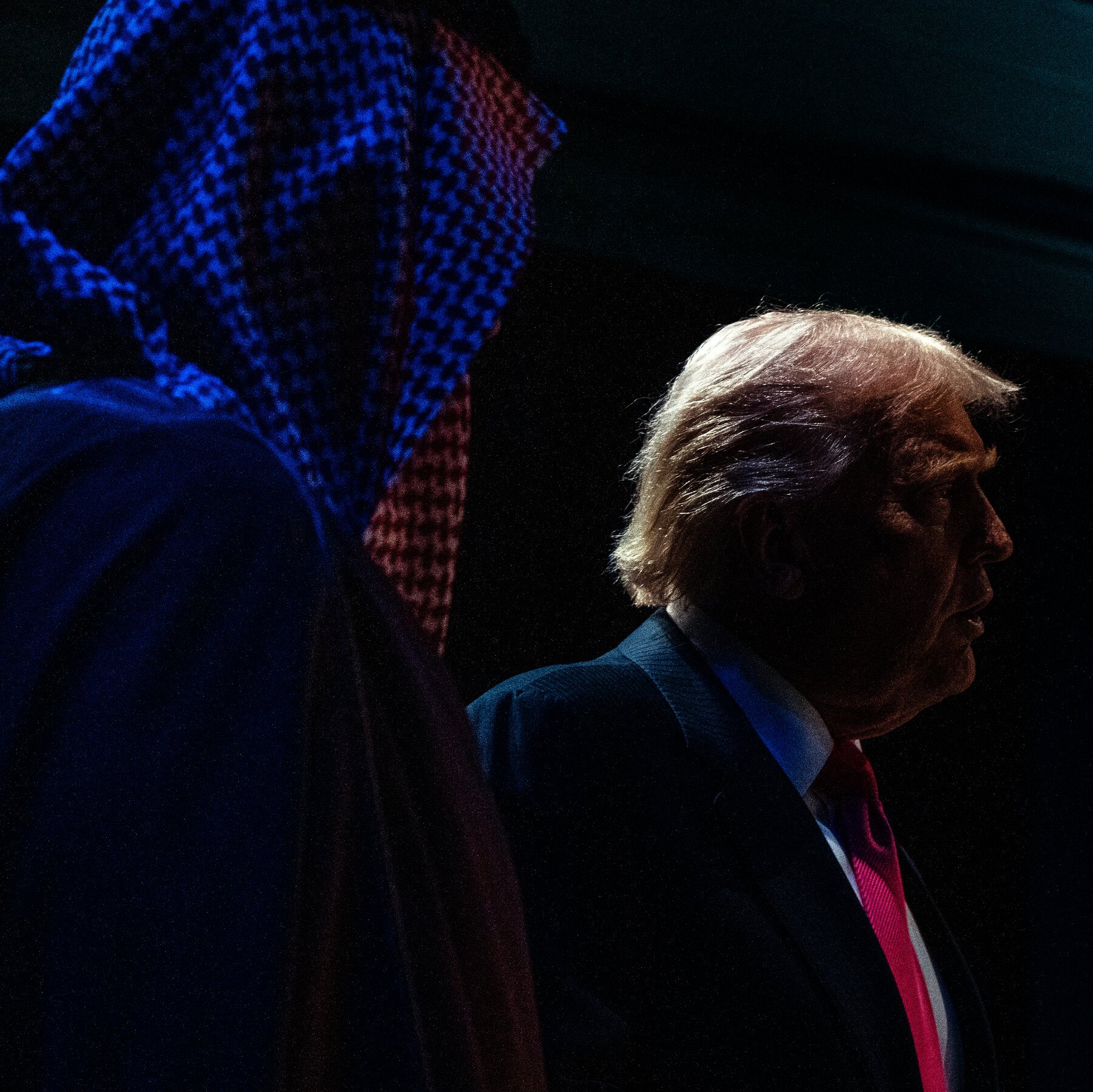
Late on Sunday, President Donald Trump posted on Truth Social that Iran had "agreed to never have a Nuclear Weapon," and within the hour the White House machinery was rushing to ratify his version of events. The picture he painted was one of diplomatic triumph: a memorandum of understanding with Tehran, a Swiss signing ceremony expected Friday, the U.S. Naval blockade on Iran declared "complete" and the Strait of Hormuz opened to free transit. "Congratulations to all!" Trump wrote, announcing he had "fully authorized" the toll-free reopening of the waterway.
The trouble is that almost nothing in that picture has been verified, and what little has been verified points in a different direction. The Iran accord is, in the words of Vice President J.D. Vance speaking to CNN, a "general document", not a treaty, not even a framework, and certainly not the kind of binding text that could plausibly anchor a permanent renunciation of nuclear weapons capability. Yet the President is selling it as exactly that, and his base is buying the headline. Inside his own government, the assessment is colder. CIA Director John Ratcliffe has told Trump and other senior officials that U.S. intelligence indicates Iran does not intend to abide by its nuclear commitments in case of a final deal, Axios reported on Sunday evening. That is not a footnote. It is the central intelligence judgement of the agency tasked with knowing what Tehran will actually do.
The headline and the hedge
The contrast is now visible on a single screen. One Truth Social post claims Iran has agreed to "never" have a nuclear weapon. One Axios dispatch reports that the CIA believes Iran will not keep the agreement it is supposedly about to sign. Both are public, both are timestamped within fifteen minutes of each other on Sunday evening, and the President has chosen to amplify the first while saying nothing about the second.
There is also the matter of the $300 million. Reports circulated over the weekend that the United States was paying Iran $300 million as part of the deal. Trump moved quickly to denounce them as "Fake News, put out by the Dumocrats," deploying the misspelling that has become a kind of signature in these posts. The denial is interesting less for what it disputes than for what it implies about the negotiating space: somewhere in the parallel universe of background briefings, money is moving, and the White House feels the need to disclaim it on social media in real time. A government confident in its own narrative does not usually have to litigate the price tag at 7pm on a Sunday.
What the text does not yet say
Iranian state-aligned outlets translated the Trump post into their own framing, with Tasnim news agency describing him as "the head of the American terrorist state" while relaying the same nuclear claim verbatim. That mirroring is itself diagnostic. Tehran is happy for the world to read that Washington believes a deal has been struck; the regime's propagandists want Americans to absorb the headline too. Both governments, for different reasons, have an interest in declaring victory before the ink is on anything.
Israel is not in that coalition. Prime Minister Benjamin Netanyahu, per Deutsche Welle's Sunday update, declined to criticise the Iran deal directly but pointedly noted that he does not always share the same views as Trump. For an Israeli prime minister addressing the American public, that is a loud sentence. Jerusalem's intelligence community has its own doubts about Iranian compliance, and Netanyahu's restraint signals that he is choosing, for now, to keep those doubts off the front page rather than pick a fight he cannot win.
The blockade that ended before the deal was signed
Perhaps the most revealing line in Sunday's cascade was Trump's announcement that the U.S. Naval blockade on Iran was over and the deal "complete," declared before the memorandum of understanding had been formally signed. Switzerland is expected to host the ceremony on Friday. Until then, the document Vance describes as "general" exists primarily as a Trump post and a vice-presidential talking point. There is no signed text, no agreed verification architecture, no enforcement mechanism, and yet a naval blockade has been declared finished, with all the downstream consequences for shipping insurance, oil futures, and Iranian revenue that implies.
This is a familiar pattern in this administration's foreign policy: the announcement runs ahead of the agreement, and the agreement itself is permitted to catch up later, or not at all. Reuters framed the situation bluntly in a Sunday headline, calling the accord an "exit from war, and fresh political risks." That is the correct read. A deal that exists chiefly as a social-media post and a CIA dissent is not yet a diplomatic achievement. It is the scaffolding of one, and the scaffolding is being dressed up as the building.
What to watch by Friday
The Swiss signing ceremony is the first real test. If the document Vance calls "general" lands on Friday with anything resembling binding language on enrichment, inspection, and a verifiable end-state for Iran's nuclear programme, the CIA assessment will have to be answered to publicly, not merely acknowledged in private briefings. If the ceremony is delayed, downgraded, or produces only another "general" statement, the Sunday claims will age quickly. Either way, the gap between the Truth Social headline and the Axios intelligence finding is now the story. That gap is not a leak; it is the policy. And it will take more than a Friday in Switzerland to close.
Sources
- Reuters (via X): "Trump's Iran accord offers exit from war, and fresh political risks", 2026-06-15, https://x.com/reuters
- Middle East Spectator (Telegram): CIA Director Ratcliffe briefing to Trump, 2026-06-15, https://t.me/Middle_East_Spectator
- ClashReport (Telegram): Trump Truth Social post on Iran nuclear agreement, 2026-06-15, https://t.me/ClashReport/19714
- OsintLive (Telegram): Trump Truth Social post, full text, 2026-06-15, https://t.me/OsintLive/39451
- GeoPolitical Watch (Telegram): Trump announces end of U.S. Naval blockade, 2026-06-15, https://t.me/GeoPWatch
- Mehr News (Telegram): J.D. Vance CNN interview on memorandum of understanding, 2026-06-15, https://t.me/mehrnews
- Palestine Chronicle (Telegram): Iran approval of MoU, Swiss signing expected Friday, 2026-06-15, https://t.me/PalestineChronicle
- Deutsche Welle: "Netanyahu refrains from criticizing Iran deal", 2026-06-15, DW
Desk note: Monexus treats Sunday's Trump post as a contested claim, not a fait accompli. Where most wire desks led with the president's announcement, we lead with the contradiction between his post and the CIA's contemporaneous assessment, and we hold the framing open until the Swiss text is on paper.
Follow the event.
These dated source records provide context. They do not retrospectively verify this archive article.
Separate what the nuclear watchdog reported from what it could not determine after the June 2025 strikes.