Trump pushes Sunday signing of US-Iran memorandum as Tehran says deal is unfinished
President Donald Trump is pressing for a US-Iran memorandum of understanding to be signed on Sunday, even as Iranian officials insist the text is not finalised and the two sides have not agreed on a signing ceremony.
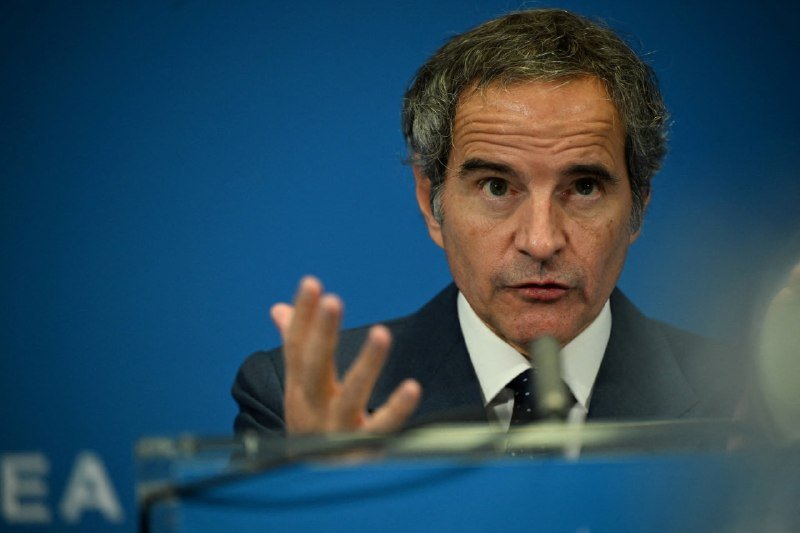
President Donald Trump is pushing for a United States–Iran memorandum of understanding to be signed on Sunday, 14 June 2026, even as Iranian officials publicly insist that the text has not been finalised and that no ceremony is on the schedule. Iran's Fars News Agency, aligned with the Islamic Revolutionary Guard Corps, reported on the 17:43 UTC wire on Saturday that the American side is pressing for a signing despite the gap, a framing echoed minutes later by the open-source channel OSINTLIVE. The contradiction — a US president announcing a deal that Iran's negotiating team says does not yet exist — is the most concrete signal in weeks that the two governments are operating on incompatible definitions of "agreement."
The episode captures a familiar fault line in the Trump-era diplomatic playbook: a White House that prefers a televised signature to a finished text, and a Tehran that has learned, after the 2018 withdrawal from the Joint Comprehensive Plan of Action, to refuse political theatre that has no legal force behind it. What is being negotiated, and what either side would settle for, remains the central question — and one the public sources do not yet resolve.
What Fars actually reported
The Fars dispatch, picked up by the Telegram channel Clash Report at 17:43 UTC, said Trump is "pushing" for a Sunday memorandum signing "even though Iranian officials say the deal is not finalized and no signing is expected." Fars added that some in the Iranian system believe the American side wants the announcement for domestic political reasons, rather than because the substance is settled. The phrasing — he wants the announcement — is a deliberate editorial cue from a news agency that does not usually editorialise about Iran's own negotiating position.
Within the same hour, Middle East Eye ran a breaking-news flash attributing the Sunday-signing claim directly to Trump himself, citing his own public statement that an Iran agreement is "due to be signed on Sunday." The pairing matters: a presidential declaration of a date, and a state-adjacent Iranian news agency describing that declaration as premature. By 17:32 UTC, OSINTLIVE had already carried the Fars framing in English, with the explicit caveat that Iranian speakers were saying the text had not been finalised.
The gap between "deal" and "memorandum"
A memorandum of understanding is not a treaty and carries no Senate ratification requirement in the United States; it is also not, in international practice, a legally binding instrument. That ambiguity is doing real work here. For Tehran, an MOU is the ceiling: it allows Iran's leadership to claim a diplomatic win without committing to the kind of verified, intrusive nuclear monitoring that previous frameworks have demanded. For the White House, an MOU is the floor: a photo opportunity and a marketable line about "ending" a conflict, with the difficult verification architecture deferred.
The public sources do not specify the substantive contents of the document under discussion. They do not confirm whether uranium enrichment, missile programmes, sanctions sequencing, or the fate of detained Iranian assets in South Korea and Iraq are addressed. The Fars report's emphasis on the non-finalisation of the text is, in this reading, an Iranian attempt to keep the MOU ceiling in place and to deny Washington the political victory of a Sunday signature until the substance is acceptable to Tehran.
Why the Sunday deadline is doing the talking
The choice of 14 June is not arbitrary, and the sources do not have to spell it out. American negotiating deadlines in the Middle East have repeatedly been set against domestic political calendars, congressional recesses, and Israeli intelligence assessments of Iranian breakout timelines. An MOU announced on a Sunday — when US markets are closed, when wire desks are thinly staffed, and when the next news cycle can be shaped by a single Monday-morning statement — gives the White House a controlled information environment in which to define what the "agreement" means.
Iranian state-aligned outlets have, over the past three years, become more disciplined about not allowing Washington to set the news frame. The Fars line — that the deal is "not finalized and no signing is expected" — is a counter-frame aimed at domestic Iranian audiences, at the Gulf states that are watching nervously, and at the European and Chinese negotiators who would prefer a slower process. It is also a signal to hardliners inside the Islamic Republic that any signing will be on Tehran's terms, not Trump's.
Stakes, and what remains uncertain
If a memorandum is signed on Sunday in something close to its current shape, the most likely outcomes are: a partial and reversible de-escalation in the Strait of Hormuz corridor, a temporary freeze on new IAEA snap-back measures, and a sanctions architecture that loosens in increments tied to verification milestones. If it is not signed, the same players face the same escalation risks that have defined the past eighteen months — a path on which a single incident could tip the region into a direct US-Iran exchange.
What the sources do not resolve is the central question of substance. No wire in the thread — Fars, Middle East Eye, OSINTLIVE — publishes a draft text, a list of agreed provisions, or even a confirmed list of negotiators present in the room. The disagreement over whether Sunday is a signing day is, in effect, a proxy for a deeper disagreement over what each side believes it has already conceded. Iranian speakers saying the text is not finalised is a way of saying the concessions are not yet balanced; Trump's insistence on a Sunday ceremony is a way of saying the political window is closing. Both can be true at once.
The most plausible read, on the available evidence, is that Sunday produces either a short, sharply worded MOU focused on confidence-building measures — or no document at all, and a mutual blame cycle through Monday. Either outcome will be presented, by each side, as a win. That is precisely why the gap between Fars and the White House is the story, rather than the document itself.
Desk note: Monexus has framed this around the public gap between Iranian and US readouts, rather than around the Trump declaration in isolation, on the principle that a deal is only as solid as the slower party's signature on it.
Wire provenance
This editorial synthesis draws on the following public wire/social posts:
- https://t.me/ClashReport
- https://t.me/s/osintlive
Follow the event.
These dated source records provide context. They do not retrospectively verify this archive article.
Separate what the nuclear watchdog reported from what it could not determine after the June 2025 strikes.