A memorandum dressed as a deal: Trump's Russia–Ukraine announcement and the cash that almost flowed
A federal judge blocks $1.8bn meant for an "anti-weaponization" fund hours before the White House unveils a Russia–Ukraine "peace agreement" — the pattern looks less like statecraft and more like a memorandum dressed up as a deal.
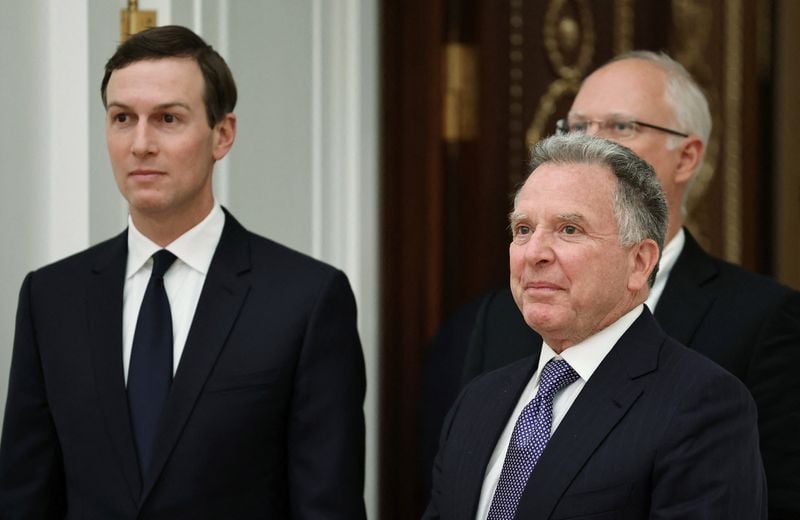
On 13 June 2026, the Trump administration signalled it was on the verge of signing a Russia–Ukraine "peace agreement" — the language, circulated in fragments through the all-caps cadence of a presidential statement, carried the cadence of a diplomatic milestone. The same 24 hours produced a quieter, less-televised decision from a federal bench: an order blocking the White House from proceeding with a $1.8bn "anti-weaponization fund." Read together, the two items are not a contradiction. They are a single pattern — executive action outrunning both the courts and its own paperwork, with allies, donors, and adversaries reading the seams.
The peace memorandum is the headline, but the cash trail underneath it is the story. A White House that can move billions in classified ways through allied intermediaries on a single afternoon is, by definition, a White House that has a process problem it has not yet been forced to solve. The judicial block on 12 June is the first attempt to force the issue.
A deal whose text nobody has seen
Clash Report's 13 June dispatch of the Trump statement is the cleanest public record of the announcement itself — a single word, "Trump:", followed by a statement that the signing of a peace agreement would occur "tomorrow," per Ukrainian outlet TSN's coverage of the same window. Ukrainian channels treated the line with the caution it deserved: a presidential statement, not a signed instrument. The vocabulary — "agreement," "memorandum," "framework" — drifted between outlets without converging on a single document.
That drift is the point. A binding peace agreement between two parties still actively fighting each other, one of which occupies roughly a fifth of the other's internationally recognised territory, would require weeks of drafts, counter-drafts, and quiet shuttle diplomacy. What the 13 June statement produced was a public-relations object: an announcement designed to demonstrate motion.
The war has produced this kind of object before. Ceasefire declarations have been issued from press podiums and then collapsed within days because the ground commanders on either side never received matching orders. Ukraine's leadership has consistently demanded that any settlement be put in writing and be tied to a credible security architecture — a position that does not survive a single press conference.
The honest read is that what is being signed is not a peace agreement. It is a memorandum of intent, perhaps narrower, perhaps only the cover sheet for a future deal. The war-monitor community reacted accordingly: the OSINTLIVE WarMonitor account, posting in the same hour, called the document "a memorandum framed to look like a 'deal,'" and speculated that the administration had been obliged to route money through allies "as a down payment on future talks."
The cash that almost moved
The block on the $1.8bn "anti-weaponization fund" surfaced in a 12 June dispatch from @unusual_whales on X, attributing the ruling to a federal judge and citing the Wall Street Journal. The framing — "anti-weaponization" — is itself a clue. A fund so named is, structurally, the opposite of an aid package: it is a vehicle for choosing what not to weaponise, which is to say, which governments and which non-state actors the United States will decline to equip. In practice, that discretion sits next to the discretion to fund favoured recipients through parallel channels.
The amount matters. $1.8bn is too small to be a war-making sum and too large to be a bureaucratic rounding error. It is the size of a policy preference made liquid: enough to keep a contractor network warm, enough to fund a particular cut-out, not enough to flip a battlefield. A judge blocking it is not ending a war; the judge is reasserting legislative oversight over a category of spending the executive had attempted to operate as a parallel treasury.
The interesting question is not whether the block survives appeal. It almost certainly will not, in some form. The interesting question is what the $1.8bn was on its way to becoming. In a system where the formal aid pipeline is politically radioactive, the executive branch has a long history of finding instruments that do not require a vote — emergency drawdowns, special defence acquisition funds, presidential drawdown authority, and a category of allied-pass-through arrangements that sit in legal grey zones precisely so they cannot be easily litigated.
The allied-pass-through problem
The WarMonitor's instinct — that money was being funnelled through allies as a "down payment on future talks" — is worth taking seriously on its structural merits, even where the specifics are unverifiable. Allied pass-throughs do several things at once. They allow the United States to maintain the appearance of restraint in its own budget; they allow the recipient government to claim sovereignty over a decision that was effectively made in Washington; and they create a class of intermediaries — defence ministries in NATO capitals, Gulf procurement offices, special-purpose vehicles — who accumulate their own leverage over the principal.
This is not a new architecture. The Iran-contra pattern, the Saudi-led coalitions of the 2010s, and the more recent Taiwan and Ukraine parallel-aid debates all sit inside the same logic. What is new is the speed at which the current administration appears to be willing to use it, and the visible impatience with the formal process that would normally slow it down.
That impatience reads, from the outside, as competence. It does not. It reads as the symptom of an executive operating with a planning horizon measured in news cycles rather than quarters. A peace memorandum announced one afternoon and a $1.8bn fund blocked the next morning are, together, a unit of analysis: a government that announces before it builds, and that builds outside the process that would force it to announce.
What the announcement is actually buying
Strip the announcement of its theatrical elements and ask what the memorandum, if it materialises, actually does. The most plausible content is a sequencing commitment — a Russian agreement to pause specific categories of strike, a Ukrainian agreement to pause others, and a US commitment to deliver (or to refrain from delivering) a specific category of weapon. None of that is peace. All of it is trading pace for leverage.
In the short run, the announcement buys the White House a news cycle in which the question is no longer whether the administration is competent at foreign policy but whether the agreement itself is real. By the time the second question becomes inescapable, the White House will have either (a) something concrete to point to, or (b) a process failure it can blame on one of the parties. Either outcome is, from a domestic-comms standpoint, acceptable.
In the medium run, the memorandum buys time — for the Russian side to consolidate what it already holds, for the Ukrainian side to demonstrate that it has alternatives to a US-led process, and for the European allies to position themselves for the moment when Washington tires of the file. None of those actors is passive in this calculation, and the memorandum's design will be shaped, in practice, by the most active of them rather than by the White House press office.
The structural pattern
The 12–13 June sequence fits a recognisable pattern in how the current administration handles instruments of state power it does not want fully debated. The first move is to brand the instrument in a way that makes it hard to attack on its merits — "anti-weaponization," "peace agreement," "memorandum." The second move is to push it into a channel that minimises legislative and judicial visibility. The third move is to announce it before the second move has been completed, on the theory that public attention will deter the kind of careful scrutiny that the second move is designed to avoid.
When a federal court intervenes, the response cycle restarts: the executive reframes the instrument, files in a different posture, or routes through a different ally. The block on 12 June did not end the fund. It forced a redesign.
The press coverage of the 13 June memorandum, by contrast, illustrates how the announcement strategy still works. Wire reporting deferred to the language of the official statement; the analytical layer — what the agreement actually contains, what the cash underneath it looks like, what the legal architecture around it has just been — followed hours later, in channels that are read by specialists and not by the broader audience. That gap between the headline and the audit is, structurally, where these instruments accumulate their power.
What the sources do not yet settle
The 13 June reporting is consistent with a memorandum rather than a binding agreement, but the text of the document has not been published by any of the channels in this thread. TSN's framing — "what was agreed" — is the right question; the answer has not yet been given. Similarly, the Wall Street Journal report cited by @unusual_whales is the only public reference to the federal block; the docket number, the judge's reasoning, and the scope of the injunction are not in the available record.
The OSINTLIVE WarMonitor's read of the announcement as a "memorandum framed to look like a deal" is, on the available evidence, the more defensible interpretation — but it remains an interpretation, not a confirmed fact. The cleanest statement this publication can make is that the 13 June announcement was a presidential statement rather than a signed instrument, that the underlying $1.8bn question had been subjected to a judicial block the previous day, and that the pattern of executive action plus judicial pushback plus theatrical announcement is now established enough to be the unit of analysis in its own right.
What does not yet appear in the public record is the counterpart on the Russian side. The absence of a parallel Russian-language announcement in the same hour, in the channels this thread draws on, is itself a signal — but it is the kind of signal that an analyst should flag rather than over-read. The next 48 hours will determine whether the memorandum is a document or a posture.
Desk note: Wire reporting on 13 June treated the Trump statement as a self-contained diplomatic event; this publication read it alongside the 12 June judicial block and the OSINTLIVE commentary as a single pattern — executive instrument, allied pass-through, and announcement timed to outrun the audit cycle.
Wire provenance
This editorial synthesis draws on the following public wire/social posts:
- https://t.me/ClashReport
- https://t.me/TSN_ua
- https://t.me/osintlive
- https://x.com/unusual_whales/status/
- https://t.me/s/ClashReport
- https://t.me/s/TSN_ua
- https://t.me/s/osintlive
Follow the event.
These dated source records provide context. They do not retrospectively verify this archive article.
A dated voting record is evidence of one decision. Use the original UN record before turning it into an alignment label.
Visual explainer · historical vote of 2022-03-02 →