Hormuz, hostage diplomacy, and a Sunday signing: what the US–Iran deal of June 2026 actually says
A memorandum is pencilled in for Sunday, the Strait of Hormuz blockade is set to lift on signature, and Tehran's own news wires say the text isn't finished. The deal exists. The details do not.
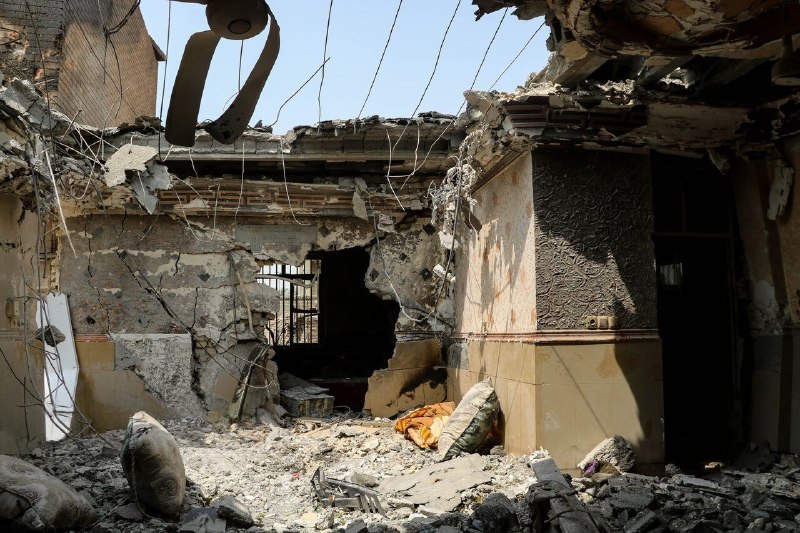
Donald Trump announced on Friday 13 June 2026 that the United States and Iran will sign an agreement on Sunday, with the blockade of the Strait of Hormuz to be lifted the moment the document is initialed, according to Telegram channel Intelslava, citing Trump's own remarks, at 18:05 UTC, and corroborated by Middle East Eye at 17:38 UTC and the X account @unusual_whales at 17:40 UTC. The Iranian state-aligned agency Fars, however, told the Telegram channel OSINTLIVE at 17:32 UTC that Iranian negotiators are publicly saying the text has not yet been finalised and that the president is pressing for a memorandum of understanding on Sunday regardless. The architecture is familiar. The specifics, on the eve of a planned signing, are unusually thin. That gap is now the story.
Three things are being conflated in the public read-out of 13 June, and untangling them is the only way to judge what is actually being signed. First, there is the political announcement: a deal exists in headline form. Second, there is the operational concession, the lifting of the Hormuz blockade, which both sides have spent weeks weaponising against each other. Third, there is the legal text, and that is precisely what Fars reports is unfinished. Reading the moment as a single event rather than a sequence of three is how readers get pulled into a market or a war on the basis of a tweet.
The blockade is the load-bearing piece. Roughly a fifth of the world's seaborne oil passes through the Strait of Hormuz, the narrow choke point between the Arabian Peninsula and Iran, and any sustained closure pushes Brent futures upward within hours. Tehran's leverage is not that it can hold the strait open in any technical sense for long, but that it can plausibly threaten enough of it for long enough to move prices and to extract concessions. Lifting the blockade on signature is a sequencing choice with consequences: it puts the price-stabilising concession ahead of the verification regime, and it gives both governments a political win on day one that they can defend at home before any implementation fights begin.
The Iranian read, as relayed through Fars and the OSINTLIVE channel, is that the document Trump wants signed on Sunday is a memorandum, not a final agreement. That distinction matters more than it sounds. A memorandum of understanding is a political commitment. It is not a treaty, it is not ratified by any legislature, and it does not, on its own, provide the kind of inspection architecture that ended the previous round of escalation. Iranian negotiators pointing this out in real time, in their own state-affiliated press, is the kind of leak that emerges when the principals in Tehran are not on the same page with the principals in Washington, and it is the single most important piece of context an outside reader can have at 18:00 UTC on Friday.
The structural pattern here is the one that has defined the post-2018 US–Iran file: sanctions as leverage, sanctions relief as the deliverable, and a sequenced set of small commitments dressed up as a comprehensive deal. The 2015 Joint Comprehensive Plan of Action was, on paper, comprehensive. What succeeded it was a sequence of maximum-pressure measures, a withdrawal by Washington, and a series of escalations in which the blockade of a single strait became the rhetorical unit of account. A memorandum signed on Sunday would slot into that lineage. It would not end it.
What is genuinely new in 2026 is the explicit linkage of an economic blockade to a single signature event. The previous US administrations, including the 2015 framework, used sanctions as a tool of attrition. The current approach uses a kinetic chokepoint as the visible hand. That is a meaningful change in how this kind of negotiation is conducted in public, and it has implications for how energy-importing states read the next one.
The energy-market read is direct. Lifting the Hormuz blockade on signature would, in the immediate term, pull back the geopolitical risk premium embedded in spot crude and in the freight rates on very large crude carriers routing around the Cape of Good Hope. The longer the blockade had been in place, the larger that pullback. A memorandum, by contrast, signals intent but does not by itself move barrels; the market will price the announcement, then re-price the implementation gap.
The counter-narrative to the celebratory framing in Western wires is straightforward, and it is the one Fars is essentially publishing. If the text is not finished, the signing is a photo opportunity, the blockade lift is conditional on something whose contents are still being negotiated, and either side can walk back from a memorandum of understanding more easily than from a treaty. There is also a longer-running counter-narrative from the Iranian domestic audience, which reads any agreement as another cycle of temporary relief followed by renewed pressure, and from the Gulf Arab states, whose interests in this round of diplomacy are not always aligned with either Washington or Tehran and whose read on the text will arrive in the days after Sunday, not before.
What remains genuinely uncertain, and where the source material thins out, is the verification regime. The 2015 arrangement worked, to the extent it worked, because the International Atomic Energy Agency had an inspection mandate that was both intrusive and politically acceptable to the Iranian system. Nothing in the Friday announcements, on the sourcing available, indicates what the equivalent architecture is in this memorandum, or whether the IAEA is named in it at all. That is the single question an energy markets desk, a non-proliferation desk, and a Gulf security desk will all want answered in the next 48 hours.
Stakes, plainly stated. If a real, text-complete agreement is signed on Sunday, the immediate beneficiaries are oil importers across Asia and Europe, the Iranian rial, and the political position of both presidents at home. The principal losers in the short term are the Gulf states, whose relative leverage declines with each deal that bypasses them, and the inspection regime, which loses ground with every cycle in which sanctions relief precedes verification. If what is signed is a memorandum with unfinished text, the winners are the traders who can position around the gap, and the losers are the traders, refiners, and foreign ministries who priced the headline rather than the document.
The honest position on the evening of 13 June 2026 is that there is a real political event scheduled for Sunday, there is a real concession on the table, and there is an open dispute, published in plain sight in Iranian state-affiliated media, about whether the document being signed actually exists in finished form. A staff-writer read of the next 72 hours is that the more consequential reporting will not be the signing itself but the leaked text that follows it, once the memorandums of understanding begin to be compared against the public statements of the people who did not sign on the same page.
Desk note: Monexus has reported the Friday announcement as a sequenced event rather than a single fact, separating the political commitment, the Hormuz concession, and the unfinished legal text, because the source material on the table from Intelslava, Middle East Eye, Fars via OSINTLIVE, and @unusual_whales already contains that separation. Western wire copy in the same window tended to collapse the three into a single "deal signed" frame; the Iranian state-affiliated frame, fairly weighted, is the more diagnostically useful one for readers trying to position around Sunday.
Wire provenance
This editorial synthesis draws on the following public wire/social posts:
- https://t.me/intelslava
- https://t.me/osintlive
Follow the event.
These dated source records provide context. They do not retrospectively verify this archive article.
Separate what the nuclear watchdog reported from what it could not determine after the June 2025 strikes.