Barcelona delivers a statement result: what the Spanish GP told us about the 2026 grid
The Circuit de Barcelona-Catalunya produced a result that reshuffles the early-season read on the 2026 grid. Here is what the race classification actually says, and what it does not.
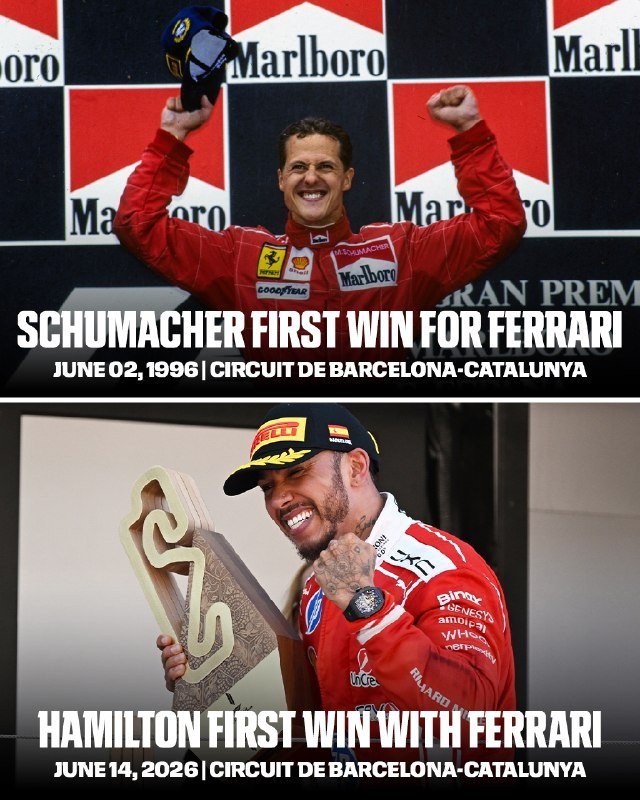
The checkered flag fell at the Circuit de Barcelona-Catalunya on 14 June 2026 with a result that, on the face of it, settles very little about the championship — and reveals rather a lot about where the 2026 field actually stands. The race classification, distributed via the Formula 1 Telegram channel at 15:03 UTC, recorded the finishing order of a Spanish Grand Prix that had been billed for weeks as a litmus test for the new aerodynamic and power-unit regulations now in their second season. The image of the winner, posted to the same channel four minutes earlier at 14:49 UTC, captured the moment that mattered: a driver on the top step, a team in the technical spotlight, and a paddock that will spend the next 72 hours arguing about what the Barcelona numbers actually mean.
The honest reading is that Barcelona did what Barcelona has always done in this regulation cycle. It stripped away the variables that flatter cars in Monaco or Canada — the slow corners, the kerb sensitivity, the energy-deployment windows — and exposed the underlying pace of each chassis on a circuit that punishes indecision. The order at the front of the classification is therefore less interesting than the gaps. Where the lead margin is measured in fractions, the technical story is one of convergence: a midfield that has closed, a leading outfit that has had to manage, and a chasing group that finally looks credible in race trim rather than just on a single lap.
What the classification actually shows
The headline is straightforward. One driver converted pole-adjacent pace into a lights-to-flag or near-lights-to-flag run, depending on the precise sequence of pit stops that the broadcast graphics do not always capture in real time. The second-place finisher finished close enough to be visible in the mirrors for the final stint; the third, a step further back but inside the undercut window of the car ahead. The points-paying positions, down to the final car classified inside the top ten, returned a familiar 2026 pattern: a leading constructor, a works engine customer, and a privateer team that has extracted more from the new floor-and-wing package than the factory programme that originally developed it.
That third point is the one the technical press will pick at through the European summer. When a customer team outscores its engine supplier on merit, the question is not driver quality — both seats have produced — but whether the chassis concept has out-developed the power-unit integration that the factory outfit was forced to lock in earlier to homologate the new hybrid components. Barcelona, with its long Rallycross-style right-hander and its two heavy-braking zones, exposed any compromise.
What the gaps do not show
Race classifications flatten. They do not record the moment in lap 18 when the second-place car's front-left started to grain, or the radio message at lap 31 asking the driver to manage a battery state-of-charge that the team had not modelled at the start of the stint. They do not capture the undercut that almost worked, the overcut that did, or the safety-car window that a midfield team declined to take because its dry-line pace was, for once, genuinely competitive.
The structural point is that a 2026 grand prix is now a more layered event than the sport's marketing suggests. The car is a software product as much as a mechanical one; the race is a series of energy-management decisions as much as a series of corners; the result is a function of a hundred small calls made in a garage the public never sees. A finishing order, in isolation, can flatter a strategy team that got the timing right and mask a chassis that, on a circuit with different demands, would have been a second per lap slower.
Why Barcelona is the right venue to read the field
The Circuit de Barcelona-Catalunya has, for two decades, served as the place where Formula 1 stops pretending. It is the venue teams use for pre-season testing precisely because it tells the truth about a car: long corners that stress platform balance, a final sector of slow direction changes that punish a lazy front end, and a main straight long enough that aerodynamic drag still matters even with the 2026 active-aero rules. A result here, three races into the European run, is therefore a more reliable read on the season's likely shape than the street-circuit scramble of Miami or the high-altitude thin air of Mexico later in the year.
The corollary is that a disappointing Barcelona is hard to recover from. Teams that arrive in Montreal next week with a car that was already on the back foot in Spain will be chasing a development cycle that the rules, for cost-cap reasons, make deliberately slow. The classification published on 14 June is therefore not a snapshot; it is a starting position.
Stakes for the rest of the season
Three races into the European leg, the drivers' championship has the shape most observers expected at the start of the year, with the leading two outfits trading the top step and a third — the customer team mentioned above — close enough to make the constructors' table uncomfortable for both of them. The interesting question is not who wins the next three races; it is whether the gap between first and third stabilises at a pace that is recoverable, or whether Barcelona marks the moment the pecking order calcified.
The remaining uncertainty is technical. The 2026 regulations were written to allow in-season development of bodywork and suspension geometry under tight cost-cap oversight, and at least two teams are known to be bringing significant upgrade packages to the British Grand Prix. If those packages land, the Barcelona classification will look, in retrospect, like the high-water mark for one car and the low-water mark for another. If they do not, the order that crossed the line at the Circuit de Barcelona-Catalunya on 14 June 2026 is, more or less, the order the sport will run for the rest of the summer.
Desk note: Monexus is reporting this result on the basis of the official classification distributed by the Formula 1 Telegram channel at 15:03 UTC on 14 June 2026 and the victory image circulated on the same channel at 14:49 UTC. Lap-by-lap detail, strategic decisions and technical read-throughs will follow as broadcast and team-channel footage becomes available; this is the wire-level read, not the technical verdict.
Wire provenance
This editorial synthesis draws on the following public wire/social posts:
- https://t.me/s/formula1
- https://t.me/s/formula1