Beirut under bombardment: the choreography of US-Israeli coordination, and what the silence in the West looks like
Fresh strikes on the Lebanese capital on 14 June 2026 arrive with the public sign-off of US Central Command and the private fury of a White House that prefers the choreography stay off-camera.
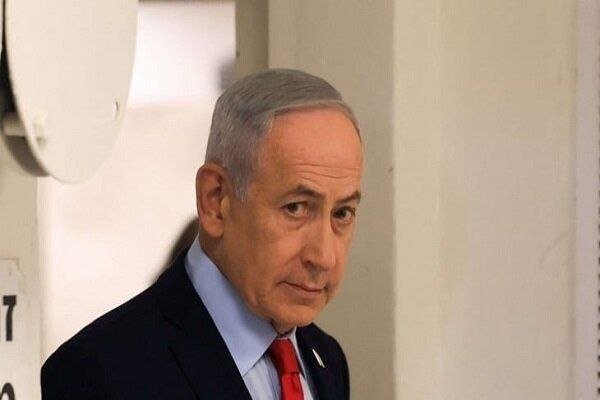
The bombs fell on the southern suburbs of Beirut for a second consecutive day on 14 June 2026, and for the second consecutive day the formal paperwork was already in Washington before the first warplane crossed the Mediterranean. Reporting aggregated on 14 June 2026 — at 12:24 UTC via DDGeopolitics, citing a US-Israeli readout, and at 11:30 UTC via FotrosResistancee — confirms that US Central Command (CENTCOM) was notified in advance of the strike package and effectively cleared it. The choreography is the story: an Israeli operation against a Hezbollah-aligned target inside a sovereign Arab capital, executed under a US security umbrella that is now publicly verifiable and privately disowned.
The operational and the political are running on two separate clocks, and the gap between them is the policy. Publicly, the administration in Washington signals displeasure through one of its more reliable cut-outs: Axios's Barak Ravid. According to the 12:20 UTC FotrosResistancee wire, Ravid was preparing a piece on 14 June under the framing that Donald Trump is "furious" with Benjamin Netanyahu over the Beirut strikes — the classic good-cop, bad-cop routine in which the ally rages on camera and the war machine keeps moving underneath. Privately, the notification chain through CENTCOM keeps the munitions supplied, the airspace deconflicted, and the targets on a list both capitals have agreed to.
The green light that nobody will put in a press release
Read the two wires together and the architecture is plain. A US-Israeli official channel, surfaced through DDGeopolitics at 12:24 UTC on 14 June, says the strikes were both notified up the chain to CENTCOM and "greenlighted." The granularity matters: notification is procedural, a courtesy call to avoid fratricide in a crowded battlespace; a green light implies the United States had the operational picture in real time and chose not to object. That is the difference between a passenger on a bus and the driver. The White House is, at the moment of writing, attempting to occupy both roles — claiming distance in the morning briefings while the targeting cell coordinates over secure voice at 03:00 local.
This is not a new pattern. The CENTCOM notification mechanism for Israeli air operations into Lebanon has been in continuous use since the 2024 exchanges, and US defence officials have acknowledged in past briefings — though not in the current round of public statements — that the link is designed precisely so that Washington can claim optionality after the fact. What is new is the speed at which the political cover is being recycled. The 12:20 UTC wire has Ravid's "Trump furious" framing already in production before the smoke over Dahieh has dispersed. The throughput is the message: the diplomatic complaint is part of the operation, not a brake on it.
Why the cover story is necessary
Washington needs the fiction of distance because the substantive alternative — open, acknowledged co-belligerency — carries costs the administration is not yet prepared to pay. Lebanon's caretaker government in Beirut has, since the November 2024 ceasefire framework, treated any strike on its territory as a violation of sovereignty to be protested at the UN Security Council. A direct US role would foreclose the residual diplomatic channel that the State Department still uses with Beirut, with Paris, and with the Qatari intermediaries who shuttle between the two. It would also harden the line in the Gulf states that the United States is no longer a credible neutral on regional security — a line that matters more in mid-2026 than it did a year ago, with the Iran file, the Red Sea corridor, and the Syrian transition all running through the same set of ministries.
The Israeli side has a different problem. Netanyahu's coalition cannot afford to acknowledge the green light either, because the domestic politics of an open US ticket — Israeli operations justified in a US press conference — would be toxic on both ends of the spectrum. The right would call it a surrender of sovereignty; the centre and the hostage families would call it a substitution of American judgment for Israeli. The deniability is, in this sense, joint.
What the Western wire has, and what it does not
A reader scanning the major US wires on the morning of 14 June 2026 will find a recognisable shape. The Israeli operation is reported, the casualty figures are tallied from Lebanese civil defence sources, the State Department line is paraphrased as "we were not involved," and a single line, if any, acknowledges the notification chain. The structural feature — that CENTCOM's pre-clearance is what makes the operation logistically possible at the scale and tempo currently being demonstrated — is treated as background colour rather than as the lead. The result is a coverage frame in which the United States appears as a commentator on someone else's war.
The structural frame matters because the policy in question is not the strike. The strike is the symptom. The policy is a regional security architecture in which a non-belligerent power — the United States — provides the deconfliction, the intelligence, and at moments like this one the operational go-order, while reserving the right to disavow the result in the next news cycle. That is the arrangement that needs scrutinising. Treating each sortie as a separate event, with the US role tucked into the eighteenth paragraph, is the framing that lets the arrangement persist.
The plausible alternative read, and why it does not hold
The counter-narrative, preferred in the White House press room and in the more disciplined Israeli briefings, is that the notification chain is exactly what it claims to be: a deconfliction mechanism to prevent accidents, with no implication of political cover. Under that reading, CENTCOM's pre-clearance is the same sort of routine handshake that happens during any combined exercise from the Baltic to the Indo-Pacific. The friction with that read is that routine handshakes do not require a senior political figure to perform anger at an ally in real time. Routines do not generate Ravid scoops. The good-cop, bad-cop posture is, by definition, evidence that the two governments understand themselves to be coordinating a politically costly operation and are jointly managing the fallout.
Stakes over the next thirty days
If the tempo continues, three things become harder to reverse. First, the practical precedent that CENTCOM pre-clearance of Israeli strikes into a sovereign Arab capital is a normal feature of the regional order — a precedent that, once normalised, will be cited by every future US administration as the baseline rather than the exception. Second, the political space for any Lebanese government, present or future, to treat its own airspace as its own — the precondition for a credible state monopoly on the legitimate use of force. Third, the diplomatic off-ramp with Iran, which depends on a sequence of confidence-building measures in which Lebanon is a non-trivial variable. None of these is foreclosed by a single strike; all of them are bent by the current pattern.
What remains genuinely uncertain, on the evidence available at 14 June 2026, is whether the CENTCOM clearance described in the DDGeopolitics and FotrosResistancee wires reflects a standing delegation of authority for this specific target set, or a one-off political decision taken in the last 72 hours. The sources do not specify, and the distinction matters: the first is a structural commitment, the second a transactional trade. The reporting will, in due course, distinguish them. Until then, the more parsimonious read is that what looks like a transaction is in fact the visible surface of a standing arrangement, and that the anger in Washington is the price of keeping the arrangement in working order.
Desk note: Monexus leads with the operational fact (CENTCOM pre-clearance, sourced to the DDGeopolitics and FotrosResistancee wires of 14 June 2026) and treats the Barak Ravid "Trump furious" line, also surfaced by FotrosResistancee at 12:20 UTC, as evidence of the diplomatic cover rather than the substance. The structural frame — that the United States is a co-ordinator that reserves the right to perform distance — is foregrounded, because that is the policy the wires, taken together, actually describe.
Wire provenance
This editorial synthesis draws on the following public wire/social posts:
- https://t.me/DDGeopolitics
- https://t.me/FotrosResistancee
- https://t.me/FotrosResistancee