Beirut strike sets a new tempo for the Israel–Hezbollah phase of the war
An Israeli strike on Beirut's Dahiyeh suburb, framed by Tel Aviv as a targeted operation against a Hezbollah communications officer, lands hours after Tehran's public warning — and exposes how thin the deterrence line has become.
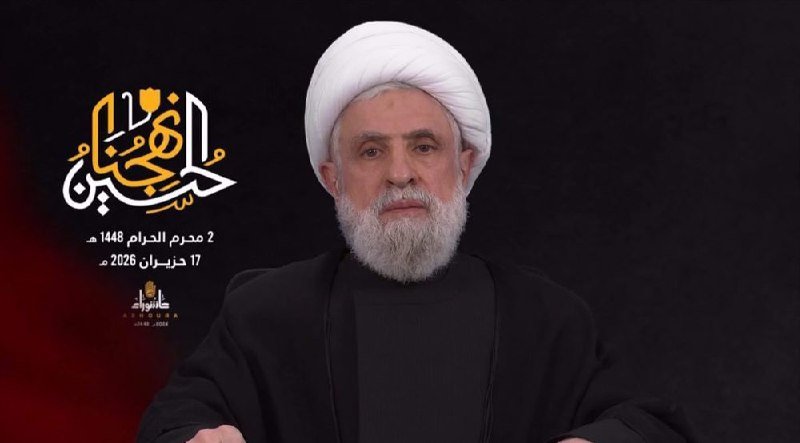
The first hours of 14 June 2026 produced the most direct Israel–Hezbollah exchange in months, and the most explicit Iran–Israel signalling since the November ceasefire. By 11:41 UTC, Israeli forces had struck targets in Beirut's Dahiyeh district, the densely populated southern suburb that serves as Hezbollah's political and operational centre of gravity. By 12:13 UTC, Middle East Spectator, a Telegram channel that aggregates regional reporting, was carrying claims that the strike had been an attempted assassination of a senior Hezbollah communications officer. By 12:14 UTC the same channel reported the toll had risen to two killed and seven wounded.
The exchange matters less for the specific casualties — small by the standards of the 2023–24 war — than for the choreography. It was carried out in public, in daylight, with confirmation from the Israeli prime minister's office and a near-immediate Iranian threat to respond. The restraint that has defined the post-ceasefire period is now visibly thinner.
The Israeli frame
Prime Minister Benjamin Netanyahu's office framed the strike, as carried by the Open Source Intelligence feed at 11:41 UTC, as an operation against "Hezbollah terror targets" in Dahiyeh, and added the boilerplate that "Israel will not accept attacks on its territory." That formulation is now standard Israeli political language after more than two years of cross-border fire, and it does two things at once: it asserts the right of preventive strike against an armed non-state actor embedded in a civilian area, and it pre-emptively recasts any Hezbollah retaliation as the aggressor act that justifies the next Israeli move.
The targeting claim — a senior Hezbollah communications officer — points to a specific operational logic. Communications-and-command figures sit lower on the symbolic ladder than politburo members, but they are the connective tissue of an organisation that has spent two decades rebuilding its command-and-control architecture after Israeli and Syrian blows. Hitting one is meant to degrade, not decapitate.
The Iranian shadow
The other half of the signal arrived before the strike did. The Open Source Intelligence feed at 11:41 UTC noted that "Iran has threatened to strike Israel if Israel strikes Dahiyah, Beirut." The threat was not new in form — Iranian officials have issued variants of it for months — but its proximity to an actual strike, hours rather than weeks, is what registered. Iran has spent the post-ceasefire period building a deterrent posture: direct missile launches in 2024, the unraveling of the Assad regime's protection in Syria, and a public insistence that Hezbollah's disarmament is a Lebanese, not an Israeli, matter to negotiate.
The interesting question is not whether Tehran issued the threat. It is whether the strike, by going ahead anyway, is a test of the threat's credibility — and, if so, whose test it is. The dominant Western reading is that Israel is signalling it will not be deterred from striking Hezbollah infrastructure regardless of Iranian warnings. The alternate reading, more common in Beirut and in regional commentary, is that the strike was deliberately calibrated — a communications officer, not a politburo figure; a daylight operation, not a decapitation raid — to give Tehran an off-ramp from its own rhetoric.
What the wire and the channels are actually showing
It is worth being precise about provenance. The two substantive items are from Middle East Spectator, a Telegram aggregator, and the Open Source Intelligence feed, which cites Netanyahu's office. Neither is a primary document. The casualty figure of two killed and seven wounded originates with the aggregator, not with Lebanese civil defence, the Lebanese health ministry, or an Israeli military briefing. The targeting claim — a Hezbollah communications officer — is presented as an Israeli security-source leak, again via aggregator, not as a confirmed Israeli government statement.
That is not a counsel of despair. It is the texture of how this phase of the war is actually being reported: claims circulate on Telegram within minutes, Western wires follow hours later if at all, and the first consolidated casualty count is often a Lebanese or Israeli health-ministry update the following morning. Anyone writing about the strike in real time is working from the same thin layer of evidence everyone else is.
The structural frame
The Dahiyeh strike is best read not as a one-off but as the visible edge of a slow drift. The November 2025 ceasefire froze the most destructive phase of the Israel–Hezbollah war but left the underlying dispute — Hezbollah's armed presence south of the Litani, Israel's willingness to strike inside Lebanon, Iran's role as patron and deterrent — exactly where it was. What has changed is the surrounding map. The fall of the Assad regime in Syria removed Iran's most reliable overland conduit to Hezbollah. The Lebanese state, under a government that has publicly committed to disarming non-state actors, is in a weaker position than at any point since 2006 to constrain Hezbollah on Israel's behalf. Israel, meanwhile, has spent eighteen months arguing that the post-ceasefire period permits targeted operations against reconstitution.
In that context, a strike on a mid-level Hezbollah figure in Dahiyeh is the operation that almost any Israeli government would have authorised. The restraint that prevented it earlier was political, not operational. The question now is what the Iranian response looks like — and whether the cycle that ran from October 2023 through the November 2025 ceasefire is restarting in a smaller, slower key.
Stakes, and what remains uncertain
If the trajectory holds, the next 72 hours will tell more than the strike itself. A Hezbollah response calibrated enough to satisfy domestic audiences without crossing Israeli red lines would suggest the ceasefire architecture is intact, if strained. A response heavy enough to trigger Israeli counter-strikes on Dahiyeh at scale would suggest the architecture is over. An Iranian move — direct, or through Iraqi or Yemeni proxies — would widen the frame from a Lebanon file to a regional one.
What the available sources do not yet establish is the identity of the communications officer reportedly targeted, the operational effect of the strike, or the Lebanese state's diplomatic posture. They do not establish whether the casualty figure will hold, rise, or be revised downward as the morning's reports consolidate. They do not establish what, if anything, was hit beyond the targeting claim. They establish, with reasonable confidence, that an Israeli strike happened in Dahiyeh on 14 June 2026, that the Israeli prime minister's office confirmed it, and that Iran had publicly threatened a response in advance. From those three facts, a sober reading is possible. A definitive one is not.
This publication treats Telegram aggregators and open-source feeds as the wire layer they currently are for fast-moving Middle East coverage: useful for chronology and framing, never a stand-alone basis for casualty or targeting claims. Where the available record thins — as it does here on the identity of the targeted officer and the consolidated casualty count — that uncertainty is named rather than smoothed over.
Wire provenance
This editorial synthesis draws on the following public wire/social posts:
- https://t.me/s/middleeastspectator
- https://t.me/s/middleeastspectator
- https://t.me/s/OpenSourceIntel
- https://t.me/s/OpenSourceIntel
Follow the event.
These dated source records provide context. They do not retrospectively verify this archive article.
Separate what the nuclear watchdog reported from what it could not determine after the June 2025 strikes.