Beirut burns again, the Strait of Hormuz closes: a single day of escalation forces a question the West keeps ducking
Two Israeli air strikes on residential buildings in Dahye, Beirut, and a declared Iranian closure of the Strait of Hormuz arrived within minutes of each other on 14 June 2026. The day's arithmetic makes a framing the West has long avoided almost impossible to ignore.
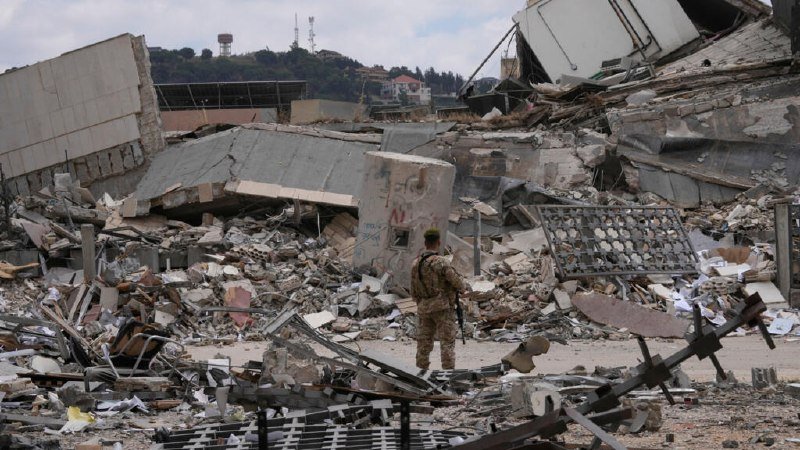
Two Israeli air strikes hit residential buildings in the Dahye suburb of Beirut on the morning of 14 June 2026, and within minutes of the second strike Iranian state-aligned outlets declared the Strait of Hormuz closed to all unauthorised shipping. The two announcements, separated by geography, by actor, and by the kind of force involved, are not the same event. But arriving in the same news cycle, they make a single point that Western commentary has been quietly stepping around for months: there is now an active military front against Hezbollah on the Lebanese coast and a parallel economic front against global energy flows in the Gulf, and the same hand is shaping both.
The arithmetic of the day, set out plainly, leaves little room for the framing that treats these theatres as separable. In Dahye — the densely populated southern suburb of Beirut that has been the focus of Israeli operations against Hezbollah infrastructure since the war's opening phase — open-source footage circulated on Telegram channels including WarMonitors documents two fighter jets, four munitions, and direct hits on what the channel described as a civilian residential building. Within an hour, Iranian state-affiliated outlets carried the line that the Strait of Hormuz "remains closed and no unauthorised foreign ship is allowed to pass through it" — a closure in name at minimum, with the world's single most important oil transit chokepoint held hostage to the security situation several hundred miles to its west. When the two announcements are read together, the question is not whether they are coordinated. It is whether any Western capital still believes they can be contained separately.
What the day actually contained
The Dahye strikes follow a pattern that has hardened over the past year: precision air action against multi-storey residential buildings in the southern suburbs, justified by Israeli authorities on Hezbollah-infrastructure grounds, condemned in Beirut as strikes on civilians. Telegram-circulated footage of the 14 June strike shows structural damage consistent with air-delivered munitions rather than a single precision-guided weapon, and the channel's claim of two aircraft and four munitions is, at this writing, the most specific figure available. The Cradle and other Beirut-based outlets have documented the recurring civilian toll in Dahye across the campaign; Lebanese official figures, when released, have routinely run higher than initial Israeli statements acknowledge, and have routinely been disputed in turn by Israeli spokespeople citing the proximity of struck buildings to what they describe as embedded Hezbollah assets. Neither side's count, on a given day, is the final word.
The Strait of Hormuz move is, in form, less violent and in substance more consequential. Closing — or, more precisely, declaring closed — the strait is the single most escalatory economic act available to Iran short of direct action against Gulf state territory, and the Iranian framing in the 14 June announcement was deliberate. By limiting the closure to "unauthorised foreign ships," Tehran preserves the rhetorical position that domestic Iranian shipping, and by extension the trade of states that have not aligned against it, can continue. This is a closure designed to split the international shipping community, not to halt it.
The counter-narrative the West is not telling
Western wire reporting on the Dahye strikes has, across the campaign, anchored on the Israeli security frame: that Hezbollah has spent two decades embedding its command and weapons infrastructure inside civilian apartment blocks, schools, and medical facilities in Dahye, and that strikes against specific buildings are the only available response to a northern border that has seen direct fire into Israeli towns. The Israeli security concern is real and well-documented; residents of northern Israel have been displaced in large numbers for the better part of a year, and Israeli emergency services have published figures on rocket and drone intercepts that are not in serious dispute.
The frame that gets less column-inch is the structural one. A campaign that systematically destroys multi-storey residential buildings in a dense urban suburb produces a civilian toll that compounds strike by strike, and a refugee flow that compounds week by week. Lebanese caretaker authorities, when they have been able to issue figures, have described tens of thousands displaced within the south and southern suburbs of Beirut. The wire treatment of these figures, when they appear, tends to be parenthetical — a sentence, sometimes a clause, between the lede and the analysis. The structural frame should be the other way around: a counter-insurgency campaign that empties a district by design is not a precision operation, whatever the language used to describe individual strikes.
The Strait of Hormuz side of the day carries a similar inversion. Western commentary routinely frames an Iranian threat to close the strait as a form of economic warfare directed at the United States and its Gulf allies. The more accurate frame is that the strait is a chokepoint that the world economy, including China, India, Japan, and South Korea, depends on for the bulk of Gulf oil and LNG transit, and that an Iranian declaration of closure is therefore a coercive act aimed at every major Asian energy importer at once. The Western framing centres Washington; the actual addressee list is in East Asia.
What the pattern adds up to
Read across theatres, 14 June 2026 is the day the long-running Hezbollah-Israel campaign and the long-running Iran-US shadow war stopped pretending to be separable. A strike on a Beirut suburb and a closure of the Gulf chokepoint, hours apart, are the kind of coordinated signal that governments issue when they want a single, simple reading to land: that the regional balance of force is being re-priced, and that the price will be paid partly in Lebanese housing stock and partly in the insurance premiums on every tanker in the Gulf. The Western commentary reflex in such a moment is to treat each event as its own crisis with its own de-escalation track. The evidence on the wire in the last twenty-four hours suggests that track no longer exists.
Stakes, plainly stated
The near-term stakes are concrete. A sustained closure, or even a sustained credible threat of closure, moves the price of crude and shipping insurance in ways that compound quickly; the 2019 episode in which Iran briefly seized commercial tankers in the strait produced multi-dollar moves in freight rates within seventy-two hours. A declared closure maintained for a week would likely move crude into triple digits and force emergency release from strategic reserves in the United States, Europe, and Asia simultaneously. The longer-term stakes are about deterrence architecture: an Iran that can credibly threaten the strait at the same moment its allies are absorbing Israeli strikes on a different front has constructed a two-theatre problem that no single carrier strike group can solve. The political cost of recognising that on the record, in Western capitals, has so far been treated as higher than the strategic cost of ducking it. 14 June is, on the evidence of the day, the day that calculation starts to look tired.
What remains genuinely uncertain
The Dahye strike count, the precise munition count, the casualty figures, and the legal characterisation of the buildings struck will not be settled in this news cycle. Israeli military briefings tend to lag initial footage by hours, not minutes; Lebanese official counts tend to settle into a stable number within forty-eight hours; the international press will run both, and the gap between them is itself the story. The Strait of Hormuz status is also, on the open wire, a question of degree: a declared closure is not the same as a physical interdiction of the waterway, and the difference between the two is the difference between a price spike and a war. Monexus will continue to track the verifiable record on both fronts as it develops.
This publication framed 14 June as a single signalling day, not as two unrelated crises: the Dahye strike and the Hormuz declaration arrived inside the same news cycle from a posture that treats them as a paired move, and the analysis above follows that reading rather than the wire convention of separating the theatres.
Wire provenance
This editorial synthesis draws on the following public wire/social posts:
- https://t.me/s/WarMonitors
- https://t.me/s/WarMonitors
- https://t.me/s/WarMonitors
- https://t.me/s/WarMonitors
Follow the event.
These dated source records provide context. They do not retrospectively verify this archive article.
Separate what the nuclear watchdog reported from what it could not determine after the June 2025 strikes.