Beirut, briefly: what a single Israeli strike tells us about the next round
Israeli drone strikes killed at least four people in southern Lebanon on Tuesday as reporting on a US-Iran MOU raises sharper questions about what kind of war Israel intends to keep fighting under ceasefire cover.
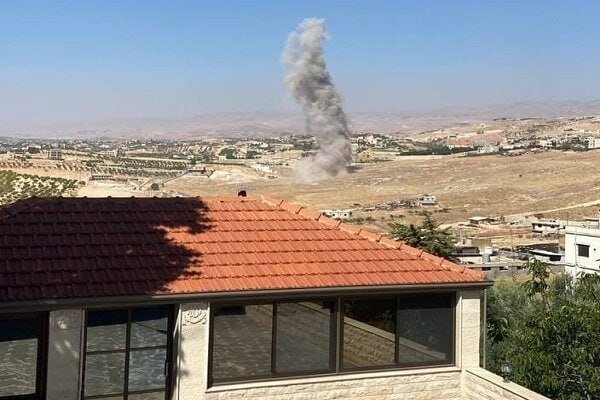
At least four people were killed in southern Lebanon on Tuesday evening in a wave of Israeli drone strikes, according to a Reuters dispatch timed to the late European news cycle, and the strike tally out of the ceasefire period is climbing fast. Iran's Khatam al-Anbiya Central Headquarters put the count at 84 alleged violations inside 48 hours, a figure that has not been independently corroborated and that should be treated as the maximum claim rather than a verified toll. Either way, the gap between the announced ceasefire and the airborne reality has become the story: not whether Israel is striking Lebanon, but what kind of war it intends to keep fighting while the diplomatic calendar pretends otherwise.
That gap is now the central object of analysis. Reporting over the past 72 hours has framed the Israeli campaign as a stream of discrete retaliations, each tied to a specific incident and bounded by a stated rules-of-engagement. The structural reading, which this publication has emphasised and the wires have been slower to absorb, treats those strikes as the output of a reproducible doctrine: degrade, then negotiate from a lower baseline, then resume degrading the moment the political language outpaces the military facts on the ground. The trade-off is real. A clearer structural read asks more of the reader than the open reporting alone strictly warrants. It also makes the next round legible in advance.
The doctrine on display
Three elements of Tuesday's reporting line up too neatly to be coincidence. Israeli drones hit targets in southern Lebanon, a region Washington and Beirut have publicly designated as the testing ground for whatever arrangement emerges from the Iran memorandum of understanding now circulating in Washington. Reporting on that MOU, including commentary surfaced by Open Source Intel, has stressed that the deal's terms appear to limit Israel's ability to strike Hezbollah infrastructure inside Lebanese territory on the implicit understanding that Iran curtails further proxy escalation. The problem, as the same commentary notes, is that a deal which only bites "if they stop developing terrorism" in practice gives Hezbollah room to rebuild. That is the operating environment the Israeli air force appears to be working against, and the tempo of the strikes is best read as pre-emptive degradation rather than retaliation for any single event.
The American frame, and its seams
The White House is selling the same package two ways at once. Vice President J.D. Vance, in remarks carried by multiple outlets, insisted that Donald Trump is not seeking to repeat the Iraq experience in Iran and is not interested in large-scale ground deployment, a posture that maps cleanly onto a president who, on the G7 sidelines in France, has reportedly floated trading tougher Ukraine-related pressure on Russia for European movement on his Iran file. John Bolton, commenting on the deal, called it geostrategically naive and argued the driving motive is keeping the Strait of Hormuz open for Gulf oil rather than any coherent regional balance. Trump's own public posture on Lebanon has wobbled between criticism of Israeli strikes on Lebanese civilians and an offhand suggestion that Syria should take over "the job" of destroying Hezbollah. The throughline is a White House that wants a deal-shaped photograph more than it wants a doctrine, and is content to leave the gap between the photo and the doctrine to be filled by other people's air force.
What the record does not yet support
There are three things the available reporting does not let us say with confidence. First, the operational intent behind each individual drone strike: the IDF has not publicly tied the Tuesday-evening sorties to a named incident, and treating them as a single coordinated campaign reads further into the pattern than the confirmed record supports. Second, the durability of the ceasefire language: Iranian-aligned outlets are reporting 84 violations in 48 hours, and wire reporting confirms at least four deaths in a single evening's wave, but no Western military spokesperson has yet published a cumulative tally or a denial. Third, the actual text of the MOU itself: as one commentator noted via Open Source Intel, analysts have been asked to assess a document many have not read, which makes confident claims about its effects premature on both sides of the argument. Until those three points are pinned down, the structural read is a working hypothesis, not a conclusion.
Why one strike is the story
The temptation in this kind of reporting is to treat each fatality as a beat and to wait for the trend to declare itself. The trend has already declared itself. The single strike is the unit of analysis precisely because it is reproducible: another drone, another southern Lebanese village, another cycle of attribution and denial, all of it unfolding inside a ceasefire whose only enforcement mechanism is the willingness of one side to keep flying. When the next round comes, and the public record suggests it will come inside the current diplomatic window rather than after it, the question will not be what happened. The question will be which government chose to look away while it happened. That choice is being made right now, in real time, by everyone who has decided the MOU is worth more on paper than the people under the drones are worth in the news.
The next round, on the calendar
The diplomatic milestones worth watching are concrete and close. The G7 in France has produced a framework for further US-Iran negotiation but no signed instrument, and the Trump administration's public posture is that no large-scale deployment is contemplated. Israeli strikes in southern Lebanon have continued through the announcement period. Iranian-aligned reporting frames the violation count as the central political fact; Western wire reporting frames it as a series of isolated incidents. Both framings are doing work. The structural read sits between them, and the next 72 hours will determine whether the MOU lands as a document or as another paragraph in a ceasefire that exists mostly in the language used to describe it.
Follow the event.
These dated source records provide context. They do not retrospectively verify this archive article.
Separate what the nuclear watchdog reported from what it could not determine after the June 2025 strikes.