Beirut strike reopens the question Israel keeps avoiding: what is the target?
An Israeli airstrike on Beirut's southern suburb killed three and wounded at least six on 14 June 2026. The pattern — not the casualty count — is the story.
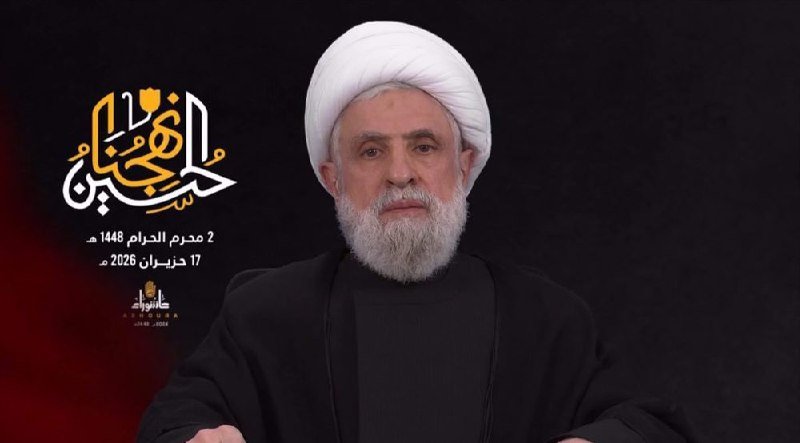
At 12:12 UTC on 14 June 2026, Lebanese Civil Defense reported that two people had been killed and seven wounded in what it described as an Israeli strike on Beirut's southern suburb, the densely populated Dahiyeh quarter. Within forty minutes, the same source raised the toll to three killed and six injured, a figure subsequently carried by the Hezbollah-aligned outlet Al-Alam Arabic. By 13:00 UTC, the toll — three dead, fifteen or more injured — was being relayed by an open-source channel aggregating Lebanese emergency-services reporting. The strike is the latest in a sequence that has, over the past year, repeatedly tested the line Israel says it observes between militant infrastructure and the civilians who live around it.
The arithmetic tells a familiar story. Civil Defense figures move quickly because the institution does: paramedics, not politicians, compile the early count, and the numbers tend to drift upward, not down, as bodies are recovered from rubble. The injury count has been reported variously as six, seven, and fifteen-plus within the span of an hour — a reflection of how initial reports collapse into a single figure, not evidence of a cover-up. What the numbers do not, and cannot, capture is the target. Until the Israel Defense Forces publishes a damage-assessment and a named-strike justification, the strike is, in the public record, a casualty event without a war aim attached to it.
The pattern underneath the count
Israel has, since the start of its campaign against Hezbollah following the October 2023 escalation, justified strikes in Dahiyeh on the grounds that the suburb is the movement's operational and administrative heartland — that civilian presence and militant presence are, in Israeli doctrine, effectively coextensive. The argument is not new; it has been used in Gaza as well, with consequences that the international community has formally censured. The point worth making is structural: when a state's targeting doctrine treats an entire urban quarter as a lawful battlefield, the burden of distinguishing combatant from non-combatant shifts from the actor doing the bombing to the residents trying to survive it. Three dead and six wounded in one strike is not a policy failure; under the doctrine on offer, it is, in some readings, a successful outcome.
Reporting on the strike is also a study in source layering. The earliest figures came from Lebanese Civil Defense via regional outlets — Al-Alam Arabic and the Beirut-based Cradle Media — and were then aggregated by open-source intelligence channels that track the wire services. None of the casualty numbers have yet been independently verified by a wire-service reporter on the ground, and the IDF has not, as of this writing, issued a statement taking responsibility for the specific strike. The pattern is familiar: the first hours of any strike in Lebanon are populated by Lebanese institutional sources, the next by Israeli and Western-wire confirmation or denial, and the gap between the two is where the political narrative is fought.
What the casualty count is actually for
The Israeli government has, across the past two years, made civilian casualties in Lebanon a function of two claims: that Hezbollah embeds its weapons in residential areas, and that the movement's continued presence south of the Litani gives Israel no alternative. The first claim is well documented by UNIFIL reporting and by independent arms-tracing investigations; the second is contested by the ceasefire framework negotiated in late 2024 and by the Lebanese government's own deployments in the south. What neither claim explains is why, in mid-2026, a strike on a Beirut suburb produces a three-figure casualty list at all. The military objective, if there is one, is not legible in the early reporting; what is legible is a one-line civil-defense bulletin.
Hezbollah's information operation, for its part, is calibrated to do exactly what it is doing in this case: surface the casualty figure, name the suburb, and let the photograph and the body count do the rest. The group does not publish its own combatant losses in real time, and the official Lebanese state has, in recent months, been quieter about Israeli strikes than it was in 2024. The asymmetry of disclosure is itself a story. When the only authoritative voice on what happened is the institution burying the dead, the politics of the strike are already settled before the targeting rationale is published.
The frame that nobody is using
Western coverage of Israeli strikes in Lebanon has, broadly speaking, settled into a three-beat structure: a sentence on the strike, a sentence on Hezbollah, and a sentence on the ceasefire that is supposed to make strikes unnecessary. The frame treats the strike as a discrete event, the movement as a permanent backdrop, and the ceasefire as the standard against which the strike is judged. What the frame leaves out is the more uncomfortable question: if the ceasefire is the standard, what is the standard when a sovereign state's air force is the party breaking it? Lebanese Civil Defense is not a political actor; its bulletins are not propaganda. When the institution says three people are dead in a residential suburb, the relevant counter-question is not whether Hezbollah is present in the suburb but whether the strike met the proportionality and distinction tests that Israel says it observes.
The honest reading of the available reporting is that the answer is not yet knowable. The target has not been named. The weapons used have not been catalogued. The strike's position relative to nearby civilian infrastructure — schools, hospitals, the dense residential blocks that give Dahiyeh its character — has not been mapped in the public record. What is knowable is that three people are dead in their own neighbourhood, and that the institutions which could, in principle, explain why, have not yet spoken. The gap between those two facts is the story.
The stakes for the next forty-eight hours
The political stakes are tighter than the military ones. A domestic Lebanese government already under fiscal pressure does not need a weekly strike in the southern suburbs; the previous cabinet resigned over exactly this kind of pressure. Hezbollah, weakened militarily by the 2024 campaign and politically by the loss of its Syrian rear, cannot afford a strike that it cannot meaningfully respond to. The ceasefire framework, meanwhile, is a document with signatories but no enforcement mechanism beyond the willingness of the parties to keep it. Every strike that produces a Lebanese Civil Defense bulletin tests that willingness in public. The risk over the next forty-eight hours is not escalation in the conventional sense — it is the slow, visible erosion of an arrangement that nobody is willing to defend in writing but that everybody is willing to describe as still holding.
Desk note: The wire-services version of this strike will lead with the casualty figure and end with a "no immediate claim of responsibility" line. Monexus leads with the same figure and ends with the question the wire version will not ask — what was the target, and on what legal basis. Both versions will be accurate; only one of them will be useful to a reader trying to understand the trajectory.
Wire provenance
This editorial synthesis draws on the following public wire/social posts:
- https://t.me/rnintel/
- https://t.me/thecradlemedia/
- https://t.me/alalamarabic/
- https://t.me/alalamarabic/
- https://en.wikipedia.org/wiki/Dahiyeh