Cage Matches on the South Lawn: A Statecraft Built for the Algorithm
A White House UFC card, a Trump-branded stablecoin, and a self-declared deadline for a US–Iran deal: the ceremonial and the coercive are converging on a single news cycle.
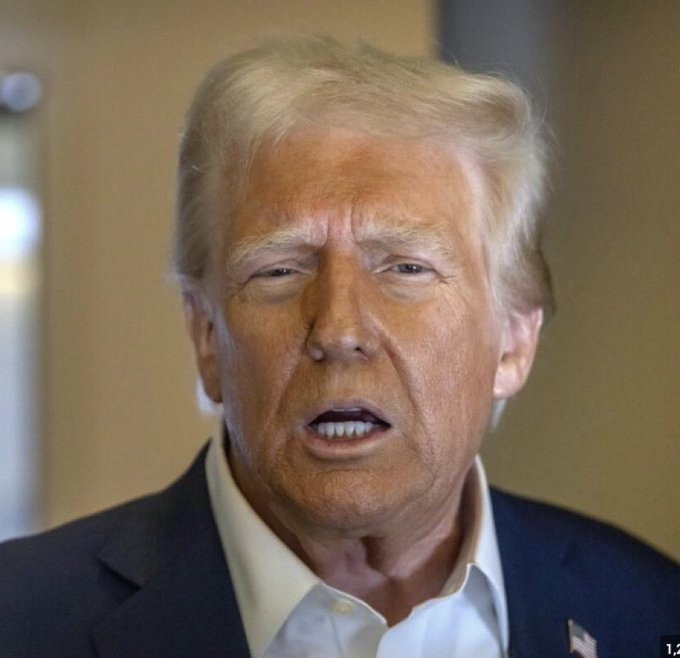
Two items landed inside two hours on 14 June 2026, and neither can be read sensibly without the other. At 17:30 UTC, Reuters World News podcast host Jacob Bogage told listeners, "We are literally going to watch UFC cage fight matches on the South Lawn of the White House," framing it as part of President Donald Trump's 80th-birthday celebrations. By 17:59 UTC, Cointelegraph reported that some of the White House fight bonuses would be denominated in USD1, a stablecoin associated with a Trump-linked venture. Hours earlier, at 09:31 UTC, Cointelegraph also carried Trump's claim that a US–Iran deal "could be signed today," alongside Tehran's flat denial that any final decision had been made. Three data points. One operating system.
The unifying thesis is simple: the pageantry of state power and the plumbing of the dollar are being merged into a single product, and the same news cycle is expected to absorb both the choreography and the coercion. The South Lawn card is not a sideshow to the Iran file; it is the same logic, run at full volume.
The ceremony
The Reuters report is plain enough: UFC fights staged on the South Lawn, marketed as a birthday fixture for an 80-year-old president. A White House used for cage matches is no longer a subtle signal. The visual language is borrowed from entertainment — spotlights, walkouts, ranked cards — and grafted onto the most heavily coded civic space in the country. The financial layer is doing the same graft. Bonuses paid in a Trump-branded stablecoin, per Cointelegraph, turn a fighter's purse into a sampler of the political economy the administration wants the rest of the world to denominate in. Spectacle and unit of account, in one transaction.
The counter-narrative is already forming in predictable corners: that the card is kitsch, that the stablecoin is grift, that the marriage of the two is pure carnival. That reading has the virtue of being funny. Its vice is that it mistakes the medium. The White House is not being trivialised; it is being re-platformed. The point of the cage match is to generate footage that travels further than any press release, and the point of paying in a branded stablecoin is to attach a monetary instrument to that footage. Bribery allegations and crowd-size innuendo are noise compared with the structural fact that the executive brand and the medium of exchange are now co-starring.
The coercion
At 09:31 UTC, Trump told reporters a US–Iran deal could be signed the same day. Tehran's response, carried in the same Cointelegraph wire, was that no final decision had been made. That is a routine choreography: an American president sets a deadline, the Iranian side refuses to perform for the deadline, and the press cycle gets a binary that is easy to cover. The structure underneath is less routine. A deal of the kind hinted at would reshape Gulf security architecture, the price of crude, the sanctions architecture that has organised Middle Eastern finance for two decades, and the political fortunes of every capital from Riyadh to Tel Aviv to Ankara.
The alternative read is that there is no deal, and the announcement is itself the deliverable. A declared deadline that Tehran declines to meet produces a known market reaction — energy prices, shipping insurance premia, currency volatility — that can be exploited by actors with positioning. It also produces a media environment in which the question of war or peace is itself the headline, and any eventual announcement, whatever its terms, lands as a win. The wire's silence on specifics is the tell: when the reporting names a counterpart, a venue, and a clause structure, a deal is close. When the reporting names a deadline and a denial, the deadline is the product.
The architecture in plain English
What ties the cage match to the sanctions file is the design choice to fuse three ordinarily separate things: political brand, monetary instrument, and platform distribution. A stablecoin is not just a token; it is a settlement rail, a treasury instrument, and a brand carrier. When a political figure attaches his name to a stablecoin, the line between campaign finance and monetary policy blurs. When that stablecoin is then used to pay fighters on the White House lawn, the line between entertainment, campaign, and state disappears. When the same week's marquee foreign-policy item is announced via social channels with a self-imposed deadline, the line between diplomacy and content goes with it.
The incumbent architecture, in plain terms, rests on a simple deal: the US supplies the reserve currency, the security umbrella, and the dollar-clearing system; the rest of the world supplies the demand for those goods and the political tolerance of the system. That bargain depends on a certain reserve of decorum — the sense that the instruments of state are larger than the personalities operating them. What 14 June 2026 illustrates is a different design, in which the personalities are the instruments. The South Lawn card monetises the brand. The USD1 bonus monetises the rail. The Iran deadline monetises the news cycle. None of these is a coherent industrial policy. All of them are coherent attention policy.
The stakes
The losers, on the present trajectory, are the institutions that depend on a clear separation between treasury, campaign, and entertainment. That includes the Federal Reserve's claim to be politically insulated, the UFC's claim to be a sports league rather than a political vehicle, and the State Department's claim to be the lead instrument of US foreign policy rather than a supporting actor in a content operation. The winners are the actors who can move fast across all three layers at once — branded-media operators, deal-savvy political entrepreneurs, and stablecoin issuers with distribution.
For the rest of the world, the practical question is whether to price in the new design or wait it out. Gulf states, Chinese commercial banks operating across MENA, and European treasuries holding dollar reserves all have to decide how much of their hedging is now hedging against US policy volatility rather than against adversaries. The Reuters–Cointelegraph pairing on this one Saturday suggests that volatility itself is the new product, and the question is not whether the next announcement will be a deal, a card, or a token, but whether the audience can tell the difference. As of 14 June 2026, the sources are silent on that.
Monexus framed the Reuters birthday-card and Cointelegraph USD1 bonus as a single attention-policy story rather than a celebrity item, and read Trump's same-day Iran claim against Tehran's denial as deadline-as-content rather than as progress toward a deal.
Wire provenance
This editorial synthesis draws on the following public wire/social posts:
- https://t.me/s/cointelegraph
- https://t.me/s/cointelegraph