Dahieh Under Fire: What Saturday's Strikes Reveal About Israel's Escalation Calculus in Lebanon
Two bombs fell on the southern Beirut suburb of Dahieh on the morning of 14 June 2026, the latest in a widening Israeli air campaign that has moved the conflict from the borderlands into a Hezbollah heartland. The strikes test a calculation that has not changed in months — and a Lebanese civilian toll that has.
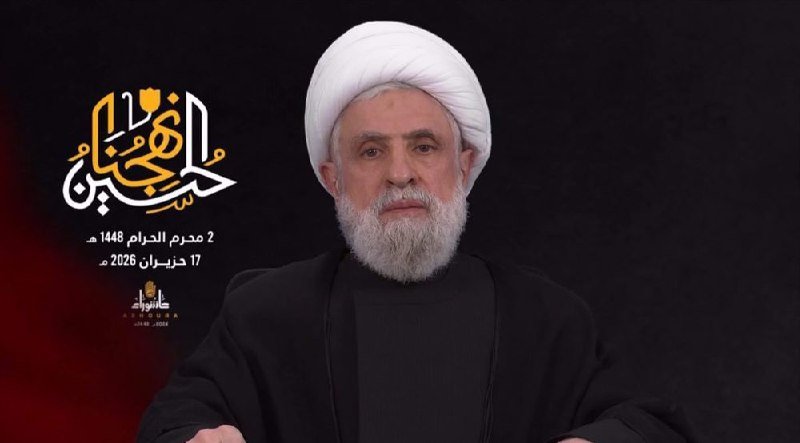
At 10:35 UTC on 14 June 2026, footage began circulating from Dahieh — the southern Beirut suburb that has functioned for two decades as Hezbollah's political and military heartland — showing what Lebanese sources described as two bombs dropped in quick succession on the Al-Ghubairi area. By 10:44 UTC, additional clips of the strike zone had reached open channels, and by 10:46 UTC the first images of the impact scene were being shared by regional correspondents. The strikes landed on a Saturday morning, in a densely populated quarter that Israel has struck repeatedly since the war in Gaza began, and that it has hit with increasing weight since the front with Hezbollah in southern Lebanon reopened in late 2023.
What is unfolding in Dahieh is not a border skirmish. It is the deliberate application of air power against a neighbourhood that Israel itself has long treated as a strategic object — and the latest data point in a campaign whose logic is best read in plain terms. The Israeli framing holds that Hezbollah's reconstruction of its rocket and precision-missile infrastructure in Dahieh cannot be tolerated; the Lebanese and Arab framing holds that the cost of that calculation is being paid in civilian lives, displacement, and the slow unravelling of Beirut's southern suburbs. Both framings are evidence-based. Only one of them is treated as self-explanatory in Western wire copy.
What the strikes hit, and what the sources show
The four wire items from the morning of 14 June are consistent in their core facts and silent on most of the rest. Two Telegram channels — one run by the Beirut-based correspondent Elijah J. Magnier under his @englishabuali handle, the other the open-source account @GeoPWatch — posted image and video material of the strike scene in Dahieh and the Al-Ghubairi area. Magnier's 10:35 UTC note cited Lebanese sources for the count of two bombs; @GeoPWatch's 10:41 UTC post added imagery without a weapons or casualty tally. No Israeli military spokesperson statement, no Lebanese health ministry casualty figure, and no Hezbollah commentary appears in the thread. The sources do not specify what was struck, whether the target was a weapons depot, a command node, a residential building, or some combination. They do not give a number of dead or wounded.
That silence is itself part of the story. Israeli strikes on Dahieh in this phase of the conflict have repeatedly targeted what the IDF spokesperson describes as Hezbollah military infrastructure embedded in a civilian urban environment; Lebanese coverage, including the @englishabuali feed, has framed the same strikes as attacks on a civilian quarter. The present thread sits squarely inside that pattern: imagery, no figures, two competing reading frames competing for the same footage.
The escalation logic
The Dahieh campaign has to be read against the broader Israeli air operation that has run across Lebanon since the October 2023 war in Gaza reopened the northern front. The Israeli operational premise, stated repeatedly by the IDF and by senior Israeli officials, is that Hezbollah's presence in southern Lebanon — and in particular its precision-missile programme, which Israeli intelligence assessments have flagged as the most serious threat on the northern border — must be degraded. The strikes on Al-Ghubairi fit that pattern. They are not a one-off. They are the kind of target set a military planner would draw if the objective were to signal that no Hezbollah-controlled neighbourhood in Beirut is off-limits.
The counter-frame from Beirut and from much of the Arab press is not a denial that Hezbollah has military infrastructure in Dahieh. It is a question of proportionality, civilian harm, and the legal frame around urban bombardment. The Dahieh strikes of 2006, which destroyed much of the suburb and killed more than 1,000 Lebanese civilians by the count later compiled by Human Rights Watch and Amnesty International, established the suburb as the benchmark case for what the Israeli air campaign against a hybrid non-state actor in a dense urban setting looks like when it runs at full intensity. Twenty years later, the question of how close the current operation is moving toward that benchmark is the question that matters — and one that the available open-source footage, by itself, cannot answer.
What the coverage leaves out
A pattern worth naming plainly: open-source coverage of strikes in Dahieh in this phase of the war is dominated by imagery of the strike itself, and by sourcing that tends toward either Israeli military spokespeople (for the targeting rationale) or Hezbollah-aligned channels (for the framing). Independent on-the-ground reporting from Dahieh has been constrained by Israeli military operations in the suburb, by Lebanese security restrictions, and by the practical difficulty of access. The result is that the public record of a strike like the one on Al-Ghubairi is built from a thin set of inputs: a few Telegram posts with strike-scene imagery, a delayed IDF statement, a delayed Lebanese health ministry figure, and a Hezbollah statement. Each of those is a primary source. None of them, on its own, is a full account.
The Western wire coverage of these strikes tends to defer heavily to the IDF framing on what was targeted and why, and to the Lebanese health ministry — rather than to the Lebanese Red Cross, UN OCHA, or independent hospitals — on casualty counts. That asymmetry is not dishonest, but it is a real one, and it shapes which parts of the strike make it into the international record.
Stakes
If the trajectory of the past two years continues, Dahieh will absorb more strikes, not fewer; the civilian toll in southern Beirut will rise; the diplomatic off-ramp — a ceasefire framework along the lines of the November 2024 arrangement that paused the Gaza-front war — will recede. Israel gains, on its own terms, a degraded Hezbollah rocket and precision-missile infrastructure in the suburb, at a cost in Lebanese civilian life and in international legitimacy that its planners evidently judge acceptable. Lebanon loses housing stock, civilian lives, and political agency over its own capital's southern edge. The diaspora community in Beirut and beyond absorbs another round of displacement.
What remains genuinely uncertain, and what the open-source record does not resolve, is the specific target of the 14 June strikes, the casualty count, and whether the two-bomb pattern represents a stepped-up yield on a specific target or a continuation of the existing campaign weight. Those answers will come, if they come, from a fuller wire cycle than the four-channel snapshot this analysis is built on. Until then, the only honest reading of the available evidence is that Dahieh was struck again, in daylight, on a Saturday, and that the regional arithmetic that produced that strike is still in force.
— Monexus Staff Writer. This piece relied on open Telegram-channel reporting; it should be read alongside Israeli and Lebanese official statements as they publish.
Wire provenance
This editorial synthesis draws on the following public wire/social posts:
- https://t.me/englishabuali
- https://t.me/englishabuali
- https://t.me/englishabuali
- https://t.me/GeoPWatch