The Dahiya strike and the information ceiling: what the wires will and won't say about Lebanon's weekend
A single Israeli air strike on Beirut's southern suburbs killed one and wounded four, according to Lebanese state media. The information that didn't accompany it tells the more important story.
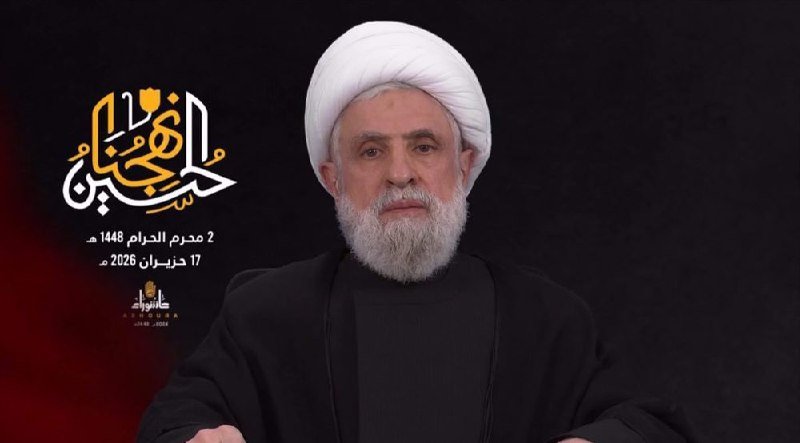
An Israeli air strike hit the Dahiya — the southern suburbs of Beirut that have served for two decades as Hezbollah's political and military heartland — on the morning of 14 June 2026, leaving at least one person dead and four wounded, according to Lebanon's National News Agency as relayed by Iranian state outlet Tasnim at 11:16 UTC. The Israeli military said the strike was a response to a Hezbollah missile attack earlier in the day, in which the group said it had targeted a "gathering of vehicles and soldiers" of what it termed the "Zionist occupation regime." The exchange, in other words, was not a one-shot provocation. It was a tit-for-tit, claimed and counter-claimed, with each side citing the other's opening move as justification.
The pattern is by now familiar. What is less familiar — and what deserves more attention than the volley itself — is the architecture of information that arrives with it. Within the space of an hour on 14 June, the public record on this strike consisted almost entirely of statements from one combatant (Israel, via the IDF spokesperson) and from actors aligned with the other (Tasnim, the Lebanese state news agency, and Hezbollah's own "Islamic Resistance" communiqués). Western wire reporting on the specific event was not present in the source material reaching this publication; the only first-pass factual ledger is the one above, and it is, by construction, partial.
What the available record actually contains
Three discrete claims move through the morning's traffic. First: Hezbollah's media arm announced, at roughly 11:40 UTC, a missile operation against "the gathering of vehicles and soldiers of the Zionist occupation regime" — language carried verbatim by both Tasnim English and Tasnim's Persian feed. Second: the Israeli military claimed, at roughly 11:17 UTC, that its own strike on Beirut's southern suburbs was a direct response to that Hezbollah action. Third: the Lebanese National News Agency, again via Tasnim, reported the casualty toll of the Israeli strike as one killed and four wounded. The thread contains no independent confirmation of any of these three claims — no UN coordinates, no Lebanese civil defence readout, no Reuters or AFP dateline from Dahiya itself.
That asymmetry is not an accident. The Dahiya has been a closed reporting environment for most of the post-2006 period; access for Western press is intermittent and largely mediated through political actors. The Lebanese state's information channels are themselves aligned, to varying degrees, with one side of the conflict. The result is a news event whose only narrative spine is supplied by the combatants — and the question of which combatant's framing travels furthest in international coverage is settled, structurally, before the first paragraph is written.
The framing problem, stated plainly
When a Western reader encounters this strike in their morning feed, the version they receive will most often be: "Israel struck Hezbollah targets in Beirut's southern suburbs in response to rocket fire." That sentence is technically supported by the available record. It also erases the asymmetry between the two sides' information footprints. The Hezbollah claim — vehicles and soldiers of the "Zionist occupation regime" — is presented as found, as a fact about the world. The Israeli claim is also presented as found. Neither is subjected, in the typical wire paragraph, to the kind of attribution hedging that would distinguish a combatant's self-report from an independently verified event. The reader is left to perform that labour unaided.
This is the structural feature worth naming. Coverage of this corridor has, for years, operated on a sourcing pattern in which the language of official spokespeople — Israeli, Lebanese, Iranian — travels furthest, fastest, and with the fewest caveats. The voices that do not arrive in time, or do not arrive in English, or do not arrive with a press-conference backdrop, are simply absent from the first draft of the story. The pattern holds regardless of which side is on offence in a given week.
What the counter-narrative looks like, and where it strains
The most plausible alternative read is that this is a routine, limited exchange within an established deterrence rhythm — that both sides are signalling to domestic audiences and to each other, that the casualty count is small by the standards of this corridor's recent history, and that the wire cycle will move on within 24 hours. There is real evidence for that reading: the casualty figures here are an order of magnitude below the strikes that have defined previous escalations, and the public claims from both sides carry the cadence of choreographed messaging rather than the texture of genuinely uncontrolled escalation.
That reading strains, though, at one point. The Dahiya is densely populated. The 2006 war established, through the destruction of entire neighbourhoods, what unrestrained escalation in this corridor looks like. The structural argument that "this is just signalling" depends on the assumption that the signalling remains bounded. The available record does not allow this publication to confirm that assumption — there is no independent reporting from inside Dahiya on 14 June, no civil-defence casualty verification, no UN OCHA situational note in the source material. The argument from rhythm is plausible; it is not, on present evidence, the only argument available.
Stakes and the forward view
The stakes of getting the framing right are not abstract. Civilians in Dahiya — Lebanese, Palestinian, Syrian, and others — bear the human cost of these exchanges first, and the lag between an event and an independently verified account of it is the precise interval in which their situation is either reported accurately or quietly miscoded. For the broader regional architecture, the more durable problem is the slow consolidation of a two-channel information environment in which each side's claims are self-authenticating and the space for an outside read shrinks week by week. A single weekend's strike is not the story. The information ceiling around it is.
What this publication can confirm from the 14 June source set: an air strike on Dahiya caused at least one death and four injuries (Lebanese NNA, via Tasnim); the Israeli military said the strike was retaliation for a Hezbollah missile attack (IDF, via Tasnim); Hezbollah claimed a missile operation against Israeli vehicles and personnel (Hezbollah media, via Tasnim). What we cannot confirm on the present record: independent casualty verification, the specific munition or aircraft used, the precise target of either strike, or whether the exchange was contained as both sides' messaging implies it was.
This piece relied solely on the Telegram-source material available at the time of writing. The thread's source list reflects the wire provenance of the claims above; it does not represent independent editorial verification, which is not possible on the present record.
Wire provenance
This editorial synthesis draws on the following public wire/social posts:
- https://t.me/tasnimnews_en
- https://t.me/tasnimnews_en
- https://t.me/JahanTasnim