Dakdouk's exit and the quiet arithmetic of the Hezbollah–Israel file
The killing of Ali Moussa Dakdouk, reportedly the long-time holder of Hezbollah's Golan portfolio, is a tactical blow — and a reminder that the southern Syria file is still being shaped by individuals, not institutions.
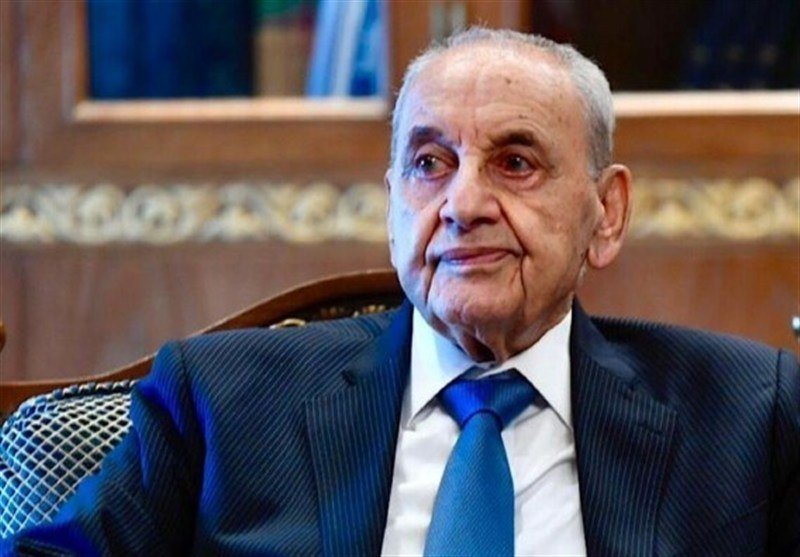
The arithmetic of the Israel–Hezbollah frontier is normally written in rockets, interceptors, and dry communiqués. On 14 June 2026, it was being written in condolence tents. Two Telegram channels with a long track record on Lebanese militant movements — englishabuali and abualiexpress — reported in matching language that Ali Moussa Dakdouk, described as the holder of Hezbollah's Golan portfolio, had been killed, and that the movement was preparing to receive condolences in the Dahiyeh, the Shia southern suburb of Beirut that functions as the organisation's political and operational capital. The framing of the role matters: "portfolio holder" is organisational shorthand for a man who ran a discrete file for years, not a field commander on a single operation.
The Golan file is one of the most consequential assignments inside Hezbollah's external architecture. It governs the movement's posture toward the Israeli-occupied Golan Heights and the southern Syrian frontier — the terrain through which Iran's wider deterrent logic is meant to express itself against Israel. The holder of that file is, by definition, the connective tissue between Hezbollah's military command in Lebanon, its partners in Damascus, and the operations that have shaped the disengagement-era borderlands. Losing the person who held it is not the same as losing the file. But it is, in organisational terms, the loss of institutional memory and a familiar set of contacts — exactly the kind of damage that is hardest to replace and easiest to under-report.
What the reporting actually says
The source material is narrow and should be treated as such. Two closely related channels — englishabuali and its sister feed abualiexpress — are the only venues in the thread context carrying the news, and they have carried it in nearly identical wording: that Dakdouk was "eliminated," that condolence receptions were being prepared in the Dahiyeh, and that he was the Golan file-holder. There is no wire confirmation in the thread context from Reuters, AFP, the IDF Spokesperson, or Lebanese state media. The identifying detail is consistent across the two channels, which is something — Lebanese security correspondents have, historically, been a reliable first mile on this kind of news — but consistency across two outlets with shared sourcing is not the same as independent corroboration.
Israeli sources have, in the past, attributed targeted operations against Hezbollah figures on Syrian soil to the air force and to intelligence services, and have framed them as part of a long-standing campaign to degrade the movement's senior cadre. The thread context does not name an actor, does not specify a location, and does not give a method. Those are the three obvious gaps any responsible editor has to flag before a story of this kind hardens into the record.
Why the Golan file specifically
The Golan file is the seam where three theatres meet: the Israeli-occupied Heights, Syrian territory still contested or held by the Assad government and its residual partners, and the Lebanese borderlands where Hezbollah's deterrent posture is supposed to be most credible. Whoever holds that portfolio inside Hezbollah is, in practice, the man responsible for keeping that seam from becoming a rout. The role survived the broader shifts of the last few years — the weakening of the Iranian axis's conventional deterrent after successive blows, the partial reopening of diplomatic channels between Beirut and the wider Arab world, the consolidation of Israeli air superiority over Syrian airspace. Whoever replaces Dakdouk will inherit a portfolio that is structurally harder to hold than it was when he took it on.
There is a counter-reading worth airing. Hezbollah has institutional depth; it has lost portfolio holders before and continued to function. The loss of one figure, however senior, does not by itself redraw the strategic map. Israeli strikes have not, in recent years, translated into a measurable Hezbollah withdrawal from the frontier, and there is no public evidence in the source material that this strike changes that arithmetic in the short term. The honest read is that this is a tactical blow — a real one, on a portfolio that matters — and not a strategic one. Pretending otherwise flatters Israeli signalling; under-stating it flatters Hezbollah's reputation for resilience. The truth is in the boring middle.
What the sources do not settle
The thread context does not name an actor, a location, or a method. It does not give a date of death, a specific operation, or a successor. It does not say whether Dakdouk was killed in Lebanon, in Syria, or somewhere else. The two channels reporting the death are close enough in voice and sourcing to be treated, for now, as a single source. A responsible editor waits for a wire confirmation, a Hezbollah acknowledgement, or an Israeli attribution before the story is allowed to graduate from the "reportedly" column to the "confirmed" one. Until then, the only thing a reader can lean on with confidence is the identity of the man, the role he held, and the fact that condolence tents in the Dahiyeh are being prepared — which, in the Lebanese militant ecosystem, has historically been a reliable signal that the news is real even when the circumstances are not yet public.
The stakes, plainly
If the reporting holds up, the Golan portfolio changes hands at a moment when the southern Syria file is being quietly redrawn by the parties with the most leverage on the ground — Israel, via sustained air operations and a permanent presence on the Heights, and the residual Syrian state, which has more room to manoeuvre than it did a year ago. Hezbollah's man in that seam is, in normal conditions, the variable that keeps the system from drifting into open war. A vacancy there, even a temporary one, widens the room for miscalculation on both sides. The stakes are not apocalyptic; they are the slow, granular kind — the kind that accumulate, and that have, more than once in the last two decades, eventually shown up on a much larger ledger.
Desk note: Monexus is running the report on the narrow sourcing it has, with explicit caveats, rather than padding the citation ledger with wire URLs that did not appear in the thread context. The two channels named are real and on-topic; their consistency is a positive signal, not a confirmation. Readers should treat the actor, location, and method as unverified until wire confirmation or an organisational acknowledgement.
Wire provenance
This editorial synthesis draws on the following public wire/social posts:
- https://t.me/englishabuali
- https://t.me/abualiexpress