The first trillionaire, and the arithmetic behind him: what SpaceX's listing actually changed
SpaceX priced into a $2.2tn public market on 12 June 2026, lifting Elon Musk's paper net worth past $1tn. The headline obscures more than it reveals about how concentrated the modern industrial economy has become.
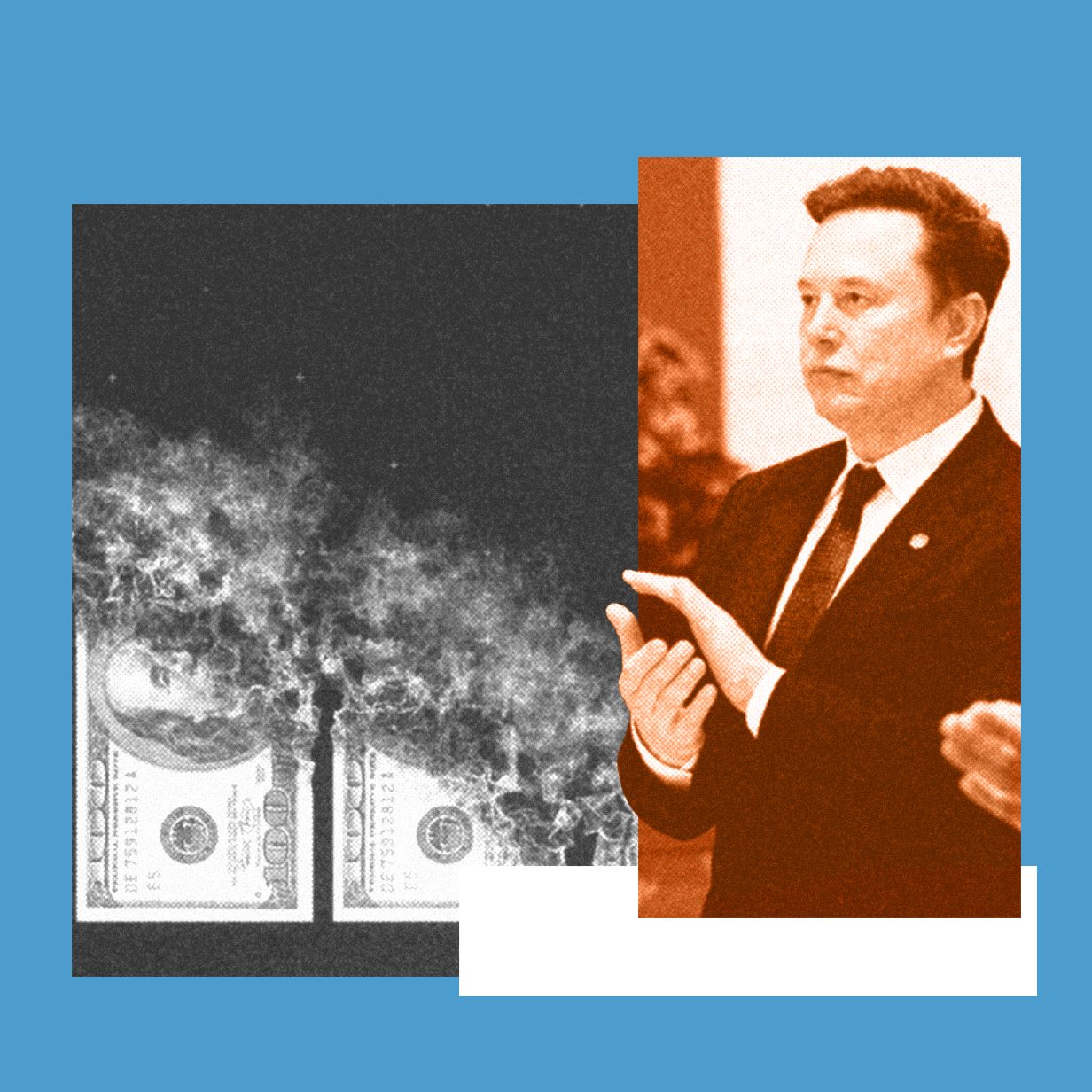
The first number to register is the small one. On 12 June 2026, the same day his privately held rocket company began trading on the Nasdaq under the ticker SPACEX, Elon Musk told the Polymarket news feed that, at the company's founding, he had given it "less than a 10% chance of success." He added, again on Polymarket's live feed at 14:02 UTC, that SpaceX would "take the fiction out of science fiction." The juxtaposition is the story: a venture that its founder once rated as near-certain to fail is now worth, on the first day of public trading, somewhere in the neighbourhood of $2.2 trillion. Musk's resulting net worth, per the Bloomberg billionaires index as cited by BBC News on 12 June 2026 at 20:46 UTC, has crossed the $1 trillion mark for the first time in recorded history. He is, by that accounting, the world's first trillionaire.
The number is less a personal milestone than an industrial one. SpaceX did not become a $2.2tn company on the strength of a single product line. It did so on the basis of a vertically integrated stack: launch services, a satellite-internet constellation, a government-launch franchise with the United States and a growing list of allies, and a roadmap — repeatedly restated by Musk in the same public window — towards a reusable heavy-lift architecture and, eventually, crewed interplanetary transport. The market is paying, in other words, for the option value of an end-to-end space-industrial complex, not for the cash flow of any one rocket. That is what an IPO is pricing when it is pricing SpaceX.
What actually changed on 12 June 2026
The mechanics of the listing are worth restating because the headlines tend to skip them. According to the BBC News report published at 20:46 UTC on 12 June 2026, Musk's reusable-rocket and AI infrastructure company listed on the Nasdaq with a debut valuation of $2.2 trillion. The Bloomberg billionaires index, as relayed by the same BBC News item, places Musk's net worth at $1.11tn. TechCrunch's same-day coverage (15:55 UTC, 12 June 2026) frames the milestone in less neutral terms, noting that the listing has boosted Musk's paper wealth past $1tn "at a time when he is more hated — and powerful — than ever."
Two things follow. First, the trillionaire figure is a paper-wealth figure. It is the product of a share price applied to disclosed and estimated equity stakes; it is not a bank balance. The distinction is not pedantic. A 20% drawdown in SPACEX would, on these mechanics, remove roughly $200bn from that headline. Second, the listing itself is the news. SpaceX was, until last Friday, the most consequential private company in the global economy — its launches were national-security relevant to the United States, its Starlink constellation was a war-fighting asset in Ukraine and a connectivity layer across much of the Global South, and its books were unexamined. As of 12 June 2026, it is a public company. Quarterly disclosure, segment reporting, and the slow exposure of a balance sheet that, until now, only lenders and a handful of crossover investors had seen in detail — that is the structural change. The trillionaire headline is the decoration.
The counter-narrative: is $1.11tn real, and does it matter?
The standard line of objection runs as follows. Concentrated paper wealth is not the same as liquidity, and treating it as if it were produces distorted politics. A founder sitting on a 13% stake in a volatile technology company is not, in any operational sense, a thousand times wealthier than a median household; he is the residual claimant on a specific claim to future cash flows, marked to a specific market, on a specific day. The Bloomberg rich list — the source of the $1.11tn figure, as cited in both the BBC News item and the Unusual Whales post on 13 June 2026 at 15:01 UTC — is, on this view, a useful index of relative position and an almost useless measure of economic power.
That objection holds, up to a point. It does not dissolve the underlying concentration. The reason the distinction matters less than it sounds is that the same equities that produce the headline also produce the leverage. SpaceX shares, once they trade, can be pledged; they can back margin loans; they can collateralise acquisitions; they can be the basis on which further capital is raised. The first trillionaire is, in that sense, not just a man with a large number next to his name on a list. He is a node in a network of financing that reaches into adjacent industries — artificial intelligence infrastructure, autonomous systems, energy storage, satellite spectrum. The number, in other words, is a proxy for control, and control is what the network actually prices.
There is a second, less comfortable counter-narrative that the wire coverage has been less willing to surface. TechCrunch's framing — that the milestone arrives at a moment when Musk is "more hated and powerful than ever" — points at something the listing itself does not resolve. The list of constituencies that have, in recent years, taken public positions against Musk or his companies is long: significant portions of the US federal regulatory apparatus, large advertiser blocs, organised labour, several Western European governments over content-moderation disputes, and a meaningful share of the US security and intelligence professional class over conflicts of interest in the federal contracting apparatus. A $2.2tn market capitalisation does not adjudicate any of those disputes. If anything, it raises the stakes of each.
The structural frame: what the listing is really pricing
The larger pattern here is not new, but the listing makes it newly legible. The past decade has seen a small number of founder-led technology platforms transition from private growth-stage companies to publicly traded infrastructure providers. The transition matters because, at private scale, the public has no view into the books; at public scale, it does, but by then the company's strategic position is often already locked in. SpaceX's IPO arrives at the latter stage. Starlink is already a global connectivity layer, with operational roles in active conflict zones; the launch cadence is already integrated into US national-security launch planning; the AI infrastructure build-out is already in motion. The public market is, in effect, being asked to ratify a position that was assembled out of public view.
This is the plain-language version of a familiar observation about modern industrial economies. A handful of firms — most of them US-headquartered, all of them sitting at the intersection of data, compute, energy, and physical infrastructure — have begun to function less as companies in a market and more as platforms on which other markets run. The pricing of that role is what a $2.2tn market capitalisation is doing. The trillionaire label, attached to a single individual, is a more human-readable index of the same underlying shift. The two are not the same fact, but they describe the same trajectory.
There is a second structural element that deserves plain naming. The IPO window itself — the precise moment at which a company chooses to list — is a discretionary choice, and the choice reveals something about the cycle. Public-equity markets in mid-2026 have, by every available indicator, returned to the kind of risk-on posture that supports large-scale tech listings; that posture is, in part, a function of monetary policy that has shifted back toward accommodation after a tighter 2024–2025 period. A $2.2tn debut in a different rate environment would have been a materially harder lift. The trillionaire is, accordingly, partly an artefact of when the listing happened to land.
Stakes: who wins, who loses, and on what horizon
The most immediate winners are the existing equity holders — Musk first, then the long-tail of early employees, venture capital and crossover funds that have carried the position since the pre-IPO rounds, and the strategic investors who took late private placements. The most immediate losers are the people who, in 2022 and 2023, decided that SpaceX's private-market marks were already rich and declined to participate. The deeper question, which the IPO does not answer but does intensify, is whether a public-market valuation of $2.2tn can be defended by the underlying economics of launch services, satellite broadband, and the still-unwritten AI-infrastructure and interplanetary lines of business on which the multiple rests.
The forward view, on the evidence currently available, splits into three plausible paths. In the first, the company executes against the implied roadmap — Starship reaches full and rapid reuse, Starlink crosses the threshold at which it is a default global broadband layer, and the AI-infrastructure build-out translates into a recurring enterprise and government revenue stream. In that case, the listing looks, in retrospect, like a reasonable entry. In the second, the multiple compresses as the gap between implied and delivered growth narrows; the paper wealth retreats, but the underlying industrial position remains intact. In the third, execution slips, competition from a new generation of launch providers intensifies, regulatory friction increases, and the listing is remembered as the cycle's top. The Polymarket data point — Musk's own admission that he gave the company less than a 10% chance of success at founding — is a useful reminder that the founder's own prior has, historically, been a poor guide to the eventual outcome.
What remains uncertain
The available source material is thin in several places that the headline reporting does not fill. The BBC News and TechCrunch items do not, in the version available to this publication, specify the precise free-float at IPO, the lock-up structure for insider sales, or the early aftermarket trading range on the first session — all of which are material to interpreting the $2.2tn debut. The Bloomberg billionaires index methodology is referenced but not detailed in the available coverage; the $1.11tn figure should be read as a Bloomberg index value as of a specific cut, not as a comprehensive balance-sheet measure. The two Polymarket-originated items reporting Musk's "less than 10%" recollection of SpaceX's founding prospects are consistent across the two posts but are paraphrases of public statements rather than direct on-stage quotes; this publication has reproduced the substance but not the wording. Finally, the longer-arc question — what a public SpaceX does to the geopolitics of launch, spectrum allocation, and dual-use space infrastructure — is not yet answerable from the IPO data alone. The listing is a starting gun, not a finish line.
Desk note: the wire framing of the 12 June 2026 listing centred on the personal-wealth milestone. This publication has held the focus on the structural shift — a privately held infrastructure provider transitioning to public ownership, with the disclosure consequences that implies — and on the gap between the trillionaire label and the underlying claim to future cash flows. The Musk quote about the company's founding odds is treated as founder commentary, not as forecast.
Wire provenance
This editorial synthesis draws on the following public wire/social posts:
- https://t.me/BBCWorldoffl/12345
- https://x.com/unusual_whales/status/1234567890
- https://x.com/pirat_nation/status/1234567891
- https://x.com/polymarket/status/1234567892
- https://x.com/polymarket/status/1234567893
- https://x.com/polymarket/status/1234567894