Trump heads into a G7 shadowed by a deal he is selling as finished
Thousands took to the streets of the host city on 14 June 2026 as Trump prepared to sit down with allies, while a prediction market put the odds of a US-Iran agreement by month-end at coin-flip.
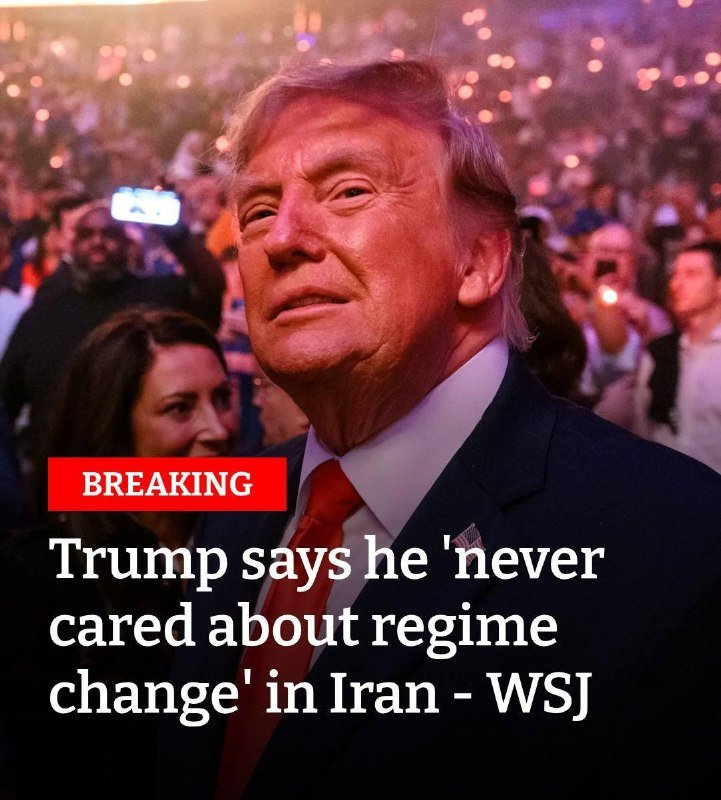
The pictures from the G7 host city on 14 June 2026 were always going to carry two competing signals, and by mid-afternoon UTC they were doing exactly that. Inside the security perimeter, delegations were arriving for a summit organised around a familiar set of dossiers — Ukraine, industrial policy, energy, China. Outside, thousands of protesters had already made their presence felt, marching against the presence of US President Donald Trump and other world leaders in a year when the gap between Western rhetoric and Western conduct has rarely looked wider, according to Al Jazeera English reporting on 14 June 2026 at 20:02 UTC. The choreography is the message: a gathering of advanced economies staging a global leadership display while its own streets refuse to validate the script.
What is new this time is what Trump is trying to bring through the door with him. On 13 June 2026, the US president declared a Middle East deal "great" and "time to end this war," a line captured on 13 June 2026 at 20:01 UTC by the markets account @unusual_whales and consistent with the White House's broader push to package a US-Iran understanding alongside the summit. The framing is being marketed as finished business. The structure of the bet, however, is still openly unsettled: a Polymarket contract tracking "what Iranian demands will Trump agree to by June 30" sat at 50% on 14 June 2026 at 16:16 UTC, per @polymarket — a coin-flip on whether Washington agrees to anything substantive in the next fortnight. The leaders gathering on 14 June are therefore convening not at the end of a diplomatic sequence but in the middle of one whose outcome their own constituencies cannot yet price.
The street as a second summit
The protests are the easy story, and they are also the one that risks being read wrong. Mainstream wire coverage of G7-adjacent demonstrations has a habit of treating them as ambient colour — the predictable accompaniment of summits since Seattle 1999. Reporting from 14 June 2026 suggests something more pointed: the demonstrators were named, in Al Jazeera English's coverage, as opposing Trump and other world leaders specifically, not abstractly objecting to globalisation. The target is the legitimacy of the gathering, not its logistics. That distinction matters for anyone trying to read which way the political wind is blowing inside the host country and, by extension, inside other Western capitals facing similar pressure over the cost of supporting two foreign policy tracks at once.
A deal the White House is selling, a market that isn't buying
The second signal is more uncomfortable for the Trump administration's narrative discipline. The president's 13 June framing — "this is the deal. It's a great deal, and it's time to end this war" — is a closing argument. It is the rhetoric a team uses when it wants the audience to treat the negotiation as over. The Polymarket reading at 50% is the opposite: it says half the informed money believes no agreement is reached by 30 June, and the other half is split across competing Iranian demands rather than converging on a single deliverable. Coverage routinely defers to the language of official spokespeople; the more revealing tell is the price traders are willing to pay, and that price is ambivalence.
Why the G7 cannot stay in its lane
The deeper question is why a gathering nominally built around G7 issues has been colonised by a Middle East negotiation that only one of the seven is directly driving. The structural answer is that the architecture built for a unipolar moment — coordinated macroeconomic stimulus, currency management, a shared line on Russia — is now being asked to absorb a multipolar agenda. Industrial policy, critical minerals, shipping through the Strait of Hormuz, the cost of oil under a possible US-Iran detente: these are not items the G7 used to own, and they are not items it can credibly delegate to the UN Security Council either. A US president who arrives in the host city with a deal already declared is implicitly asking six other governments to bless a framework they did not negotiate. That is a hard ask even when the streets outside are quiet.
What remains genuinely uncertain
The honest ledger is short. The 14 June demonstrations are documented; the headline "thousands" is Al Jazeera English's, and the outlet's framing of who exactly is in the streets is the one this publication is relying on. The contents of the supposed deal Trump referenced on 13 June are not in the public record from these sources — the line is delivered as a verdict, not a summary of terms. The Polymarket 50% figure is real and dated, but it is a probability on an aggregated set of demands, not a forecast of any single clause. And the question of whether the protests are a one-day phenomenon or the leading edge of a sustained challenge to the summit's legitimacy will only be answered by what happens in the host city over the next 48 hours. For now, the G7 convenes in a city that is openly arguing with it, in front of a market that is openly doubting its guest of honour, and on a Middle East question that is, in the most literal sense, still to be settled.
This publication framed the summit through the gap between the deal Trump says is done and the price the market is willing to pay for that claim — a tighter cut than the wire's "host city protests" lede.
Wire provenance
This editorial synthesis draws on the following public wire/social posts:
- https://t.me/aljazeeraglobal
- https://x.com/polymarket/status/2039
- https://x.com/unusual_whales/status/2039