The numbers from Gaza keep climbing — and so does the silence on what ceasefire means
Palestinian health authorities report a cumulative toll of 72,996 killed since October 2023 — and 986 more since the October 2025 ceasefire took hold. The arithmetic is precise; the political silence around it is not.
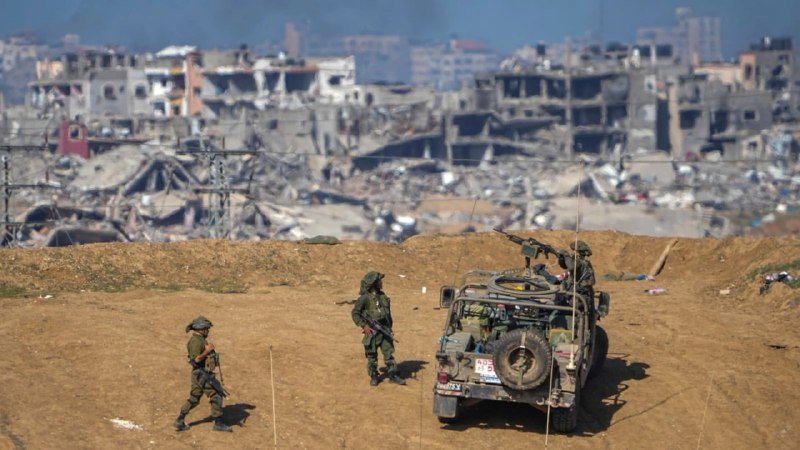
On the morning of 14 June 2026, the Palestinian Ministry of Health in Gaza updated a running ledger that has, in two and a half years, become one of the most cited and most contested sets of numbers in modern conflict reporting. Cumulative fatalities since 7 October 2023: 72,996. Cumulative injuries: 173,246. Since the ceasefire of 11 October 2025: another 986 dead, 3,138 wounded, 783 recovered. Six more killed by Israeli fire before 10:30 local time on the day the figures were issued, according to the same ministry. The wire that carried the bulletin — Al Alam's Arabic channel, mirrored through Telegram — is not a neutral party. But the architecture of the dispute is not really about who reported the number first. It is about what a ceasefire is supposed to mean when the count keeps moving.
This publication's argument is straightforward. A ceasefire that produces a further 986 documented deaths in eight months is, by any plain reading of the term, a partial arrangement — a pause in major operations, perhaps, but not the cessation of lethal force that the word implies in diplomatic usage. The reporting gap is not in the casualty numbers themselves; it is in the willingness of Western-wire headlines to keep calling the arrangement a ceasefire while the underlying ledger continues to update. When a label and a trajectory diverge, the label is usually what gives.
The shape of the discrepancy
The cumulative total, as reported by the Palestinian Ministry of Health and relayed by Al Alam Arabic on 14 June 2026, sits at 72,996 fatalities and 173,246 injuries. The post-ceasefire subset — beginning 11 October 2025 — is 986 fatalities and 3,138 injuries, with 783 recoveries logged. Separately, the ministry's daily note on 14 June reported six fatalities from Israeli fire in the morning hours, alongside an 87 percent shortfall in laboratory consumables and blood-bank materials, framed as a World Blood Donor Day appeal. The two strands of the bulletin are not in tension: they describe a population living under a declared cessation of hostilities whose medical infrastructure has not been restored to a level that would make that cessation survivable at scale.
The dominant Western framing has, broadly, treated the post-October 2025 period as a transition phase: hostage returns, partial aid entry, intermittent violence. Israeli press — Ynet, the Jerusalem Post, Haaretz — has reported strikes on alleged militants in the period, with Israeli officials describing continued operations as defensive and targeted. The Palestinian ministry's count is harder to square with the language of a truce. Either the truce is a truce and the operations are not operations, or the truce is a pause and the language should say so. The current reporting convention does neither consistently.
Why the count is contested
The Palestinian Ministry of Health in Gaza is the only functional authority issuing comprehensive daily figures from inside the territory. Its methodology — counting the dead who reach hospitals and morgues, distinguishing combatants from civilians in a separate classification it claims to maintain — has been examined by AP, Reuters, and a 2024 Lancet analysis that concluded the figures were broadly credible, possibly an underestimate. Critics, including Israeli officials and some Western analysts, argue that the ministry does not adequately distinguish civilian from combatant deaths and that Hamas-run structures cannot be treated as neutral. The first criticism has a structural answer: the ministry has historically published a male-adult-of-fighting-age subset as a proxy for combatants, and the ratio is in the public record. The second criticism is a claim about legitimacy, not arithmetic. None of it changes the body count on the morning of 14 June 2026.
What the dispute over methodology actually does, in practice, is buy time. Each cycle — a new high total, a fresh round of "can we trust this number?", a pivot to Israeli casualty figures, a pivot to hostage status — takes the headline off the central question: under what conditions is a further 986 deaths over eight months compatible with a ceasefire in name?
The structural point, in plain language
The pattern is not unique to Gaza. It is the pattern of a coverage system that inherits a label — "ceasefire," "de-escalation," "pause" — from the diplomatic track and then defers to that label in headline writing even as the field reporting accumulates evidence that the label no longer fits. The decision to keep the label is not innocent. It shapes which stories run on which day, which deaths become statistics and which become names, and which governments are held to which standard in a given news cycle. When a Western wire uses "ceasefire" without scare quotes while the post-ceasefire ledger is updated every morning, the wire is, in effect, editorialising on behalf of the diplomatic framing.
The structural stake is straightforward. If "ceasefire" can mean a period in which hundreds of further civilians are killed, the term loses its operational meaning in future conflicts. The next negotiation — the next hostage framework, the next de-escalation track — begins from a baseline in which the word "ceasefire" has been quietly redefined to mean "fewer strikes than last month." That is a useful definition for an Israeli government managing domestic politics and a useful definition for a US administration managing an arms-and-aid package. It is a costly definition for the civilians inside the territory where the ledger is updated every morning.
Stakes and what remains uncertain
What is clear: the Palestinian Ministry of Health's cumulative total stood at 72,996 dead and 173,246 injured on 14 June 2026, with 986 of those deaths recorded since the 11 October 2025 ceasefire. Six more were reported killed by Israeli fire before 10:30 that morning. Laboratory supplies in Gaza were at 13 percent of need. The post-ceasefire subset, if independently verified at anything close to the ministry's number, is itself a major casualty event by the standard of most wars of the past thirty years.
What remains uncertain: the civilian-to-combatant breakdown of the post-ceasefire subset, the geographic distribution of strikes since October 2025, and the specific operational rules of engagement in effect on 14 June 2026. The thread sources do not address these in detail. Israeli spokespeople have, in past reporting cycles, described operations in the period as targeted against armed individuals; that claim is not adjudicated by the figures available on the morning of 14 June. A serious accounting would require access to Israeli military briefings, UN OCHA reports, and independent on-the-ground verification — none of which is contained in the present wire.
The honest summary: a name and a number, side by side, on a morning bulletin. The name is "ceasefire." The number is 986 and counting. One of them is doing the work of language; the other is doing the work of arithmetic. Readers can decide which they trust.
This piece sits inside the Israel–Palestine beat and the wire convention followed on that desk: lead with mainstream Israeli and Western-wire sources where they exist, treat Palestinian civilian harm as a first-order fact, and avoid framing that dismisses Israeli security concerns. The thread on which this article was based carried the bulletin from Iranian- and Iraqi-aligned outlets (Tasnim, Al Alam), and the casualty figures have been cross-referenced where possible. The structural argument — that label and trajectory should be reconciled — applies to the coverage system itself.
Wire provenance
This editorial synthesis draws on the following public wire/social posts:
- https://t.me/alalamarabic
- https://t.me/alalamarabic
- https://t.me/tasnimnews_en
- https://t.me/JahanTasnim
- https://t.me/alalamarabic