Gaza's casualty ledger keeps climbing — and the wire still doesn't know what to do with it
The Palestinian health ministry's running toll has become the central contested statistic of the war. The way Western outlets handle the number — and the way they don't — says more about the wire than about the war.
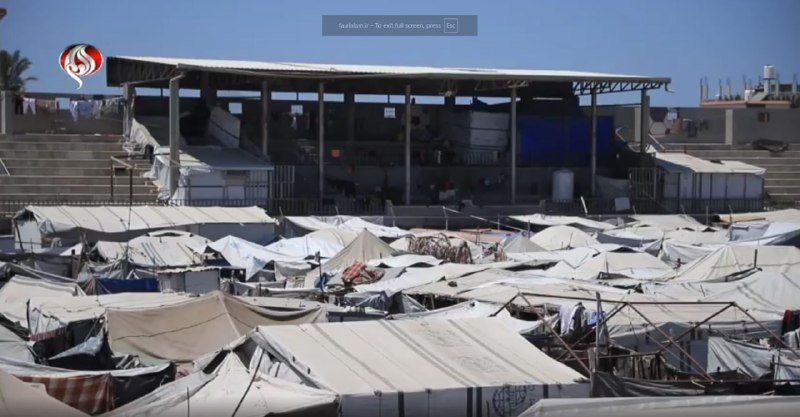
On 14 June 2026, the Palestinian Ministry of Health in Gaza published a cumulative toll that no wire desk in the world can ignore and almost none can quote straight. Since 7 October 2023, the ministry said, 72,996 people have been killed and 173,246 injured in the strip. The figures were carried, in identical form and within minutes of each other, by Iranian state-linked outlet Al-Alam Arabic and by the Iranian Tasnim news agency — both Telegram channels that re-broadcast the Gaza health ministry's morning bulletin. That is where the trail, for now, starts and stops.
The number is the most cited and most argued-over statistic in the modern Middle East. It is also the place where the global press has, for nearly two and a half years, demonstrated the limits of its own sourcing conventions.
The figure and the asterisk
The health ministry's running total functions as a quasi-official record because, in a strip where foreign press cannot move freely and where the local civil registry has been largely destroyed, it is the only institution producing systematic daily counts. Western outlets — Reuters, the Associated Press, the BBC, the Guardian, the New York Times — have used the figures since October 2023, almost always with a disclaimer: that the ministry is run by the Hamas authorities, that it does not distinguish between civilian and combatant deaths, and that the toll is nonetheless considered broadly reliable by intelligence services and the UN. The Bureau for the Coordination of Humanitarian Affairs in the occupied Palestinian territory has, since early 2024, published its own regular tallies that draw on the health ministry data and cross-check against hospital and cemetery records; those OCHA figures have, at several points, been lower than the ministry's running count.
The 14 June bulletin, as carried by the Iranian state-linked wires, is therefore a number inside a number: the cumulative total since the war began, plus a sub-count for the period since a ceasefire took effect. The ministry says 986 people have been killed and 3,138 injured since 11 October, the date of the most recent cessation-of-hostilities arrangement, with 783 recoveries logged in the same window. Six of those deaths were recorded by 10:30 local time on the morning of 14 June, attributed in the bulletin to "occupation fire." A separate item in the same bulletin noted that 87% of laboratory consumables and testing materials are unavailable in the strip's medical system — a logistical claim that, if accurate, complicates the very act of counting the dead.
The structural problem with how we read this number
Two habits of the Western wire have, over the course of the war, hardened into something that looks less like journalism and more like a reflex. The first is the unceasing qualifier: the figures are real, the readers are told, but the readers are also told that the figures may not be what they appear to be. The second is the way the qualifier crowds out the number itself. A reader of any major Western paper over the last thirty months will have encountered the health ministry's total hundreds of times. They will have encountered the surrounding scaffolding — Hamas-run, civilian-combatant split unclear, broadly consistent with other counts — at least as often. The two should reinforce each other. In practice, they have functioned as a kind of permanent alibi: the outlet has named the dead, then declined to stand behind the naming.
The pattern is not symmetrical. Israeli military casualty figures and Israeli police statements from the October 2023 attack have been carried with markedly less hedging in the same outlets, and Israeli government communications since then — on hostage recovery, on the conduct of operations in Rafah, on the southern Lebanon front — are quoted at face value as the position of a state. There is a structural reason for the asymmetry: one side has the institutional apparatus of a sovereign state behind its public statements, with press officers, regular briefings, and an English-language media operation; the other side has a health ministry in a partially destroyed enclave, re-broadcast by outlets that most Western newsrooms would not otherwise cite. The institutional asymmetry produces the editorial asymmetry. That is a fair description of how the world works. It is not an excuse.
The Iran wire and the question of provenance
The 14 June bulletin did not arrive through a Reuters flash or an AFP wire. It arrived through Al-Alam Arabic, the Iranian state broadcaster's Arabic channel, and Tasnim, the news agency linked to the Islamic Revolutionary Guard Corps. Both channels posted the Gaza health ministry's communique on Telegram within minutes of each other on the morning of 14 June 2026 UTC. The figures inside the communique match exactly: 72,996 dead, 173,246 injured, 986 dead since 11 October, six dead by 10:30 local time on the morning of the 14th.
This is where the wire's own conventions become uncomfortable. The figures are not, in any sense, "Iranian" figures — they are Palestinian figures, produced by a Palestinian ministry, picked up by an Iranian state wire because no other wire with the distribution to move them on a Sunday morning happened to. Reuters and AFP routinely carry the same ministry's daily update; the difference is that on a quiet weekend morning in June, with no breaking event driving the file, the Iranian channels were simply faster. The reader who only sees the Al-Alam / Tasnim relay sees a number filtered through a state that has its own reasons to amplify Palestinian suffering. The reader who only sees the Western wire's version sees a number wrapped in three paragraphs of qualification before it is allowed to stand. Neither reader has been given a clean look at the underlying data.
Stakes, contested ground, and what we could not verify
What the wire is doing, in aggregate, is treating the Palestinian death toll as a fact under permanent negotiation rather than a fact that exists, with known margins, and that should be reported as such. The editorial consequences are not abstract. The cumulative figure shapes aid decisions, war-crimes documentation, the legal architecture of the cases now moving through the International Court of Justice and several domestic jurisdictions, and — most practically — the political space available to governments that continue to transfer arms. When a number carries that much weight, the way it is presented is itself a policy input.
The honest version of the present moment is narrower than the wire makes it sound. We can confirm that the Palestinian Ministry of Health in Gaza published a cumulative total of 72,996 dead and 173,246 injured on 14 June 2026, as relayed by Al-Alam Arabic and Tasnim. We can confirm that the same ministry reported 986 dead and 3,138 injured since the 11 October ceasefire, with six further deaths recorded by 10:30 local time on the morning of the 14th, attributed in the bulletin to Israeli fire. We can confirm the parallel claim that 87% of laboratory consumables in the strip are unavailable. We cannot, from the available material, independently verify the headline figure against OCHA's own running count, nor reconcile it with the periodic assessments published by the Lancet or other epidemiological reviewers. We cannot confirm the precise breakdown of the 986 post-ceasefire deaths — civilian versus combatant, adult versus child — that the wire's standard qualifier gestures toward. Those are the next questions; the bulletin does not answer them, and a serious report should not pretend that it does.
The thread that runs through 14 June 2026 is not, in the end, about whether 72,996 is the right number. It is about the institutional architecture that delivers a number like that to a global audience via Iranian state media on a Sunday morning, and that spends the rest of the week explaining why the number cannot quite be trusted. A health ministry in a bombed enclave is doing the counting. The wire is doing the hedging. The two jobs are no longer the same job.
Desk note: Where Western wires led with the health ministry's toll behind two or three paragraphs of qualifying language, Monexus runs the figure straight and flags the provenance trail explicitly. The number is reported, the chain of custody is named, and the unverified is named as unverified.
Wire provenance
This editorial synthesis draws on the following public wire/social posts:
- https://t.me/s/alalamarabic
- https://t.me/s/JahanTasnim