Germany's 7-1 demolition of Curaçao masks a more interesting story underneath
Kai Havertz's brace powered a 7-1 rout in Houston, but Curaçao's first-ever World Cup goal — and the 21 minutes they held a four-time champion — told the more revealing story of a tournament that finally invited them in.
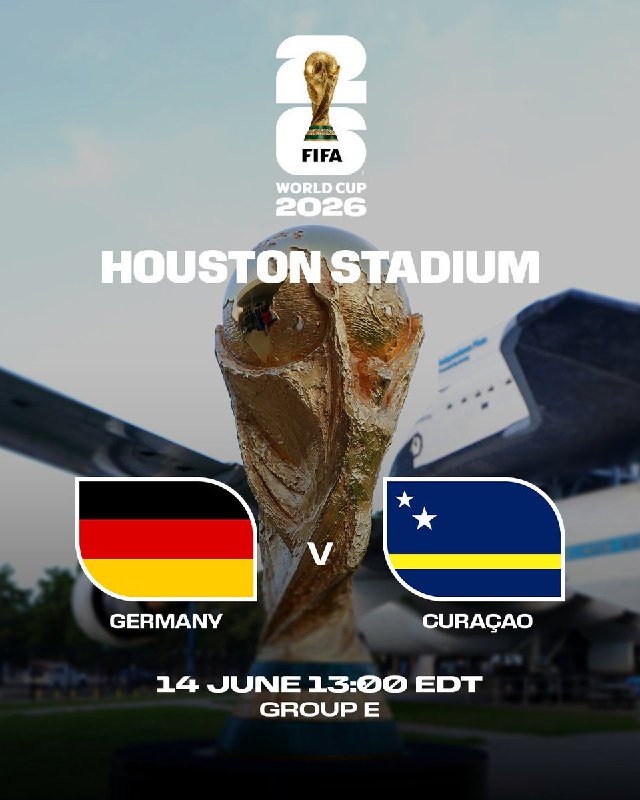
At 21:07 UTC on Sunday evening in Houston, Kai Havertz put Germany two goals up and the 7-1 result that had been telegraphing itself all half was suddenly, definitively, on its way. Curaçao, a 150,000-person Caribbean nation playing in its first men's World Cup, had briefly dared to believe. Twenty-one minutes in, Livano Comenencia rose to meet a set piece and slotted the ball past the German keeper to make it 1-1. The Caribbean side had, for a few possessions, looked like they might belong.
They did belong — until the gap between squad depth and tournament experience reasserted itself with the patience of a four-time champion. By full time at Houston's NRG Stadium, Germany had run out 7-1 winners in their Group E opener, with Havertz's brace, late-half pressure and a second-half avalanche doing the structural work. The scoreline flattered the favourites; the first 30 minutes did not.
The goal that mattered more than the result
Comenencia's header was Curaçao's first-ever World Cup goal, and the country's entire bench treated it as the moment it actually was. The BBC's live feed, CBS Sports' match coverage and ESPN's post-game write-up all carried the line. A nation that had travelled 4,800 km to play its first match at the tournament, drawn into a group with Germany, had not just shown up — it had answered the only question a debut ever really asks. Twenty-one minutes of parity against a side expected to contest the latter rounds is not a moral victory, but it is a measurable one: the average FIFA-ranked side in this group was supposed to concede inside the opening ten. Curaçao did not.
That this happened in Houston — a host city with the largest Curaçaoan diaspora in the United States — turned the occasion into something more layered than a group-stage fixture. FIFA's 48-team expansion was designed, in part, to give smaller footballing nations exactly this kind of night. Whether the economics of the format still reward the participants is a separate question, but the optics of an entire diaspora seeing its flag on a World Cup scoresheet is the kind of currency the tournament actually trades in.
Why the 7-1 is the wrong story to lead with
Wire copy from Sunday evening gravitated, understandably, to Havertz and the second-half deluge. ESPN's report led with "Germany's demolition of Curaçao shows pros and cons." BBC Sport framed it as a "brief scare" before Germany "turned on the style." The framing is technically accurate and editorially lazy. The pros Havertz and his teammates displayed — vertical passing, half-space overloads, the calm of a side that has played 20-plus major tournaments between them — were never in question. The cons, by contrast, were visible in that opening half-hour: a back line that allowed a Caribbean debutant to win the first significant aerial duel of the match, a midfield that took until the 25th minute to find its press-trigger, and a forward line that needed a piece of individual quality (Havertz's first, on 19 minutes) to break a side ranked 86th by FIFA.
The structural read is less flattering than the scoreline. Germany's recent major-tournament exits — 2022 group stage in Qatar, a 2024 European Championship on home soil that ended in the quarters — were preceded by exactly this kind of slow start. A side with Havertz, Florian Wirtz and the returning Jamal Musiala should not need 35 minutes to impose itself on a Curaçao. The fact that they did, and still won by six, says as much about Curaçao's tactical discipline as it does about Germany's ceiling.
What the smaller nations actually take from nights like these
There is a familiar argument that beatings of this scoreline damage the smaller team, financially and psychologically, and there is something to it. But the historical record is more mixed. Panama's 2018 tournament debut featured a 1-0 loss to Belgium and a 2-1 loss to England; the federation has treated the experience, in the years since, as foundational. Curaçao's manager — and the country's federation, which secured this berth via a 2023 Caribbean qualifying campaign that included a penalty shootout win over Panama — will read the second-half tape carefully and leave Houston with a competitive data set no friendly could replicate.
The other side of the ledger is harder. FIFA's expansion to 48 teams, which brings Curaçao and roughly a dozen other debutants or near-debutants to North America this summer, has drawn criticism from federations who argue the dilution is real. Sunday's 7-1 is the kind of result that fuels that critique. The honest answer is that both things are true: the format widens the door, and the gap inside the room is wide.
Stakes, and what the rest of Group E actually tells us
Group E still has to be played. Germany sits top on three points and a +6 goal difference that, in a 48-team field where third-place teams can advance, may matter more than usual by the final whistle of the group stage. Curaçao's next fixture — and the question of whether they can take a point or three from the other sides in the section — is the more interesting tournament question. A second goal at this World Cup, against any opponent, would be another national first. The size of the defeat on Sunday does not change that arithmetic.
The remaining uncertainty is the one that has hung over Germany since before the tournament: whether a side this talented is actually playing to its ceiling. Sunday's evidence was mixed. The Havertz-Musiala-Wirtz axis, once it found its rhythm, looked like the most technically gifted midfield trio in the field. The defensive shape in the first half looked like the kind of problem Julian Nagelsmann will need to solve quickly — there are deeper waters ahead than Curaçao. The 7-1 is, in the end, a data point, not a verdict. Curaçao provided a more interesting story than the scoreline suggests, and Germany provided a less reassuring one than the scoreline suggests.
This piece led with Curaçao's first World Cup goal rather than Germany's margin of victory — a deliberate inversion of the wire framing, which had the question the wrong way round by full time.