Haiti returns to the World Cup — and the framing it carries back with it
Fifty-two years after their only previous appearance, Haiti walk out at a World Cup against Scotland in Boston. The team is back. The question of what 'back' means is the one the cameras will not ask.
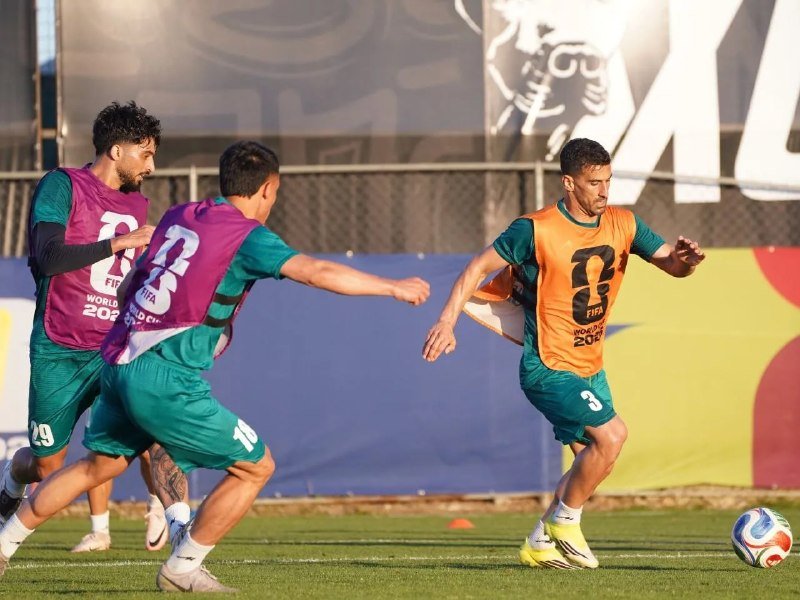
For roughly ninety minutes on Sunday evening in Boston, the arithmetic of Caribbean football briefly overtook the arithmetic of Caribbean politics. Haiti, making their first World Cup appearance in fifty-two years, kicked off against Scotland at Gillette Stadium in the seventh match of the 2026 tournament. Outside the ground, Carnival drums competed with bagpipes. Inside, the football did what football does — it forced a country that the world has largely stopped looking at, except through a single grim news frame, to be looked at differently for an evening.
The temptation, watching the colour and noise along the Charles, is to write this as a redemption story and leave it there. The temptation should be resisted. A World Cup return is genuinely historic for a federation that has spent most of the last two decades fighting for basic infrastructure, and it deserves to be marked. But the framing that travels with the team back home — the assumption that a good tournament somehow answers the questions that the last decade has posed about Haitian football, Haitian governance, and FIFA's own complicity in both — is the story worth interrogating.
What the pictures actually show
Reuters correspondents in Boston reported on the night of 13–14 June 2026 that Haiti's supporters had taken over parts of downtown with Carnival music and kit, mingling with the Tartan Army, whose fans told reporters they had happily spent thousands of dollars to follow Scotland to a tournament the team had also been absent from in living memory. By the time the teams walked out at Gillette Stadium — a 65,000-seat venue that hosted New England Revolution matches long before it hosted World Cup football — the frame was a familiar one: a small nation, a small federation, a big occasion, a city cashing in on both.
That frame is not wrong. It is just incomplete. The Caribbean diaspora in Greater Boston is one of the largest outside Florida; the Haitian-American community in Massachusetts numbers in the hundreds of thousands; the city's hospitality economy is, by any honest accounting, a primary beneficiary of hosting three group-stage matches. The fans in the street are not props. They are the point.
The framing the cameras will not ask
What the broadcast graphics will not pause on, and what most of the wire copy will not linger over, is the institutional backdrop against which the Haitian federation arrives at this tournament. FIFA's own governance file on the Fédération Haïtienne de Football is, in plain language, a long one. The federation has been suspended, restored, re-suspended, and re-administered more than once in the last decade. The 2026 qualifying campaign was won in a country whose domestic league has been operating under severe disruption for years, and whose national team programme has depended heavily on diaspora-based players — athletes who, in many cases, have never set foot in the country they represent at senior level.
None of that makes the team less legitimate. It makes the framing of their return more fraught. A standard World Cup colour piece treats national-team success as a closed loop: the federation produces the players, the players produce the results, the results produce the pride. In Haiti's case, the loop has more exits than entries, and several of those exits are doors that FIFA itself built. The honest version of the story notes that pride and structural critique are not in tension — they are both true at the same time.
What the structural view actually says
The deeper pattern is the one that runs through almost every World Cup narrative involving a small federation, and it does not require a theorist's name attached to it. Mega-events concentrate attention and revenue in host cities and host associations. Smaller federations get the prestige of qualification, the FIFA development payments that come with it, and a fortnight of being seen. The federation-level governance reforms that the same governing body promised in the wake of its own corruption scandals move at a different pace, in a different room, with different minutes.
Haiti is not a uniquely aggrieved case. But it is, in 2026, a particularly clear one. The team is on the field. The federation's reform file is on a shelf. Both deserve to be in the same paragraph, because pretending otherwise is the kind of courtesy the small-Caribbean story has historically been paid — and then been quietly dropped with once the camera trucks roll out of town.
The stakes, in plain terms
If the trajectory continues, the federation gets a development payment, the diaspora gets a week of catharsis, Boston's hotels get a bump, and the structural questions get filed under 'later' — the same folder they have been in since the last time FIFA's governance council promised to look at small-federation capacity. If the framing of this World Cup is taken seriously, the question worth keeping alive is not whether Haiti 'deserved' to be here. They won their group. The question is what 'here' costs, who pays for it, and what changes at the federation level between now and the next cycle.
The evidence on those last three points is thin in the public record, and the wire coverage now being filed out of Boston does not address it. That is itself the story.
This piece sits inside Monexus's coverage of the 2026 World Cup, where the desk is treating group-stage returns by small federations as governance stories as much as sporting ones.
Wire provenance
This editorial synthesis draws on the following public wire/social posts:
- https://t.me/s/GeoPWatch
- https://x.com/reuters/status/2065922888662917120
- https://x.com/reuters/status/2065905049713205248