Hegseth's Iran Claims Outrun the Document on the Table
On CBS, the U.S. Secretary of War declared a deal was done. Margaret Brennan's questions made clear it isn't. The gap between the talking points and the text is now the story.
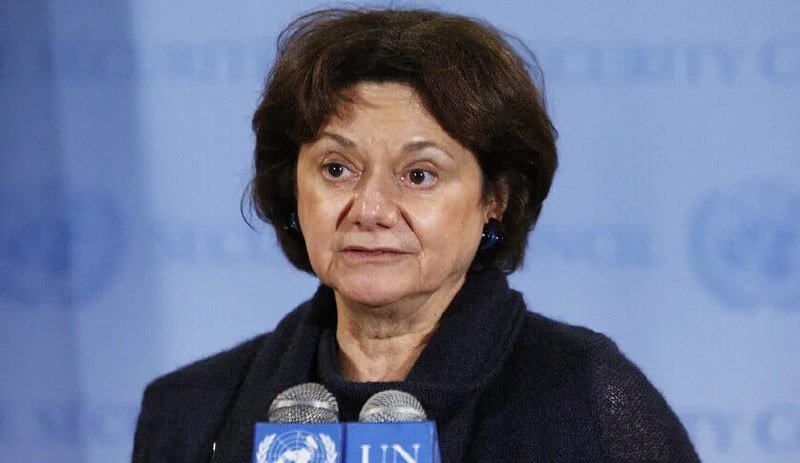
On the Sunday politics shows, the gap between a confident claim and a quiet qualification is usually measured in seconds. The 14 June 2026 interview on CBS, with Secretary of War Pete Hegseth, ran the other way: the gap was the entire interview.
Hegseth told host Margaret Brennan that President Donald Trump's military pressure had pushed Iran toward an agreement, that the United States had "controlled the straits this entire time," and that the document on the table committed Iran to "never" having, seeking, or buying a nuclear weapon. Brennan, in turn, noted that the two sides were "not even at the memorandum" and pointed out, on live television, that the 2015 JCPOA had once promised the same thing. The administration had not yet produced the text it was claiming to interpret.
That mismatch — victory language for a deal that has not reached its first milestone — is the story. It is also a window into how the White House is choosing to narrate a negotiation whose substance, by every indication, remains thin.
The claims, in order of certainty
Hegseth's strongest claim was tactical: "We have controlled the straits this entire time." The Strait of Hormuz, the chokepoint through which roughly a fifth of global seaborne oil transits, has been the leverage point of the last several weeks. If U.S. forces have, in fact, maintained operational dominance over the waterway, that is a statement of fact, not of negotiation, and it does not depend on a deal being signed.
The next claim was weaker. The Secretary said the United States would negotiate with Iran to reopen the strait — implying, without saying, that Iran is presently restricted from using it. Whether that is a temporary wartime posture or a concession Tehran is being asked to formalize is precisely the kind of detail that should appear in a memorandum, not in a Sunday show.
The weakest claim was the most loudly delivered. "The document says Iran will never have a nuclear weapon, won't seek one, won't buy one, won't have one." That is a maximalist formulation. Brennan's follow-up was the obvious one: the JCPOA said that too, and the JCPOA was a longer, more intrusive, and more verifiable instrument than anything described on air. The administration's own language has retreated from "deal" to "memorandum" in real time. Hegseth acknowledged the downgrade and then argued for the upgrade in the same answer.
What the talking points leave out
Two structural omissions deserve attention.
First, verification. A non-acquisition commitment is only as good as the inspection regime behind it. The 2015 agreement placed constraints on enrichment capacity, centrifuge types, and research-and-development pathways, and gave the International Atomic Energy Agency access to declared and, in some cases, undeclared sites. The mechanism for "never" was the mechanism, not the word. If the present text is being sold on a four-times-"never" formulation, the reader should be told what mechanism backs it. Hegseth did not.
Second, sequencing. Hegseth also claimed that President Trump had "made us energy independent at home" and that prices were "coming down." The first is a contested claim about net trade flows and refinery configuration; the second is a claim about retail gasoline that consumers can check at the pump. Margaret Brennan noted that energy prices are "pretty high right now." That exchange matters because the political case for a foreign-policy deal — Iran, Ukraine, anything — depends on the administration delivering a domestic cost story at the same time. If the cost story is not landing, the deal has to do more rhetorical work. That is a context in which maximalist claims about a non-existent memorandum become more attractive, and less reliable.
A pattern, not an anomaly
The pattern of selling a deal before the deal exists is not new to this administration. It is, however, a specific kind of negotiating posture: declare the conclusion, negotiate the text, and treat any public skepticism as obstruction. The risk is that the posture becomes self-defeating. Tehran's incentive to sign a document that the U.S. side is already describing as a fait accompli is reduced precisely to the extent that the document can be claimed as a win without being signed. Conversely, if Iran does sign, the maximum the text can deliver is what is on the page — and what is on the page is, by Hegseth's own account, not yet a memorandum.
The most plausible alternative read is that the administration is doing what administrations do in the late innings of a long negotiation: managing expectations downward in private and upward in public. The risk of that read is that it treats the gap between Hegseth's rhetoric and Brennan's questions as a feature rather than a bug. It is, at minimum, both.
What the next ten days look like
The diplomatic calendar will answer the question the interview dodged. If a memorandum of understanding is published, the public — and analysts — can compare its verification architecture, its sequencing, and its enforcement clauses against Hegseth's four-times-"never." If no text appears, the administration will be in the awkward position of having to choose between walking back its own victory language and continuing to describe an unsigned document as a fait accompli.
For the oil market, the relevant variable is the strait. Hegseth's claim of U.S. control does not require a deal to hold; a deal, if signed, may or may not change the operational picture on the water. For U.S. consumers, the relevant variable is the price at the pump, which Hegseth described as "coming down." That claim is testable on a weekly basis, and it will be tested.
For the wider Middle East, the stakes are larger than a single interview. A maximalist non-proliferation claim, delivered before the text, sets up either a vindication or a credibility cost. The administration has chosen the rhetorical posture. The document, when it arrives or doesn't, will close the loop.
This publication wrote the story straight: the U.S. administration's Iran claims, the on-air qualification from the interviewer, and the structural question of what mechanism backs a "never" that the 2015 agreement also promised. The wire version of this exchange tends to lead with the deal; we lead with the gap.
Wire provenance
This editorial synthesis draws on the following public wire/social posts:
- https://t.me/wfwitness
- https://t.me/ClashReport
- https://t.me/ClashReport
- https://t.me/ClashReport
- https://t.me/ClashReport
Follow the event.
These dated source records provide context. They do not retrospectively verify this archive article.
Separate what the nuclear watchdog reported from what it could not determine after the June 2025 strikes.