Hegseth on the Strait, Hegseth on the Deal: A Sunday-Morning Audit
Two Hegseths sat in the same studio chair on 14 June: one selling a reopened Strait of Hormuz, the other selling a memorandum with Tehran. The drones NBC reported three days later suggest only one of them is right.
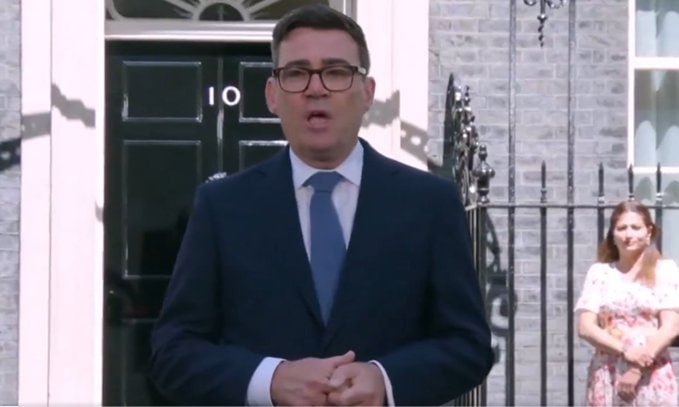
On the morning of 14 June 2026, Pete Hegseth sat in the studio chairs that American Sunday politics has worn smooth, and offered two versions of a war that may be ending. In one telling, the Strait of Hormuz is the prize: a chokepoint reopened, oil priced, freedom of navigation restored. In the other, the prize is the deal itself: a memorandum of understanding with Tehran, signed under American bombardment, that is supposed to convert strikes into architecture. The same defence secretary, on the same broadcast, defended both. The distance between them is the story.
A week earlier, on 7 June, the United States opened a direct military campaign against Iranian nuclear and missile infrastructure. By the second weekend, the shooting had produced a document. NBC News reported on the evening of 16 June that, since the memorandum was announced on the Sunday prior, Iran's Islamic Revolutionary Guard Corps had fired multiple drones at commercial shipping in the Strait of Hormuz, with U.S. forces shooting them down before they struck. Senator Lindsey Graham, surveying the same exchange on the same Tuesday, framed it bluntly: "We had all of this before Trump started the war." His pitch for the deal was structural rather than sentimental: a permanent ceasefire, open straits, an end to enrichment. If the agreement holds, he argued, the war purchases a regional settlement, not a battlefield.
The prize called Hormuz
The strait is the headline number. Somewhere around a fifth of seaborne oil passes through a channel roughly twenty-one miles wide at its narrowest. Hegseth's framing on the broadcast was the maritime one: reopen the waterway, restore the price signal, let the Gulf's crude move. That argument has the virtue of fitting on a placard. It also has the vice of assuming that the Iranian side, having absorbed twelve days of strikes, sees the same balance sheet that the Pentagon does.
John Bolton, who has signed his own memoranda with this regime and watched them torn up, offered the contrarian read on the same Tuesday. The deal, he said, is a bad one, because the President is thinking about one thing: he wants the strait open and Gulf oil on international markets. Geostrategic implications are a footnote. Bolton's point is not that Hormuz is unimportant. It is that an Iranian side still firing drones at commercial traffic after a ceasefire announcement is not behaving like a side that has conceded the maritime argument.
The prize called architecture
The second Hegseth, the one reading from the diplomatic ledger, pointed at the document rather than the waterway. A memorandum of understanding is, in the taxonomy of arms control, a softer object than a treaty: it signals convergence without binding either party to a single clause. The American argument is that the MOU is a down-payment on a broader settlement, one in which enrichment is suspended, missile programmes are curtailed, and the regional proxy network thins. Graham's enumeration: ceasefire, open straits, no enrichment, verified by inspectors. That is a real architecture, if it holds.
The trouble is that the on-screen record contains two incompatible claims about what the Iranian side has actually accepted. Hegseth on the strait implies Iranian compliance with freedom of navigation in real time. Hegseth on the deal implies Iranian acceptance of structural constraints on its nuclear programme. Either can be true. Both cannot be true if the IRGC is still firing drones at tankers three days after signature, as NBC reported.
What the on-screen exchange actually shows
Working only from the broadcast itself, the contradictions are narrow but specific. Hegseth defended the war as having produced a maritime reopening that the war alone could deliver. Hegseth defended the deal as having produced a diplomatic architecture that the war alone could not. He did not, in the clips available, reconcile the two: he asserted each in turn. The Iranian drone activity NBC described is, on its face, an answer to the first claim rather than a confirmation of it. Whether it also threatens the second claim depends on what the memorandum actually says about commercial traffic, and what enforcement mechanism it contains. Those texts have not been published.
Bolton's reading is consistent with the drone reporting: that the Iranian side is preserving leverage on the waterway while signing whatever paper is placed in front of it. Graham's reading is the optimistic mirror: that the paper is the point, and the waterway follows. Both senators are reading the same news cycle. They are not reading the same deal.
The audit that matters
There are three dates to watch. The first is the publication of the memorandum text, which will convert the political argument into a legal one. The second is the next incident in the Strait of Hormuz, which will convert the legal argument back into a political one. The third is the first IAEA inspection report under whatever inspection regime the memorandum establishes, which will determine whether "no enrichment" is a constraint or a slogan.
Until those three filings exist, Hegseth's Sunday performance is the artefact. He argued that the war opened the strait. He argued that the deal locked in what the war opened. The IRGC, on NBC's account, was firing at ships in the strait while the deal was being signed. One of these propositions is the American position. The other two are working hard to become it.
Follow the event.
These dated source records provide context. They do not retrospectively verify this archive article.
Separate what the nuclear watchdog reported from what it could not determine after the June 2025 strikes.