Hegseth sells a 30-day Strait of Hormuz fix. The Strait of Hormuz is a 21-mile problem.
On 14 June 2026, the U.S. Secretary of War told CBS the U.S. can reopen the Strait of Hormuz in 30 days. The claim does more work as leverage than as logistics.
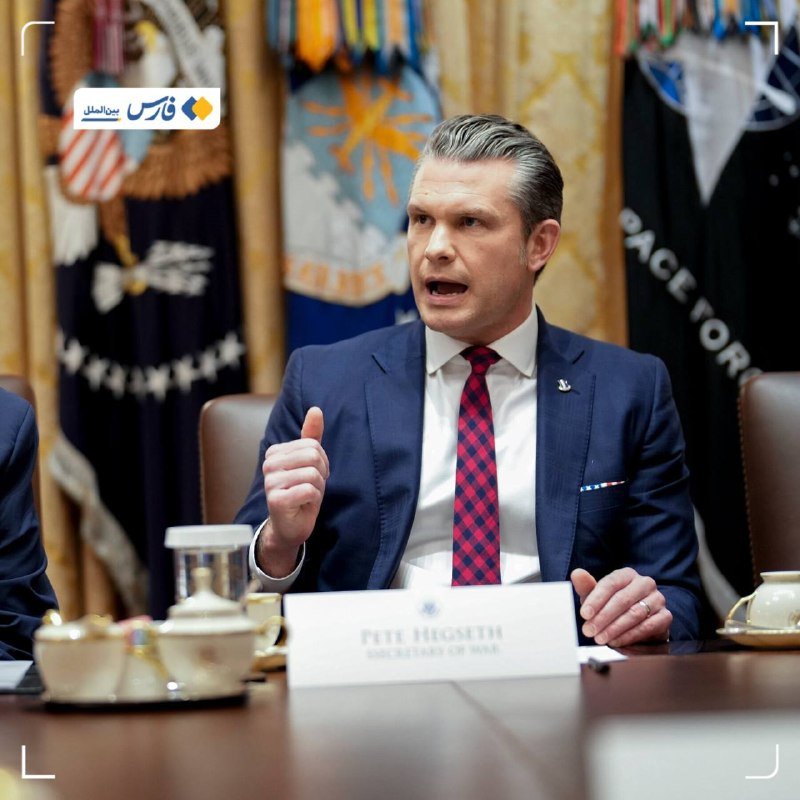
On 14 June 2026, in a series of CBS interviews aired mid-afternoon Eastern time, U.S. Secretary of War Pete Hegseth put a calendar on the table: the United States, he said, could restore safe passage through the Strait of Hormuz "within 30 days in a permissive environment." The Strait of Hormuz is a 21-mile-wide choke point at the mouth of the Persian Gulf through which roughly a fifth of the world's traded oil normally moves. Putting a 30-day clock on it is, depending on who you ask, a confidence-building measure, an operational promise, or a negotiating instrument pointed at Tehran.
The claim deserves the same scepticism the public has learned to apply to any official timeline coming out of a war room during a live negotiation. The point is not whether the U.S. Navy can sweep the Strait — it almost certainly can, with mine-countermeasures vessels, helicopter pickets, and escort task forces. The point is what "safe passage" means in a corridor where the threat comes not from a single minefield but from a layered mix of fast-attack craft, anti-ship missiles on the Iranian coast, and now, evidently, the diplomatic weather around a deal that has not yet been signed.
What Hegseth actually said
Hegseth's CBS appearance, summarised in five Telegram posts by the wfwitness channel between 15:02 and 15:25 UTC on 14 June 2026, was structured as a five-point sales pitch for a phased arrangement with Iran. Phase one, he said, "would begin immediately with the reopening of the Strait of Hormuz and a gradual unwinding of the U.S." presence. He claimed that "Project Freedom never stopped" and that the United States "has maintained control of the Strait of Hormuz throughout the confrontation." He added that Washington will "keep the military option in place throughout the 60 days of negotiations and maintain pressure on Iran for as long as necessary," and that military pressure from President Trump has "pushed Iran toward an agreement," while conceding the deal, and even the memorandum, had not yet been finalised.
The shape of the proposal is familiar: a sequence of confidence-building gestures, a defined negotiation window, a military option held in reserve, and an opening concession framed as American strength. What is new is the explicit 30-day clock on the maritime leg. That clock is doing diplomatic work, not just operational work. It tells Tehran the U.S. is prepared to either clear the corridor or to keep choking Iran's export revenues until the memorandum is signed. It tells oil markets, tanker operators, and the Gulf monarchies that there is a defined end-state in view. And it tells the Pentagon's own planners exactly how long they have to be ready for either branch of the decision tree.
The Strait is a logistics problem masquerading as a talking point
The framing assumes that what blocks the Strait is a thing the U.S. military can simply remove. It is worth remembering what "the Strait" is, and is not. It is not a single bridge or canal. It is roughly 21 nautical miles wide at its narrowest, divided into inbound and outbound shipping lanes, with Iranian territorial waters on the north shore and Omani on the south. The U.S. Fifth Fleet, based in Bahrain, has run continuous operations through the waterway for decades, including the International Maritime Security Construct that was stood up in 2019 specifically to deter Iranian harassment of commercial shipping.
The threats that have closed or degraded the waterway in past crises — the 1980s Tanker War, the 2019 limpet-mine attacks on tankers attributed to Iran, the 2020 seizure of the MV Stena Impero, the periodic seizures of oil tankers through 2023 and 2024 — have rarely been conventional naval engagements. They have been salami-slice harassment: small boats, drones, mines, cyber interference with ship systems, and the implicit threat of shore-based anti-ship cruise missiles. A 30-day "permissive environment" plan presupposes that Iran will hold its fire for thirty days while the U.S. formally reopens a corridor whose closure is, in the Hegseth framing, the leverage point. That is a diplomatic assumption dressed up as a logistics forecast.
The counter-narrative from Tehran
The Iranian side has its own read, and it is not the same as the U.S. one. From Tehran's vantage, a U.S. "military option" held in place for 60 days is not a negotiating instrument but a standing threat that, by the U.S. account, has already produced the very confrontation now being wound down. Iranian state media — and the channels that pick up its readouts, including PressTV, Tasnim, and IRNA — have framed the Strait as a sovereign Iranian interest, with closure or the threat of closure as a legitimate countermeasure to U.S. and Israeli pressure rather than an act of aggression. Whether one finds that framing legitimate or not, it is the framing inside which an Iranian negotiator will be sitting across from an American one.
The structural point, stripped of the press-release language on either side, is that the Strait is the world's most concentrated single chokepoint for seaborne energy, and any arrangement that lasts will have to give both sides a defensible story about who won and who conceded what. A 30-day window plus a 60-day negotiation plus a continuing military option is, in practice, a recipe for an interrupted settlement — not a clean reopening followed by a tidy phase two. Energy traders have been pricing that ambiguity for weeks; that is why benchmark crude has been less volatile than it would otherwise be through this episode, and why insurance war-risk premia for tankers transiting the Strait have remained elevated even as headlines moved toward "deal."
What "permissive environment" actually buys
The phrase "permissive environment" is the kind of military-bureaucratic vocabulary that does a lot of work without committing anyone to anything. It is the standard Pentagon way of saying "the threat is low enough that we can operate here routinely," as opposed to a "non-permissive" or "contested" environment in which every movement requires force protection. Hegseth's 30-day claim, read literally, is that the U.S. can produce a permissive environment in the Strait in 30 days. Read against his own caveat — that the memorandum has not been finalised — it is a statement of capability, not of current fact. Capability statements from a Secretary of War on the eve of a deal are themselves a form of pressure. The question is whether Tehran treats that pressure as something to sign under, or something to wait out.
The stakes, in plain terms
If the 30-day window holds and a memorandum follows, the immediate winners are oil consumers — particularly in Asia, which takes the bulk of Gulf crude — and the Gulf monarchies, whose own export infrastructure is most exposed to a long closure. Iran's foreign-currency position improves if sanctions unwind in step. The U.S. demonstrates that military pressure plus diplomacy can produce a defined, time-bounded outcome, which is a useful template to point to in other theatres. If the window slips, the winners are those who have hedged against the Strait — other producers with spare capacity, alternative-route pipeline operators, and the financial instruments that have been trading the volatility. The losers in that scenario are the same Asian importers and the Iranian population, which has been the long-suffering downstream of this confrontation for years.
What remains uncertain
The five wfwitness posts give the bones of the U.S. position, but they do not — and cannot — show the Iranian counter-position, the text of any draft memorandum, or the views of the Gulf states and the European parties with skin in this game. They do not specify what "gradual unwinding of the U.S." presence means in terms of force posture, base access, or the carrier strike group currently in the Indian Ocean. They do not show whether the 30-day clock is something the Pentagon actually plans against or something the Secretary of War said on a Sunday morning show. The framing will be settled by what happens in the next fortnight, not by the language of the announcement.
Desk note: Wire coverage of the Hegseth interview is still coalescing; this piece reads the five wfwitness posts from 14 June 2026 as a coherent statement of the U.S. negotiating position, not as a final account of where the deal stands.
Wire provenance
This editorial synthesis draws on the following public wire/social posts:
- https://t.me/wfwitness
- https://t.me/wfwitness
- https://t.me/wfwitness
- https://t.me/wfwitness
- https://t.me/wfwitness