Hezbollah's Golan portfolio holder is dead. The argument over how he died tells its own story.
Two accounts of Ali Moussa Dakdouk's death — covert strike or battlefield casualty — have surfaced within an hour. Both versions tell us something about the information war, not just the kinetic one.
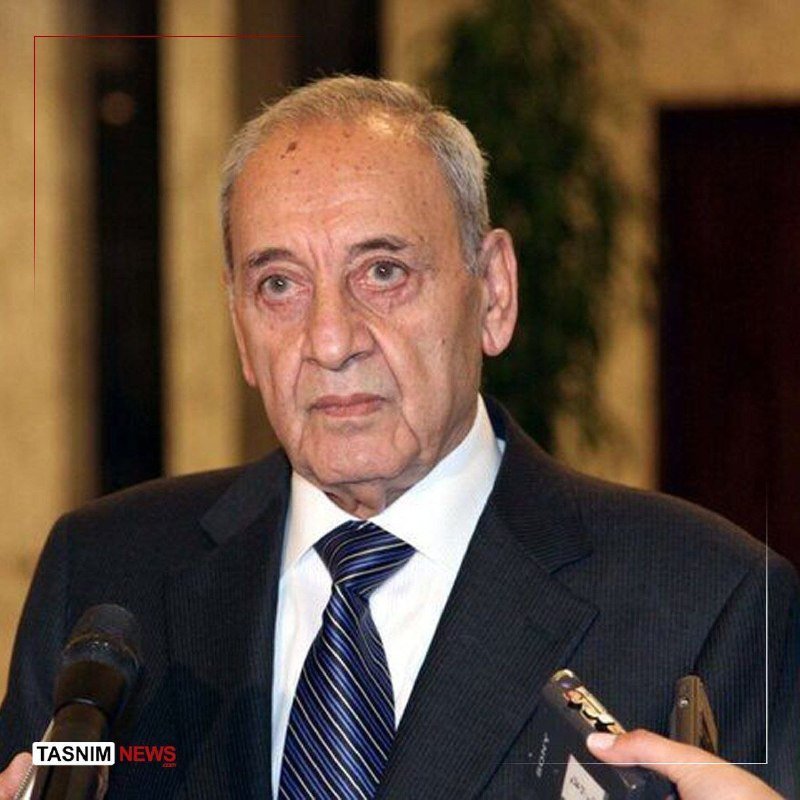
A senior Hezbollah operative, identified in Iranian and Lebanese channels as the movement's point man for the occupied Golan file, has been killed in southern Lebanon. The contested part is the manner — and the dispute is already doing the work of the war it tries to describe.
Within roughly an hour on 14 June 2026, two accounts of Ali Moussa Dakdouk's death circulated on Telegram feeds with ties to both the Iranian Revolutionary Guards and to Hezbollah's own media ecosystem. One version, attributed to Iranian sources affiliated with the IRGC, leaves the cause deliberately unspecified. The other, attributed to unofficial Lebanese sources identified with Hezbollah, insists Dakdouk was not the target of a targeted elimination but fell in field engagements with the Israel Defense Forces. Read together, the two accounts amount to a controlled release: he is dead, the moment is salient, the details are negotiable.
What both accounts agree on
Dakdouk's role is consistent across the messaging. He held the Golan portfolio inside Hezbollah — the brief that links the movement's southern-Lebanon posture to the frontier with Israel and, by extension, to the wider Iran-aligned axis facing off against the Jewish state. That he is being named, and that his portfolio is being named, is itself a piece of signalling. The Golan file is not a back-office assignment. Whoever runs it owns the connective tissue between Hezbollah's rocket array, Iranian command priorities, and the quiet logistics that flow through the Beqaa and south Lebanon.
The sourcing overlap is also notable. Both accounts are surfacing on English-language Telegram channels with direct affiliations to the IRGC and to Hezbollah's unofficial press layer. They are not Israeli communiqués, not wire reports, not UN tracking. They are the dead man's own information ecosystem telling the world it has lost him, on its own timing, in its own terms.
What they disagree about — and why that matters more than the death itself
The split is precise. The IRGC-adjacent version is coy: it confirms the death, flags the man's portfolio, and stops. The Hezbollah-adjacent version is louder in a specific direction: no targeted assassination, just combat. The distinction is not semantic. A targeted killing credits Israeli intelligence penetration and a specific operational achievement. A battlefield death reduces the event to attrition, to the slow arithmetic of a war being fought by fire missions and ambushes rather than by covert actions.
The first framing helps the adversary. The second framing helps the movement. The choice of which to amplify is, in this part of the world, an editorial decision with kinetic consequences. When Iranian and Hezbollah-linked channels surface an Israeli intelligence success, they tend to bury it. When they surface a story that strips Israeli intelligence of credit, they amplify it. Theakdouk ledger — strike versus firefight — is the test case.
What is being kept out of the frame
Neither account offers a date, a location more precise than "southern Lebanon," or a name of a unit involved. Neither acknowledges any Israeli statement, and there is no independent wire confirmation in the thread. That silence is itself the story. The death of a senior portfolio-holder in an active war zone is the kind of event Reuters, AFP and the BBC would normally chase to a sourced confirmation within hours. The vacuum is filled, for now, by the dead man's allies.
It is worth naming what the two Telegram accounts do not dispute. They do not contest that Dakdouk held the Golan file. They do not contest that he is dead. They do not contest that the killing is a loss to the network he served. The argument is purely about who deserves the credit for inflicting the loss, and what that credit implies about the balance of intelligence and combat power on the ground.
The structural read
Wars between states produce battlefield communiqués with bylines, maps and timestamps. Wars between states and armed movements that sit inside other states produce something messier: a fog of attribution in which the movement's own press organs shape the first draft of history because nobody else can. The information contest is not a sideshow to the fighting in south Lebanon. It is one of the fights.
The harder question is what version will harden into the regional record. Israeli sources, when they speak, will tend to claim the operation. Hezbollah-aligned media will tend to deny the operation. The truth, as so often in this war, will live somewhere in the gap — and the gap is large enough to drive a propaganda cycle in three languages for a week.
Stakes
If the targeted-strike version holds, the Golan file is wounded and Israeli intelligence is credited with penetrating it. If the battlefield version holds, the file is wounded and the war is just doing its grim work. Either way, south Lebanon has lost a man whose portfolio was the most exposed piece of real estate in the Iran-aligned axis. The next holder will inherit a shorter fuse.
What remains uncertain
The sources do not agree on the manner of death. They do not name a date, a town, or a unit. No independent wire has yet confirmed the death outside the Telegram ecosystem in which the claim originated. Until that confirmation arrives — or fails to — the dead man's allies own the story of how he died, and that ownership is a form of power the front itself cannot take back.
Desk note: Monexus is reporting the contested claim as a contested claim. Telegram channels affiliated with Hezbollah and the IRGC are treated as primary sources for the movement's own framing, not as neutral fact. The structural point — that attribution is itself a battlefield — stands whether or not the underlying strike is independently confirmed in the next 24 hours.
Wire provenance
This editorial synthesis draws on the following public wire/social posts:
- https://t.me/englishabuali/
- https://t.me/abualiexpress/
- https://t.me/abualiexpress/
Follow the event.
These dated source records provide context. They do not retrospectively verify this archive article.
Separate what the nuclear watchdog reported from what it could not determine after the June 2025 strikes.