Hezbollah reopens the northern front with drone and missile strikes inside Israel
Two claimed operations within hours — drones on a military position in Houla and a missile salvo on an Israeli artillery site — frame a re-escalation along the Lebanon-Israel line that the sources do not yet allow us to fully verify.
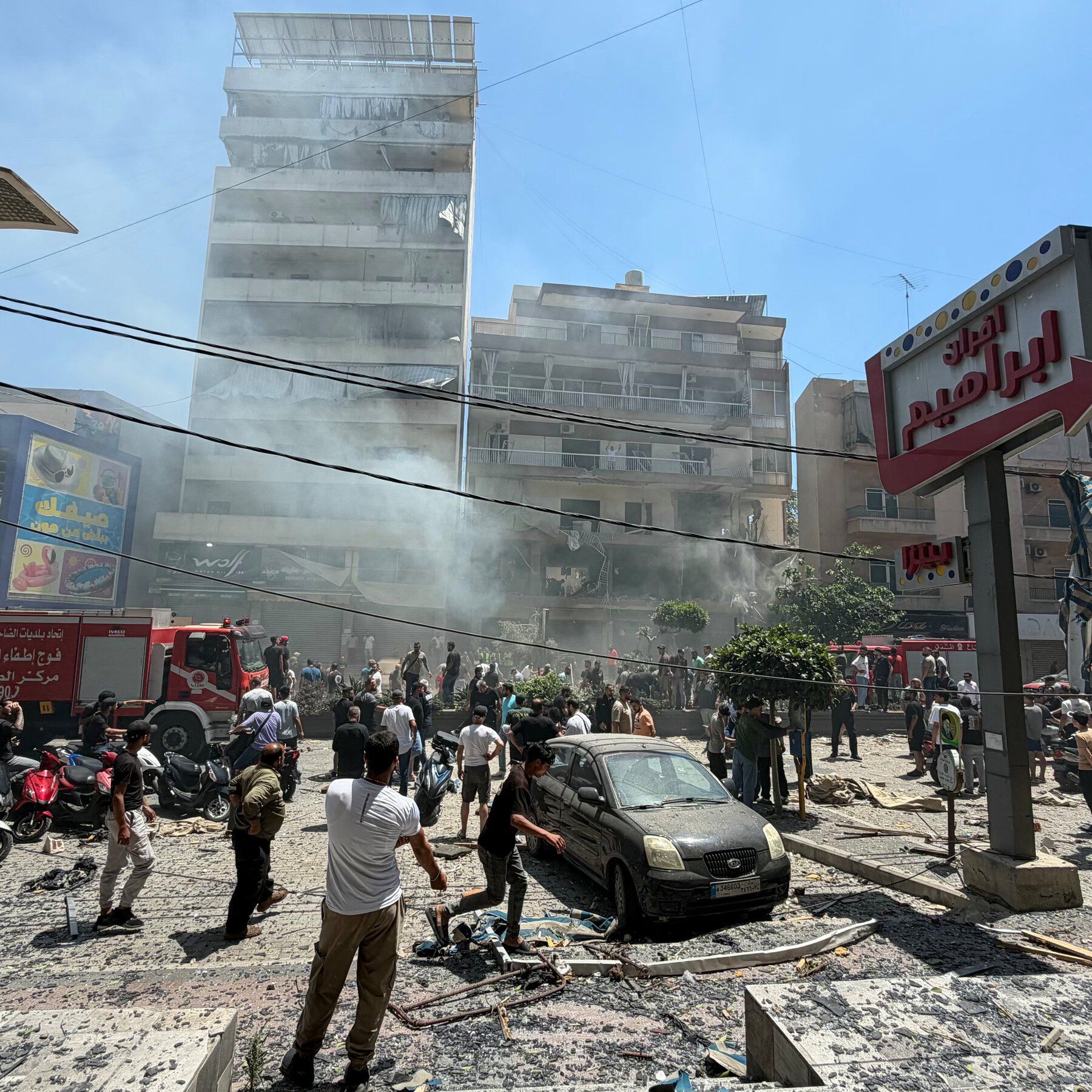
Hezbollah said on Sunday, 14 June 2026, that it had carried out two distinct operations against Israeli military targets inside Israeli territory, framing both as retaliation for what the group described as ongoing Israeli attacks on Lebanon. The claims, circulated in parallel by the movement's media arm and amplified by regional outlets close to the Iranian-aligned axis, mark the first publicly claimed operations of the day and arrive against a backdrop of near-daily cross-border fire that has defined the northern sector since October 2023. As of midday UTC, no Israeli military authority had publicly confirmed a successful strike on its territory, and the incident remains contested between the claimants and the Israeli defence establishment.
The substance of the two claims matters less for their tactical weight than for what they signal: a deliberate, public re-entry into a tempo of named operations at a moment when the Lebanese-Israeli line is being watched for a wider de-escalation. The two announcements, issued in close succession on the morning of 14 June, are best read as a single messaging event, not as two independent tactical actions.
The first claim — drones on Houla
The first operation, announced in the early hours, was a drone strike. According to the movement's media channel, Hezbollah fighters launched two attack drones at 12:50 am local time (21:50 UTC, 13 June 2026) at what it described as an Israeli military position in the town of Houla, in northern Israel near the Lebanese border. The channel carried the claim in the standard operational format Hezbollah has used throughout the post-October 2023 exchanges: a target descriptor, a time stamp, a munition count, and a framing of the action as a response to a specific Israeli strike on Lebanese territory earlier in the day or the previous night.
Houla sits inside the Israeli Galilee panhandle, a short distance from the frontier. The location is consistent with the geography Hezbollah drones have hit repeatedly over the past two and a half years. The movement has, in past operations, framed such strikes as reconnaissance-in-force — actions designed less to inflict casualties than to demonstrate that the airspace remains penetrable and that the air-defence chain can be probed at chosen times.
The second claim — a missile salvo on an Israeli artillery position
The second operation escalated the claimed payload and the stated intent. According to a separate notice circulated by Hezbollah-aligned outlets, the movement said its "Islamic resistance" fighters had struck a "newly established" Israeli artillery position with a heavy missile salvo, again framed as retaliation for Israeli attacks on Lebanon. The phrasing of the second notice — explicitly invoking the artillery position as a discrete target and describing the munition type as missiles rather than drones — is itself a tactical signal: heavier munitions at a deeper target, in a town well inside the Israeli side of the border, suggest a deliberate widening of the accepted operational envelope.
Israeli-language coverage of the second claim was not in the source set at the time of writing, and the IDF had, as of the time of the original alerts, not issued a confirmation that the artillery position had been hit or that strikes had landed on Israeli soil. The status of the claim therefore remains a Hezbollah assertion. The movement has, in the past, framed unsuccessful or partially intercepted strikes as successes, and a final assessment requires Israeli acknowledgement or independent on-the-ground verification that the source set does not provide.
What the dominant framing misses
The Western wire framing of cross-border Hezbollah operations tends to fold such incidents into a single narrative of "routine exchange" — a way of normalising a tempo of fire that, if applied to any other bilateral frontier, would be described as active hostilities. The structural point worth making is that there is nothing routine about a state and a non-state armed actor exchanging daily strikes across a recognised international border; the routine framing functions to lower the perceived stakes of any single incident and, by extension, to lower the political cost of tolerating the tempo.
The opposite reading, that this is a Hezbollah messaging exercise designed for a Lebanese and regional audience rather than a substantive military escalation, is also credible. The two operations were announced in close succession, used standardised claim language, and arrived in a week when the movement is publicly under pressure from Lebanese domestic constituencies to demonstrate continued capability. The competing explanations are not mutually exclusive. The tactical effect — penetrating Israeli airspace and forcing air-defence responses — can be achieved at low cost and the political effect — signalling to a domestic audience that the northern front has not been surrendered — is achieved regardless of the operational outcome.
The structural point is that Hezbollah's claim architecture is now mature enough to function as a parallel information order, in which the movement's own account of what happened on the border is published, circulated, and consumed in real time by a regional audience before any independent or Israeli confirmation is available. The wire services, when they cover such incidents, are often reduced to translating the claim rather than to reporting a contested event.
Stakes and what remains uncertain
The near-term stakes are concrete. A sustained tempo of claimed Hezbollah operations, even at low casualty yield, raises the political cost for any Israeli government contemplating a de-escalation arrangement in the north and lengthens the runway for any future ground operation in southern Lebanon. It also raises the cost, for mediators, of constructing a verifiable ceasefire architecture: an information environment in which one side's narrative reaches regional and diaspora audiences within minutes and the other side's denial or confirmation is delayed by hours makes the verification problem materially harder.
The article should be honest about what the source set does not resolve. The first claim gives a target town and a munition count but no casualty figure. The second claim describes a target type and a munition type but does not specify the location with equivalent precision, and no Israeli or Western wire confirmation of either strike was in the thread at the time of writing. The reporting therefore stands as a record of what Hezbollah and Hezbollah-aligned outlets said on 14 June 2026, not as a record of the operational facts on the ground. A reader who treats this piece as confirmation that Israeli positions were hit is over-reading the evidence; a reader who treats it as confirmation that the claims were issued in the form described is reading it correctly.
How Monexus framed this: the wire services, where they pick the story up, will likely package it as a "routine exchange" or as a "Hezbollah claims" line. The piece above treats the claims as a messaging event in their own right and reads the operational language as a signal, rather than absorbing the framing that what just happened on the Israel-Lebanon line is in any sense ordinary.
Wire provenance
This editorial synthesis draws on the following public wire/social posts:
- https://t.me/thecradlemedia/1
- https://t.me/TheCradleMedia/1
- https://t.me/JahanTasnim/1